BMC Tablet Plan Stalls Over BJP Demand
BMC's plan to give tablets to corporators hits roadblock, BJP insists on Indian-made devices
'%3E%3Crect%20width%3D'96'%20height%3D'96'%20fill%3D'%23B3261E'%2F%3E%3Ccircle%20cx%3D'30'%20cy%3D'24'%20r%3D'44'%20fill%3D'%23fff'%20opacity%3D'.12'%2F%3E%3Ccircle%20cx%3D'60'%20cy%3D'74'%20r%3D'40'%20fill%3D'%23000'%20opacity%3D'.10'%2F%3E%3C%2Fg%3E%3Cg%20fill%3D'%23fff'%3E%3Crect%20x%3D'29'%20y%3D'49'%20width%3D'8'%20height%3D'19'%20rx%3D'1'%2F%3E%3Crect%20x%3D'39'%20y%3D'40'%20width%3D'9'%20height%3D'28'%20rx%3D'1'%2F%3E%3Crect%20x%3D'50'%20y%3D'45'%20width%3D'8'%20height%3D'23'%20rx%3D'1'%2F%3E%3Crect%20x%3D'60'%20y%3D'53'%20width%3D'7'%20height%3D'15'%20rx%3D'1'%2F%3E%3Crect%20x%3D'41'%20y%3D'34'%20width%3D'5'%20height%3D'6'%2F%3E%3C%2Fg%3E%3C%2Fsvg%3E)
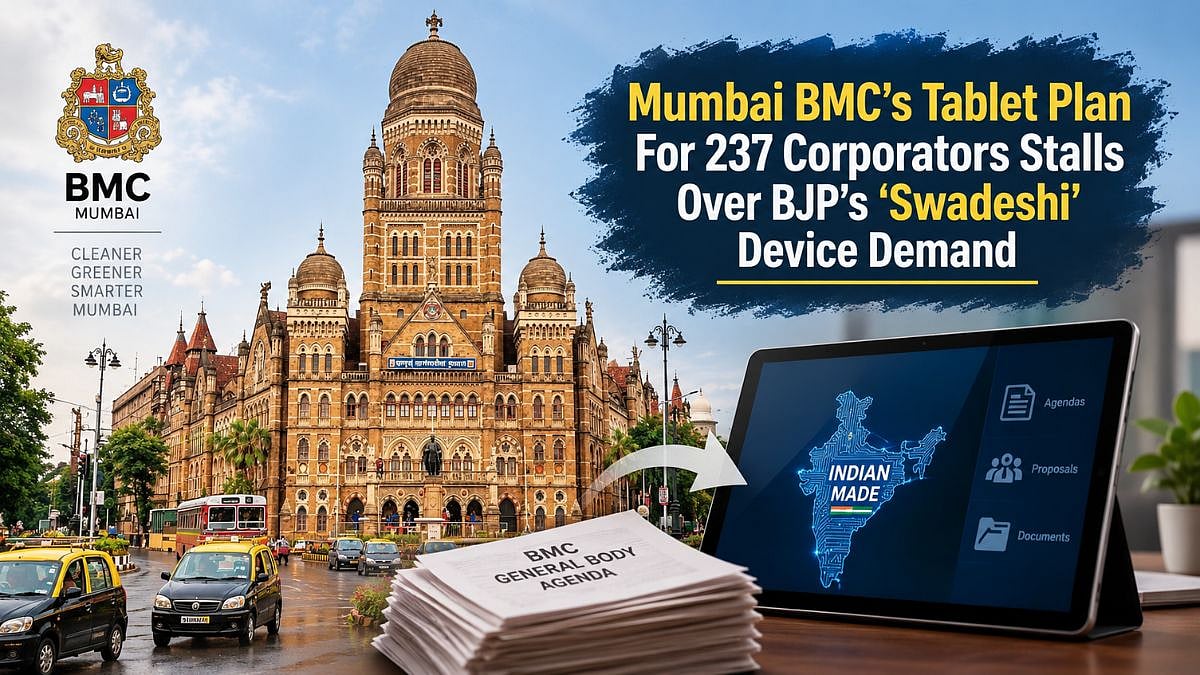
The Brihanmumbai Municipal Corporation's (BMC) proposal to provide 237 corporators with 13-inch tablets has been put on hold due to the Bharatiya Janata Party's (BJP) demand for 'swadeshi' devices. The civic administration had planned to equip all corporators, including 10 nominated members, with tablets to reduce paperwork and move towards a digital system.
The BMC currently relies on physical copies of committee and General Body agendas, which are hand-delivered to corporators by staff of the Municipal Secretary's Department. This practice costs the civic exchequer crores of rupees in paper, printing, transportation, distribution, and staff overtime.
The BJP had proposed a dedicated app to give corporators instant access to House and committee agendas, proposals, and supporting documents through unique proposal codes. However, the advanced models available on the Government e-Marketplace (GeM) portal are largely from foreign manufacturers, including Chinese and Japanese brands.
According to a civic official, the BMC needs advanced tablets for corporators, but the best available options are not from Indian companies. House Leader and BJP group leader in BMC Ganesh Khankar said that many corporators are digitally savvy and prefer receiving agendas online, but the party will only procure Indian-made tablets.
The BMC has tried to go digital before, but without much success. In 2012, the civic body provided each representative with a laptop, smartphone, and SIM card to reduce paperwork and digitally track ward-level development works. However, the laptops were later returned, and a proposal to replace them with tablets or iPads in 2017 never materialized.
The BMC's digital ambitions are being caught between the need for efficient governance and the BJP's push for Indian-made products. The civic administration will have to explore alternative options to provide corporators with digital access to important documents and agendas.
The use of digital technology can help reduce costs and increase efficiency in governance. The BMC's efforts to move towards a paperless system are commendable, but the insistence on Indian-made devices may delay the process.
In the meantime, the BMC will have to continue relying on physical copies of documents, which will continue to incur significant costs. The civic administration will have to find a solution that balances the need for digital governance with the demand for Indian-made products.
The BMC's tablet plan is not just about providing corporators with digital devices, but also about moving towards a more efficient and transparent system of governance. The use of digital technology can help reduce corruption and increase accountability, which is essential for good governance.
The delay in the BMC's tablet plan is a setback for the civic administration's digital ambitions. However, it also provides an opportunity for the BMC to explore alternative options and find a solution that works for everyone. The BMC must find a way to balance its digital ambitions with the demand for Indian-made products and provide corporators with the tools they need to govern effectively.
In conclusion, the BMC's tablet plan has been put on hold due to the BJP's demand for Indian-made devices. While the civic administration's digital ambitions are commendable, the insistence on Indian-made devices may delay the process. The BMC must find a solution that balances the need for digital governance with the demand for Indian-made products and provide corporators with the tools they need to govern effectively.
Frequently asked questions
Why has the BMC's tablet plan been stalled?
The BMC's tablet plan has been stalled due to the BJP's demand for Indian-made devices, which are not available on the Government e-Marketplace (GeM) portal.
What is the purpose of the BMC's tablet plan?
The purpose of the BMC's tablet plan is to provide corporators with digital access to important documents and agendas, reducing paperwork and moving towards a paperless system.