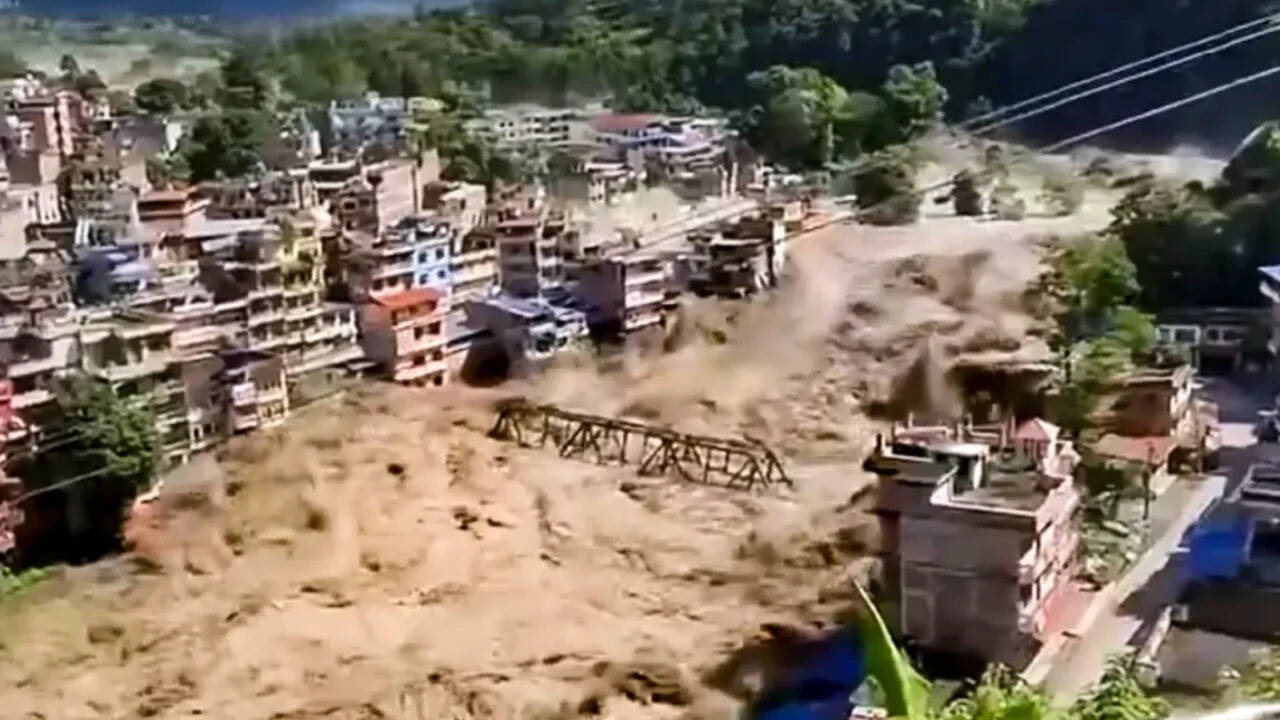
India Identifies 200 High-Risk Himalayan Glacial Lakes
India has 7,500 glacial lakes, 200 at high risk of flooding.
'%3E%3Crect%20width%3D'96'%20height%3D'96'%20fill%3D'%23B3261E'%2F%3E%3Ccircle%20cx%3D'30'%20cy%3D'24'%20r%3D'44'%20fill%3D'%23fff'%20opacity%3D'.12'%2F%3E%3Ccircle%20cx%3D'60'%20cy%3D'74'%20r%3D'40'%20fill%3D'%23000'%20opacity%3D'.10'%2F%3E%3C%2Fg%3E%3Cg%20fill%3D'%23fff'%3E%3Crect%20x%3D'29'%20y%3D'49'%20width%3D'8'%20height%3D'19'%20rx%3D'1'%2F%3E%3Crect%20x%3D'39'%20y%3D'40'%20width%3D'9'%20height%3D'28'%20rx%3D'1'%2F%3E%3Crect%20x%3D'50'%20y%3D'45'%20width%3D'8'%20height%3D'23'%20rx%3D'1'%2F%3E%3Crect%20x%3D'60'%20y%3D'53'%20width%3D'7'%20height%3D'15'%20rx%3D'1'%2F%3E%3Crect%20x%3D'41'%20y%3D'34'%20width%3D'5'%20height%3D'6'%2F%3E%3C%2Fg%3E%3C%2Fsvg%3E)
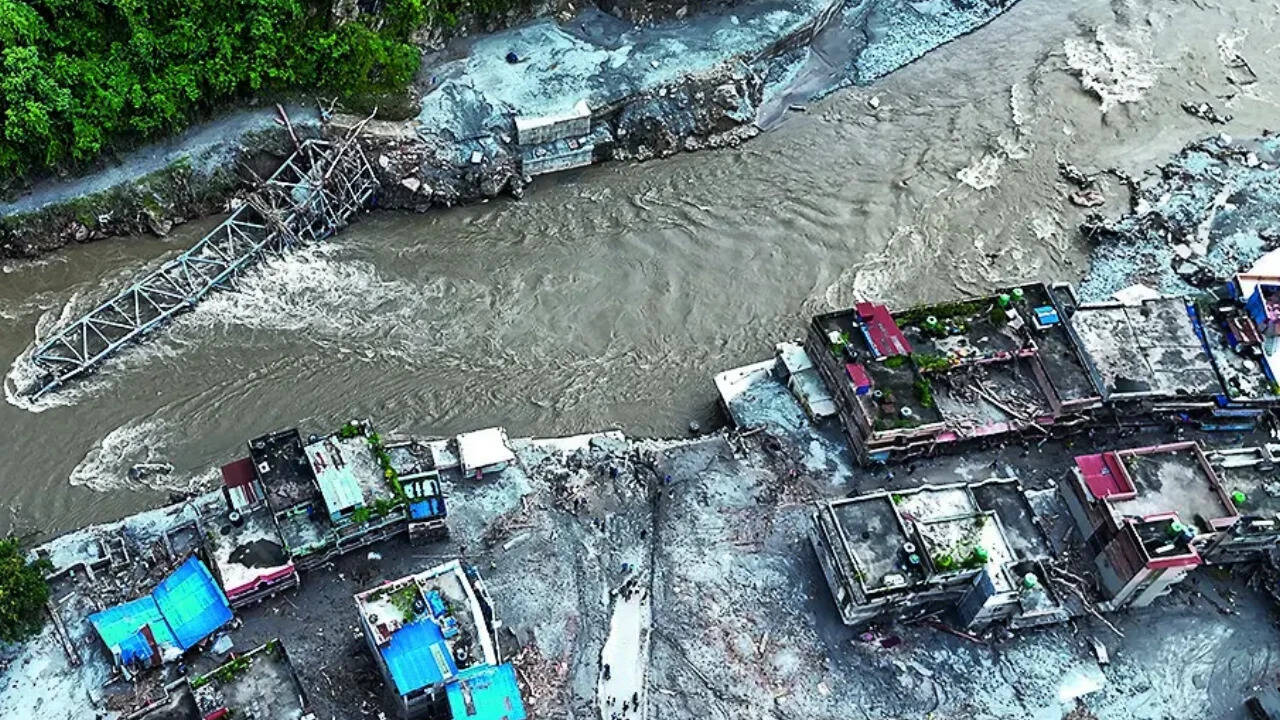
India is home to approximately 7,500 glacial lakes in the Himalayas, with around 200 of these lakes considered to be at high risk of flooding. This alarming situation has been highlighted by a recent glacial lake outburst flood in Nepal, which served as a wake-up call for the Indian government to take proactive measures.
The Indian government has launched a National GLOF Risk Mitigation Programme to address the issue. This programme will focus on conducting thorough assessments of the glacial lakes, continuous monitoring of their conditions, and establishing effective early warning systems. Additionally, the programme aims to raise awareness among local communities about the risks associated with glacial lake outburst floods.
The recent GLOF incident in Sikkim resulted in severe damage, underscoring the urgency of implementing proactive measures to mitigate the risks. The Indian government's response to this situation is a crucial step towards protecting the lives and livelihoods of people living in the surrounding areas.
Glacial lake outburst floods are a significant concern in the Himalayan region, where the impact of climate change is being felt. Rising temperatures are causing glaciers to melt at an alarming rate, resulting in the formation of glacial lakes. These lakes can burst their banks, causing catastrophic floods that can have devastating effects on the environment and human settlements.
The National GLOF Risk Mitigation Programme is a comprehensive initiative that will help to identify and mitigate the risks associated with glacial lake outburst floods. The programme will involve collaboration between various government agencies, research institutions, and local communities to ensure that the risks are assessed and managed effectively.
The Indian government's efforts to address the issue of glacial lake outburst floods are a positive step towards protecting the environment and human lives. However, more needs to be done to raise awareness about the risks associated with climate change and to implement measures to mitigate its impacts.
In conclusion, the identification of 200 high-risk glacial lakes in the Himalayas is a significant concern that requires immediate attention. The Indian government's National GLOF Risk Mitigation Programme is a crucial initiative that will help to mitigate the risks associated with glacial lake outburst floods. It is essential that the government continues to work towards protecting the environment and human lives from the impacts of climate change.
The situation highlights the importance of proactive measures to mitigate the risks associated with glacial lake outburst floods. The Indian government's response to the situation is a positive step towards addressing the issue, and it is essential that the government continues to work towards protecting the environment and human lives.
What it means for India is that the country needs to be prepared to face the challenges posed by climate change. The identification of high-risk glacial lakes is a significant concern that requires immediate attention, and the government's efforts to address the issue are a positive step towards protecting the environment and human lives.
Frequently asked questions
What is a glacial lake outburst flood?
A glacial lake outburst flood is a type of flood that occurs when a glacial lake bursts its banks, causing catastrophic flooding.
How many glacial lakes are in the Himalayas?
There are approximately 7,500 glacial lakes in the Himalayas, with around 200 considered to be at high risk of flooding.