ITAT Rules ESOP Buybacks As Capital Gains
Startup employees get tax relief, ESOP payouts taxed as capital gains
'%3E%3Crect%20width%3D'96'%20height%3D'96'%20fill%3D'%230B6E4F'%2F%3E%3Ccircle%20cx%3D'30'%20cy%3D'24'%20r%3D'44'%20fill%3D'%23fff'%20opacity%3D'.12'%2F%3E%3Ccircle%20cx%3D'60'%20cy%3D'74'%20r%3D'40'%20fill%3D'%23000'%20opacity%3D'.10'%2F%3E%3C%2Fg%3E%3Cg%20fill%3D'none'%20stroke%3D'%23fff'%20stroke-width%3D'3.2'%20stroke-linecap%3D'round'%20stroke-linejoin%3D'round'%3E%3Cpolyline%20points%3D'31%2C59%2041%2C49%2049%2C54%2063%2C37'%2F%3E%3Cpolyline%20points%3D'55%2C37%2063%2C37%2063%2C45'%2F%3E%3C%2Fg%3E%3C%2Fsvg%3E)
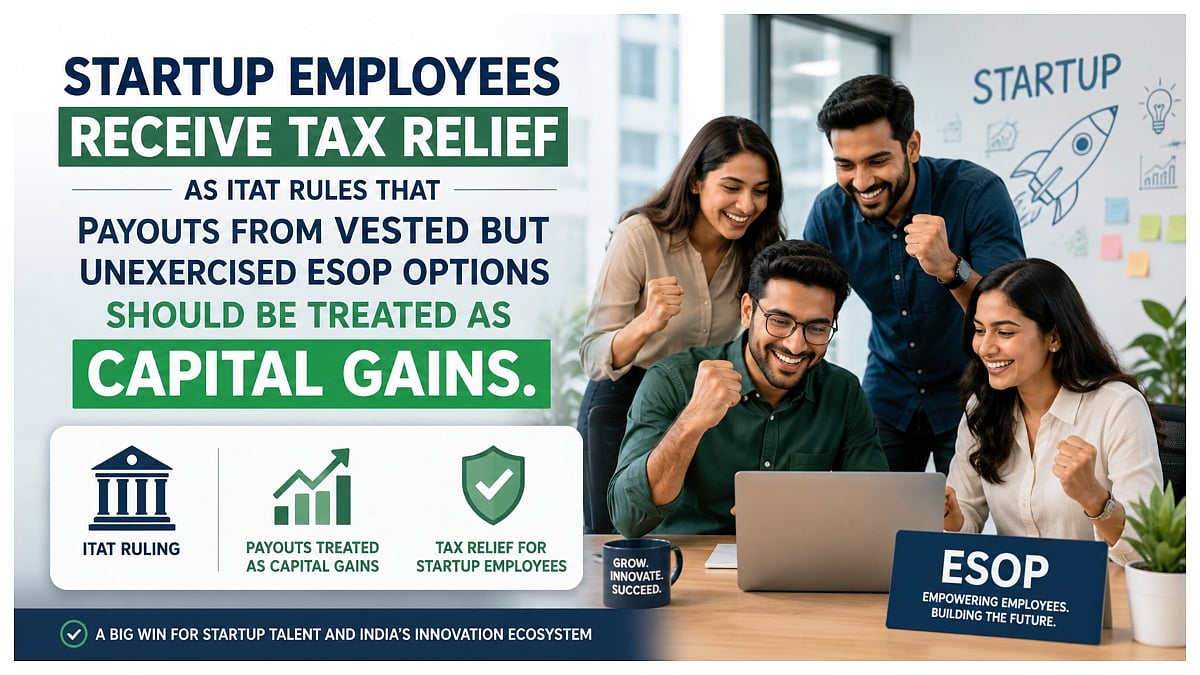
The Bengaluru bench of the Income Tax Appellate Tribunal (ITAT) has ruled that money received from the buyback of vested but unexercised Employee Stock Ownership Plan (ESOP) options should be taxed as capital gains and not as salary income.
This decision came in a case involving a former Flipkart employee whose vested stock options were repurchased after Walmart acquired the e-commerce company.
The employee had reported the buyback proceeds as long-term capital gains, but the Income Tax Department argued that the payment should be treated as salary.
The ITAT rejected this argument, stating that ESOPs are taxed as a salary perquisite only when an employee exercises the options and receives shares.
Until the options are exercised, they merely give the employee a right to purchase shares in the future, which is considered a capital asset.
Since the vested options were repurchased before exercise, the transaction involved the transfer of a capital asset, and the resulting income must be assessed under capital gains.
The ITAT also clarified that an employer's decision to deduct TDS does not decide the final nature of an employee's income, and that TDS is only a method of collecting tax in advance.
This ruling could reduce the tax burden for eligible startup employees, as salary is taxed according to applicable income-tax slabs, while capital gains follow separate tax rules.
However, the actual tax treatment and rate will depend on factors such as the holding period, nature of the asset, and applicable law.
The decision is particularly important as startups increasingly use ESOPs to attract employees and offer liquidity during acquisitions or secondary transactions.
The ruling provides clarity on the tax treatment of ESOP buybacks and could benefit startup employees who receive ESOP payouts during company acquisitions, mergers, or other exit opportunities.
The ITAT's decision is a significant development in the taxation of ESOPs and is expected to have a positive impact on the startup ecosystem.
With this ruling, startup employees can expect a more favorable tax treatment on their ESOP buybacks, which could lead to increased liquidity and flexibility for them.
The decision also highlights the importance of understanding the tax implications of ESOPs and the need for startup employees to carefully consider their tax obligations when receiving ESOP payouts.
Frequently asked questions
How will ESOP buybacks be taxed after the ITAT ruling?
ESOP buybacks will be taxed as capital gains, not as salary income.
What is the impact of the ITAT ruling on startup employees?
The ruling could reduce the tax burden for eligible startup employees, as capital gains are taxed separately from salary.