India Aims To Become Semiconductor Hub
India seeks self-reliance in semiconductors, crucial for electronics and EVs. Can it succeed?
'%3E%3Crect%20width%3D'96'%20height%3D'96'%20fill%3D'%230B6E4F'%2F%3E%3Ccircle%20cx%3D'30'%20cy%3D'24'%20r%3D'44'%20fill%3D'%23fff'%20opacity%3D'.12'%2F%3E%3Ccircle%20cx%3D'60'%20cy%3D'74'%20r%3D'40'%20fill%3D'%23000'%20opacity%3D'.10'%2F%3E%3C%2Fg%3E%3Cg%20fill%3D'none'%20stroke%3D'%23fff'%20stroke-width%3D'3.2'%20stroke-linecap%3D'round'%20stroke-linejoin%3D'round'%3E%3Cpolyline%20points%3D'31%2C59%2041%2C49%2049%2C54%2063%2C37'%2F%3E%3Cpolyline%20points%3D'55%2C37%2063%2C37%2063%2C45'%2F%3E%3C%2Fg%3E%3C%2Fsvg%3E)
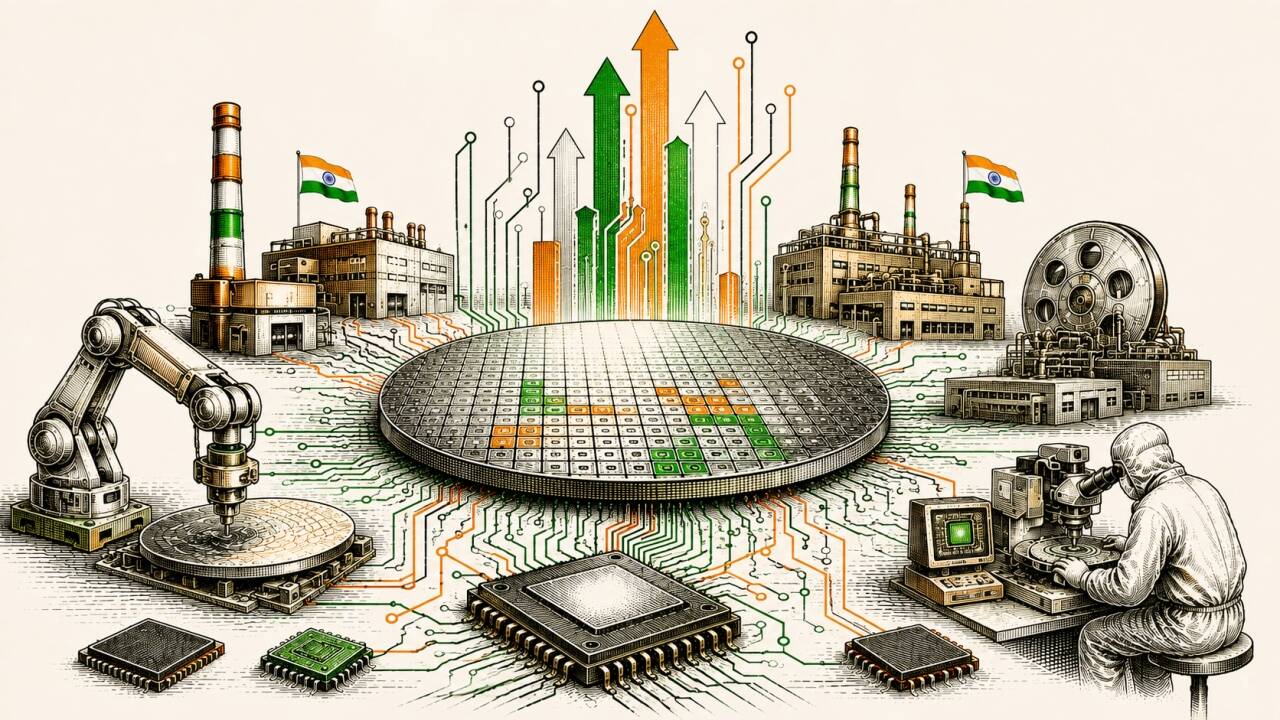
India is making a push to become a major semiconductor hub, a crucial component in modern electronics, electric vehicles, and artificial intelligence. Semiconductors are a vital part of the global technology ecosystem, and having a self-reliant semiconductor industry is essential for India's economic and technological growth.
The Indian government has recognized the importance of semiconductors and has been taking steps to promote the development of a domestic semiconductor industry. This includes providing incentives for companies to set up manufacturing facilities in India and investing in research and development.
The global semiconductor market is highly competitive, with countries like Taiwan, South Korea, and the United States already established as major players. However, India has a number of advantages that could help it become a significant player in the industry, including a large and skilled workforce, a growing domestic market, and a favorable business environment.
One of the key challenges facing India's semiconductor ambitions is the need for significant investment in infrastructure and technology. Building a world-class semiconductor industry will require substantial investment in areas like manufacturing facilities, research and development, and talent acquisition.
Despite these challenges, there are already signs that India is making progress in the semiconductor sector. A number of major companies, including Intel and Samsung, have already set up operations in India, and there are several domestic companies that are working on developing semiconductor technology.
In the current globally uncertain economic and geopolitical environment, having a self-reliant semiconductor ecosystem is more important than ever. India's push to become a major semiconductor hub is a key part of its strategy to reduce its dependence on foreign technology and promote domestic economic growth.
The development of a domestic semiconductor industry could have a number of benefits for India, including the creation of jobs, the promotion of economic growth, and the reduction of dependence on foreign technology. It could also help to promote the development of other industries, such as electronics and electric vehicles, which rely heavily on semiconductors.
Overall, India's ambition to become a major semiconductor hub is an exciting and challenging opportunity. While there are certainly obstacles to overcome, the potential benefits of success make it an effort worth pursuing.
The Indian government's push to promote the development of a domestic semiconductor industry is a key part of its strategy to promote economic growth and reduce dependence on foreign technology. As the global semiconductor market continues to evolve, it will be interesting to see whether India can succeed in its ambitions to become a major player in the industry.
In conclusion, India's semiconductor ambitions are a crucial part of its strategy to promote economic growth and reduce dependence on foreign technology. With the right investment and support, India has the potential to become a major player in the global semiconductor industry.
Frequently asked questions
Why is a self-reliant semiconductor ecosystem important for India?
A self-reliant semiconductor ecosystem is important for India because it will reduce the country's dependence on foreign technology and promote domestic economic growth.
What are the challenges facing India's semiconductor ambitions?
The challenges facing India's semiconductor ambitions include the need for significant investment in infrastructure and technology, as well as competition from established players in the industry.