900-Year-Old Sculpture Identified As Gayatri
A 12th-century sculpture in Dhar, Madhya Pradesh, has been reidentified as Gayatri, not Saraswati. Digital technology helped uncover the truth.
'%3E%3Crect%20width%3D'96'%20height%3D'96'%20fill%3D'%23B3261E'%2F%3E%3Ccircle%20cx%3D'30'%20cy%3D'24'%20r%3D'44'%20fill%3D'%23fff'%20opacity%3D'.12'%2F%3E%3Ccircle%20cx%3D'60'%20cy%3D'74'%20r%3D'40'%20fill%3D'%23000'%20opacity%3D'.10'%2F%3E%3C%2Fg%3E%3Cg%20fill%3D'%23fff'%3E%3Crect%20x%3D'29'%20y%3D'49'%20width%3D'8'%20height%3D'19'%20rx%3D'1'%2F%3E%3Crect%20x%3D'39'%20y%3D'40'%20width%3D'9'%20height%3D'28'%20rx%3D'1'%2F%3E%3Crect%20x%3D'50'%20y%3D'45'%20width%3D'8'%20height%3D'23'%20rx%3D'1'%2F%3E%3Crect%20x%3D'60'%20y%3D'53'%20width%3D'7'%20height%3D'15'%20rx%3D'1'%2F%3E%3Crect%20x%3D'41'%20y%3D'34'%20width%3D'5'%20height%3D'6'%2F%3E%3C%2Fg%3E%3C%2Fsvg%3E)
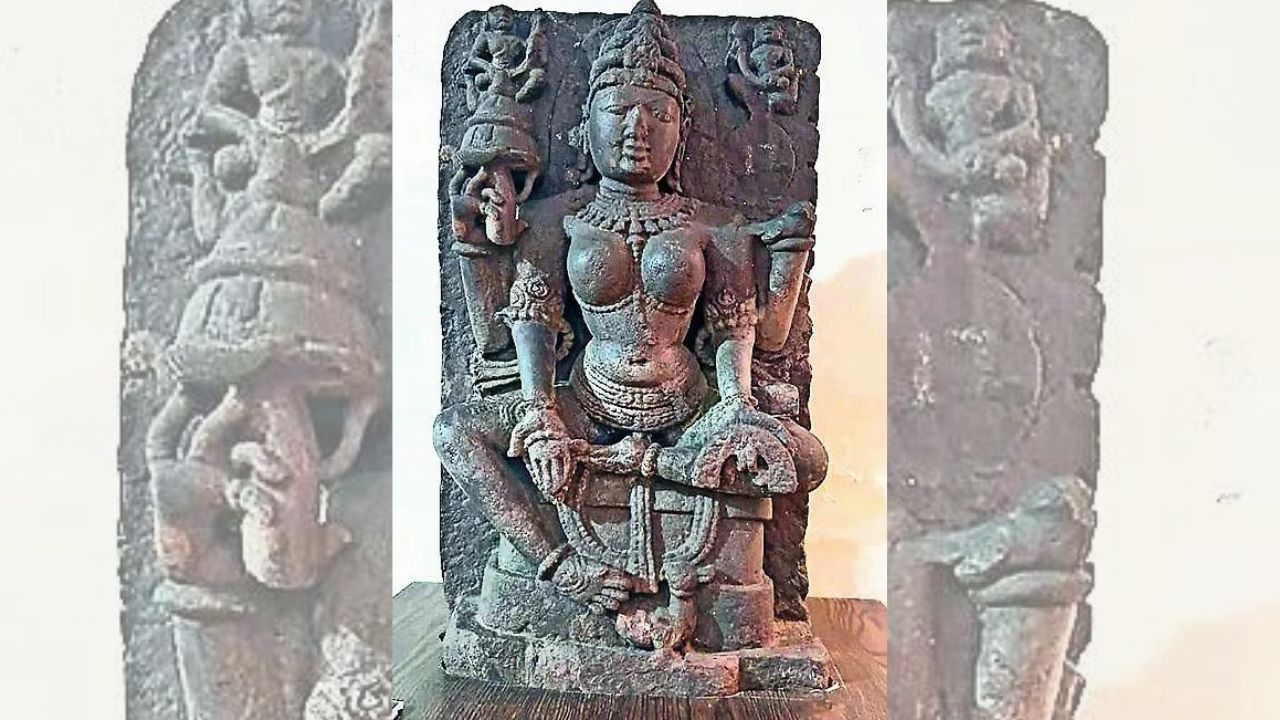
A significant discovery has been made in Dhar, Madhya Pradesh, where a 12th-century sculpture previously thought to be of Saraswati has been correctly identified as Gayatri. This revelation came about through the use of digital documentation and 3D mapping, which revealed iconographic clues that had been missed for centuries.
The sculpture, which dates back to the 12th century, was found to lack a veena, a common attribute associated with Saraswati. This absence, combined with other iconographic details, led experts to conclude that the sculpture is actually a rare representation of Gayatri, the goddess embodying Vedic wisdom.
The reidentification of this sculpture is a significant find, not only because it sheds new light on the history of the region but also because it highlights the importance of digital technology in uncovering the truth about our cultural heritage. The use of 3D mapping and digital documentation allowed experts to examine the sculpture in unprecedented detail, revealing clues that had been hidden in plain sight for centuries.
The discovery of this sculpture is also significant because it represents a rare image of Gayatri. The goddess is an important figure in Hindu mythology, and this sculpture provides a unique insight into the way she was revered and represented in the past.
The rediscovered icon is now being celebrated as part of Madhya Pradesh's digital heritage mission. This initiative aims to use digital technology to preserve and promote the state's rich cultural heritage, and the reidentification of this sculpture is a major milestone in this effort.
The digital heritage mission is an important step forward in the preservation of India's cultural heritage. By using digital technology to document and preserve our cultural artifacts, we can ensure that they are protected for future generations and made accessible to a wider audience.
In the case of the Gayatri sculpture, digital technology has not only helped to uncover the truth about its identity but also provided a new way of experiencing and interacting with the artifact. The 3D mapping and digital documentation of the sculpture allow viewers to examine it in detail, from any angle, and provide a level of accessibility that was previously impossible.
The reidentification of the Gayatri sculpture is a significant discovery that highlights the importance of digital technology in preserving and promoting our cultural heritage. It is a testament to the power of innovation and collaboration in uncovering the truth about our past and preserving it for the future.
The discovery is also a reminder of the rich cultural heritage of Madhya Pradesh and the importance of preserving and promoting it. The state is home to a wealth of cultural artifacts and historical sites, and initiatives like the digital heritage mission are crucial in ensuring that these treasures are protected and made accessible to a wider audience.
In conclusion, the reidentification of the 12th-century sculpture as Gayatri is a significant find that highlights the importance of digital technology in preserving and promoting our cultural heritage. It is a testament to the power of innovation and collaboration in uncovering the truth about our past and preserving it for the future.
The significance of this discovery extends beyond the academic and cultural communities, as it represents a major milestone in the preservation of India's cultural heritage. It is a reminder of the importance of preserving and promoting our cultural artifacts and historical sites, and the role that digital technology can play in this effort.
As India continues to evolve and grow, it is essential that we prioritize the preservation of our cultural heritage. Initiatives like the digital heritage mission are crucial in ensuring that our cultural artifacts and historical sites are protected and made accessible to a wider audience. The reidentification of the Gayatri sculpture is a significant step forward in this effort, and it is a testament to the power of innovation and collaboration in preserving our cultural heritage for future generations.