Volkswagen To Cut 100,000 Jobs By 2030
Volkswagen plans to cut 100,000 jobs, 15% of workforce. Job losses due to economic conditions.
'%3E%3Crect%20width%3D'96'%20height%3D'96'%20fill%3D'%23B3261E'%2F%3E%3Ccircle%20cx%3D'30'%20cy%3D'24'%20r%3D'44'%20fill%3D'%23fff'%20opacity%3D'.12'%2F%3E%3Ccircle%20cx%3D'60'%20cy%3D'74'%20r%3D'40'%20fill%3D'%23000'%20opacity%3D'.10'%2F%3E%3C%2Fg%3E%3Cg%20fill%3D'%23fff'%3E%3Crect%20x%3D'29'%20y%3D'49'%20width%3D'8'%20height%3D'19'%20rx%3D'1'%2F%3E%3Crect%20x%3D'39'%20y%3D'40'%20width%3D'9'%20height%3D'28'%20rx%3D'1'%2F%3E%3Crect%20x%3D'50'%20y%3D'45'%20width%3D'8'%20height%3D'23'%20rx%3D'1'%2F%3E%3Crect%20x%3D'60'%20y%3D'53'%20width%3D'7'%20height%3D'15'%20rx%3D'1'%2F%3E%3Crect%20x%3D'41'%20y%3D'34'%20width%3D'5'%20height%3D'6'%2F%3E%3C%2Fg%3E%3C%2Fsvg%3E)
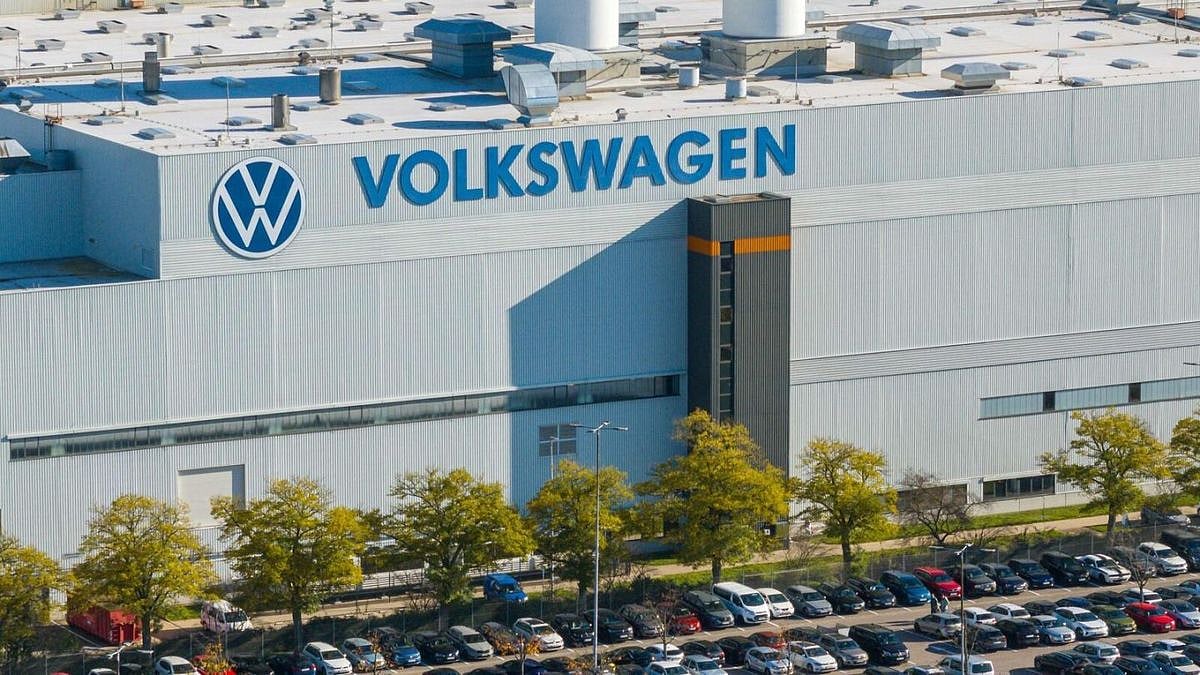
Volkswagen, the German carmaker, has announced plans to eliminate 100,000 jobs by 2030, marking the largest restructuring drive in the global car industry's history. The company's management and labour representatives have signed off on the plan, which will reduce the automaker's workforce by nearly 15%.
The job cuts will be implemented in two phases, with 50,000 roles already planned for elimination and an additional 50,000 positions to be cut. The company cited prevailing economic conditions as the reason for the move, including American tariffs, inconsistent demand for its electric vehicle lineup, and intensifying rivalry from Chinese manufacturers.
Volkswagen's supervisory board, which is split evenly between labour and shareholder representatives, has approved the plan. The company's CEO, Oliver Blume, described the unanimous approval as a strong signal for the group's future. However, the run-up to the agreement was marked by tensions between unions and executives, with unions accusing management of withholding information from staff.
The job cuts will affect several of Volkswagen's plants in Germany, including those in Hannover, Emden, Zwickau, and Neckarsulm. The long-term viability of these plants remains uncertain, and the company is exploring alternative purposes for the sites rather than committing to outright closures.
The impact of the job cuts will be significant, with the affected regions likely to suffer economically. Martin Lehmann, an employee at the Zwickau site, warned that the factory and the local supply chain built around it function as the economic backbone of the area.
Volkswagen's decision to cut jobs is part of a larger trend in the automotive industry, which is facing significant challenges in the transition to electric vehicles. The company's move is expected to have far-reaching consequences for the industry and the economy as a whole.
In India, Volkswagen's subsidiary, Skoda Auto Volkswagen, has started production of its new 'Taigun' model at its plant in Pune. However, the job cuts announced by the parent company are unlikely to have a direct impact on the Indian operations.
The job cuts will represent the largest restructuring drive in the global car industry's history, surpassing the 50,000 positions General Motors shed following its 2009 bankruptcy filing. Once finalized, the 100,000 job losses will have a significant impact on Volkswagen's global headcount and the automotive industry as a whole.
The decision to cut jobs is a significant one, and it will have far-reaching consequences for the industry and the economy. As the automotive industry continues to evolve, companies like Volkswagen will need to adapt to changing market conditions and technological advancements.
In conclusion, Volkswagen's decision to cut 100,000 jobs by 2030 is a significant move that will have far-reaching consequences for the industry and the economy. The company's decision is part of a larger trend in the automotive industry, which is facing significant challenges in the transition to electric vehicles.
Frequently asked questions
Why is Volkswagen cutting jobs?
Volkswagen is cutting jobs due to prevailing economic conditions, including American tariffs, inconsistent demand for its electric vehicle lineup, and intensifying rivalry from Chinese manufacturers.
How many jobs will be cut?
Volkswagen plans to eliminate 100,000 jobs by 2030, which represents nearly 15% of its workforce.