PM Modi Gifts Indian Crafts To Uzbek, Kyrgyz Leaders
PM Modi presents traditional Indian gifts, including tea and silk, to Uzbek and Kyrgyz leaders at SCO Summit.
'%3E%3Crect%20width%3D'96'%20height%3D'96'%20fill%3D'%234A235A'%2F%3E%3Ccircle%20cx%3D'30'%20cy%3D'24'%20r%3D'44'%20fill%3D'%23fff'%20opacity%3D'.12'%2F%3E%3Ccircle%20cx%3D'60'%20cy%3D'74'%20r%3D'40'%20fill%3D'%23000'%20opacity%3D'.10'%2F%3E%3C%2Fg%3E%3Cg%20fill%3D'none'%20stroke%3D'%23fff'%20stroke-width%3D'3'%3E%3Ccircle%20cx%3D'48'%20cy%3D'48'%20r%3D'16'%2F%3E%3Cellipse%20cx%3D'48'%20cy%3D'48'%20rx%3D'6.5'%20ry%3D'16'%2F%3E%3Cline%20x1%3D'32'%20y1%3D'42'%20x2%3D'64'%20y2%3D'42'%2F%3E%3Cline%20x1%3D'32'%20y1%3D'54'%20x2%3D'64'%20y2%3D'54'%2F%3E%3C%2Fg%3E%3C%2Fsvg%3E)
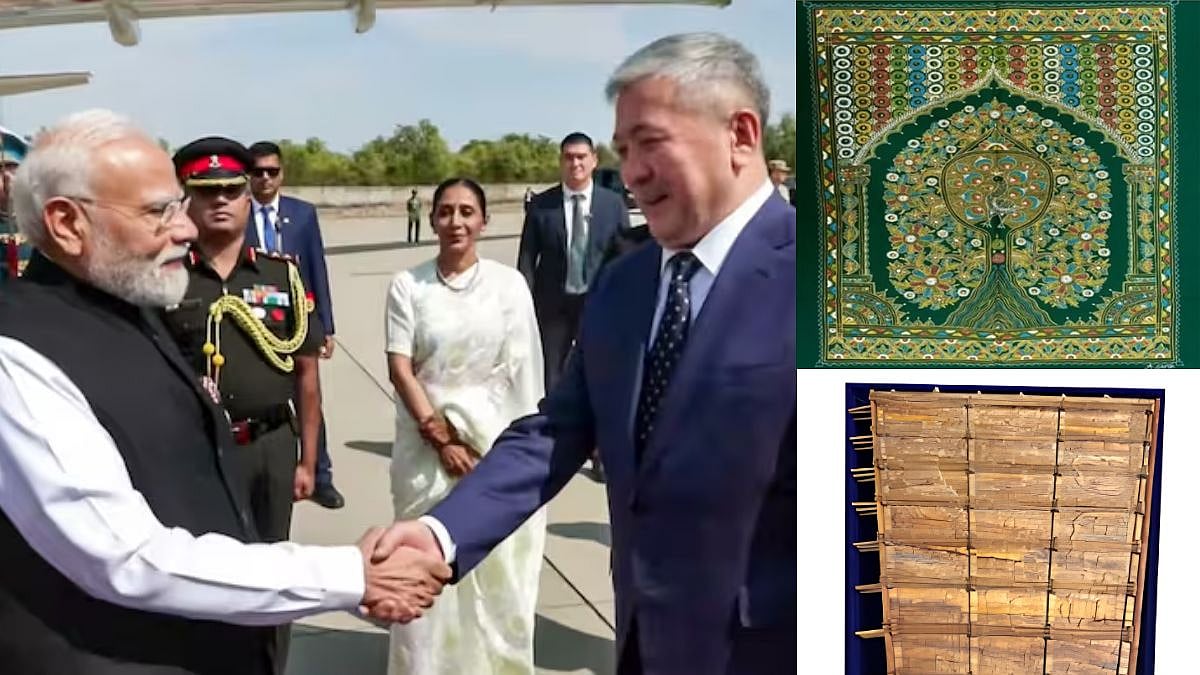
Prime Minister Narendra Modi presented a selection of traditional Indian products to the leaders of Uzbekistan and Kyrgyzstan on the sidelines of the Shanghai Cooperation Organisation (SCO) Summit. The gifts showcased India's rich cultural heritage and regional traditions.
The gifts included premium Kangra tea from Himachal Pradesh, known for its distinctive aroma and delicate flavour. This tea has a long history and is recognised for its unique character. By presenting Kangra tea, India's renowned tea-growing heritage found a place in the diplomatic exchange.
PM Modi also gifted a Ladakhi Tsung-dul Banket to the President of Kyrgyzstan. Another notable gift was Sandalwood Shata Tantri, a traditional craft associated with India's intricate sandalwood artistry. Sandalwood carving has been an important part of Indian handicraft traditions for centuries.
A marble Inlay Casket with a Banarasi silk stole was presented to the spouse of the President of Uzbekistan. The Banarasi silk stole represents the centuries-old weaving traditions of Varanasi in Uttar Pradesh. Banarasi silk is celebrated for its rich texture, intricate motifs, and elaborate weaving techniques.
The choice of these gifts reflects India's growing emphasis on using traditional crafts, textiles, and regional products as part of cultural diplomacy. Rather than being merely ceremonial presents, such items offer international leaders an insight into India's diverse artistic and culinary traditions.
The exchange took place during the SCO Summit, an important multilateral platform that brings together countries across Eurasia to discuss issues including regional security, economic cooperation, and connectivity. The summit provides a platform for India to strengthen its ties with other member countries and promote its cultural heritage.
The gifts presented by PM Modi are a testament to India's rich cultural diversity and its commitment to promoting traditional crafts and textiles. The use of cultural diplomacy as a tool for international relations is a significant aspect of India's foreign policy.
In recent years, India has been actively promoting its cultural heritage and traditional crafts through various initiatives. The presentation of these gifts to the leaders of Uzbekistan and Kyrgyzstan is a part of this effort.
The SCO Summit is an important platform for India to engage with other member countries and promote its national interests. The summit provides an opportunity for India to strengthen its ties with other countries and promote regional cooperation.
In conclusion, the gifts presented by PM Modi to the leaders of Uzbekistan and Kyrgyzstan are a significant aspect of India's cultural diplomacy efforts. The use of traditional crafts, textiles, and regional products as gifts reflects India's commitment to promoting its cultural heritage and strengthening its ties with other countries.
The significance of these gifts lies in their ability to promote India's cultural diversity and traditional crafts. The gifts are not just ceremonial presents but also offer an insight into India's rich cultural heritage. The presentation of these gifts is a part of India's efforts to promote cultural diplomacy and strengthen its ties with other countries.
Overall, the gifts presented by PM Modi are a testament to India's rich cultural diversity and its commitment to promoting traditional crafts and textiles. The use of cultural diplomacy as a tool for international relations is a significant aspect of India's foreign policy, and the presentation of these gifts is a part of this effort.
Frequently asked questions
What gifts did PM Modi present to the leaders of Uzbekistan and Kyrgyzstan?
PM Modi presented traditional Indian gifts, including premium Kangra tea, a Ladakhi Tsung-dul Banket, Sandalwood Shata Tantri, and a marble Inlay Casket with a Banarasi silk stole.
Why did PM Modi present these gifts to the leaders of Uzbekistan and Kyrgyzstan?
The gifts were presented as part of India's cultural diplomacy efforts to promote its traditional crafts, textiles, and regional products, and to strengthen its ties with other countries.