Nalsar Students Oppose CJI as Convocation Guest
Nalsar students object to CJI Surya Kant as chief guest, cite concerns over remarks.
'%3E%3Crect%20width%3D'96'%20height%3D'96'%20fill%3D'%231A5276'%2F%3E%3Ccircle%20cx%3D'30'%20cy%3D'24'%20r%3D'44'%20fill%3D'%23fff'%20opacity%3D'.12'%2F%3E%3Ccircle%20cx%3D'60'%20cy%3D'74'%20r%3D'40'%20fill%3D'%23000'%20opacity%3D'.10'%2F%3E%3C%2Fg%3E%3Cg%20fill%3D'%23fff'%3E%3Cpath%20d%3D'M31%2041%20L48%2031%20L65%2041%20Z'%2F%3E%3Crect%20x%3D'33'%20y%3D'43'%20width%3D'4'%20height%3D'17'%2F%3E%3Crect%20x%3D'41'%20y%3D'43'%20width%3D'4'%20height%3D'17'%2F%3E%3Crect%20x%3D'51'%20y%3D'43'%20width%3D'4'%20height%3D'17'%2F%3E%3Crect%20x%3D'59'%20y%3D'43'%20width%3D'4'%20height%3D'17'%2F%3E%3Crect%20x%3D'30'%20y%3D'62'%20width%3D'36'%20height%3D'4'%20rx%3D'1'%2F%3E%3C%2Fg%3E%3C%2Fsvg%3E)
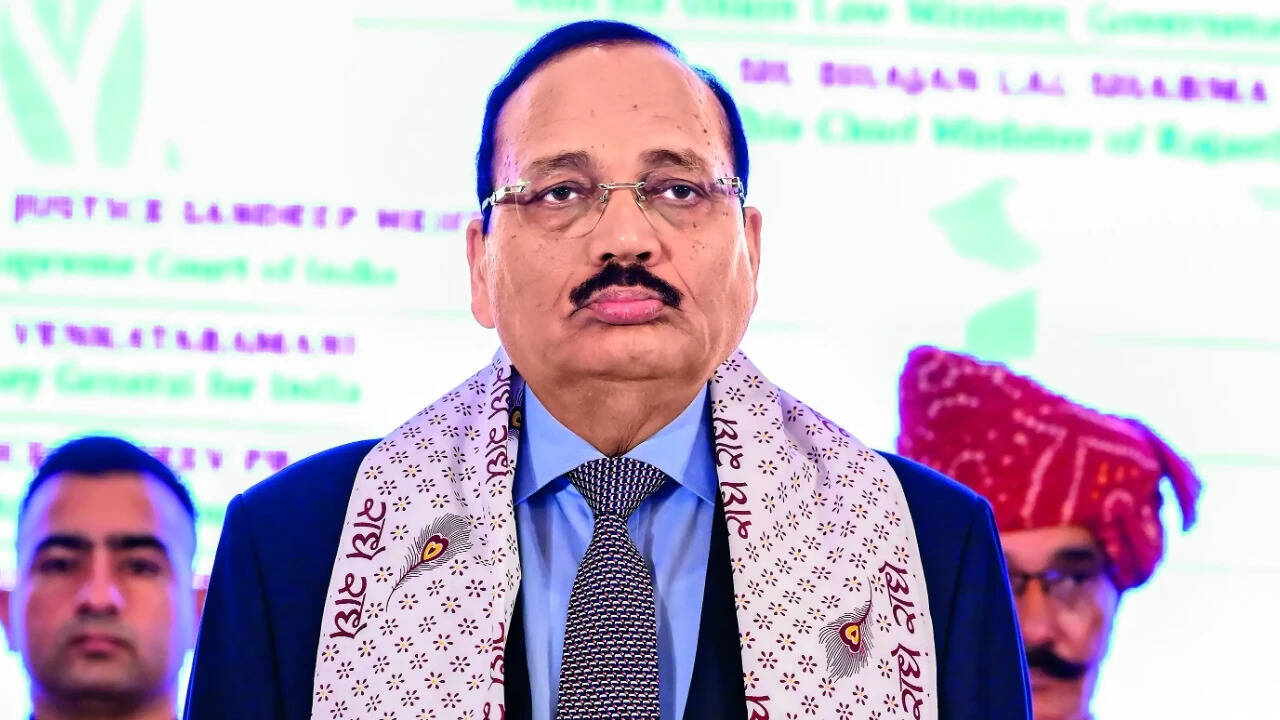
Nalsar University students have expressed strong objections to the proposed invitation of Chief Justice Surya Kant as the chief guest for their upcoming convocation ceremony. The students' concerns stem from reported remarks made by the Chief Justice during a recent court hearing, which they believe are at odds with the university's values and the principles enshrined in the Indian Constitution.
The students have submitted multiple representations to the university administration, outlining their objections and requesting that the invitation be reconsidered. This move is seen as a significant gesture of dissent, highlighting the students' commitment to upholding the values of the institution and the Constitution.
The university administration has yet to respond to the students' concerns, leaving the situation uncertain. The students' decision to speak out against the invitation is a testament to their engagement with contemporary issues and their willingness to take a stand on matters of principle.
Nalsar University, a premier institution for legal education in India, has a long history of fostering critical thinking and intellectual curiosity among its students. The current controversy surrounding the invitation of the Chief Justice as convocation guest has sparked a debate about the role of institutions in promoting values of justice, equality, and freedom of speech.
The students' objections to the Chief Justice's remarks are rooted in their understanding of the Constitution and its emphasis on social justice and human rights. By speaking out against the invitation, the students are exercising their right to free speech and demonstrating their commitment to the values of the institution.
The incident has also raised questions about the relationship between the judiciary and academic institutions. While the judiciary plays a crucial role in upholding the law and ensuring justice, academic institutions have a responsibility to promote critical thinking and intellectual freedom.
As the situation unfolds, it remains to be seen how the university administration will respond to the students' concerns. The decision to invite the Chief Justice as convocation guest has sparked a controversy that goes beyond the confines of the university, highlighting the complex interplay between institutions, values, and principles in Indian society.
In the broader context, this incident reflects the ongoing debates about the role of institutions in promoting social justice and human rights. The students' actions demonstrate their awareness of these issues and their willingness to engage with them in a meaningful way.
Ultimately, the outcome of this controversy will depend on the university administration's response to the students' concerns. However, the incident has already sparked a significant debate about the values and principles that underlie Indian society, and the role of institutions in promoting them.
The students' objections to the Chief Justice's remarks have highlighted the importance of critical thinking and intellectual freedom in academic institutions. As the situation unfolds, it will be important to watch how the university administration navigates this complex issue, balancing the need to uphold institutional values with the need to respect the principles of free speech and intellectual freedom.
In conclusion, the controversy surrounding the invitation of the Chief Justice as convocation guest at Nalsar University has sparked a significant debate about the role of institutions in promoting values of justice, equality, and freedom of speech. The students' actions demonstrate their commitment to these values and their willingness to engage with contemporary issues in a meaningful way.
Frequently asked questions
Why are Nalsar students opposing the CJI as convocation guest?
The students are opposing the CJI due to concerns over his reported remarks during a recent court hearing, which they believe conflict with university values and constitutional principles.
Has the university administration responded to the students' concerns?
No, the university administration has not yet responded to the students' concerns.