China Develops Hybrid Rice with High Yields
China's new hybrid rice ensures high yields, cuts seed costs. Farmers can reuse seeds, lowering production costs.
'%3E%3Crect%20width%3D'96'%20height%3D'96'%20fill%3D'%234A235A'%2F%3E%3Ccircle%20cx%3D'30'%20cy%3D'24'%20r%3D'44'%20fill%3D'%23fff'%20opacity%3D'.12'%2F%3E%3Ccircle%20cx%3D'60'%20cy%3D'74'%20r%3D'40'%20fill%3D'%23000'%20opacity%3D'.10'%2F%3E%3C%2Fg%3E%3Cg%20fill%3D'none'%20stroke%3D'%23fff'%20stroke-width%3D'3'%3E%3Ccircle%20cx%3D'48'%20cy%3D'48'%20r%3D'16'%2F%3E%3Cellipse%20cx%3D'48'%20cy%3D'48'%20rx%3D'6.5'%20ry%3D'16'%2F%3E%3Cline%20x1%3D'32'%20y1%3D'42'%20x2%3D'64'%20y2%3D'42'%2F%3E%3Cline%20x1%3D'32'%20y1%3D'54'%20x2%3D'64'%20y2%3D'54'%2F%3E%3C%2Fg%3E%3C%2Fsvg%3E)
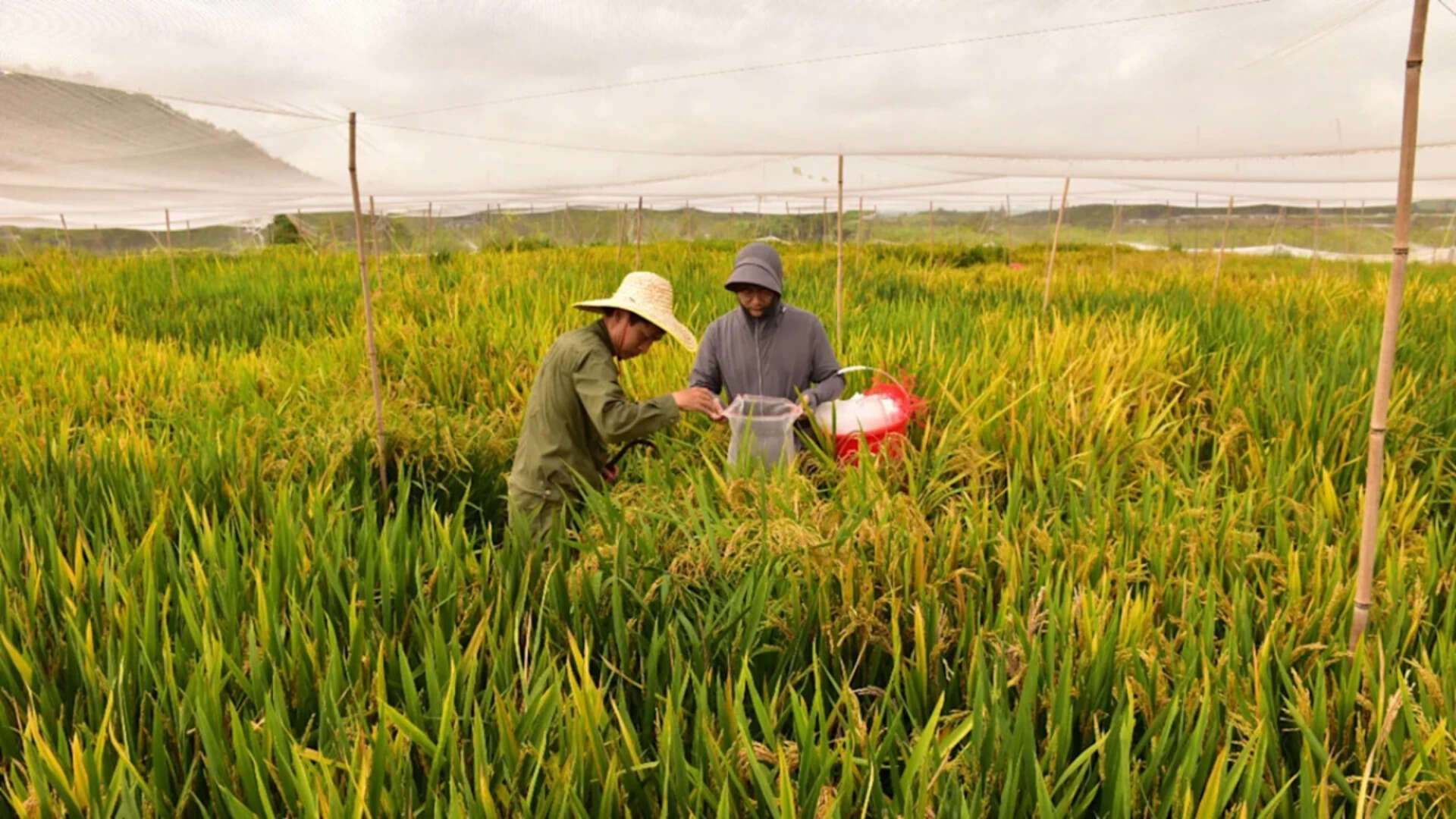
Chinese scientists have made a significant breakthrough in agricultural technology by introducing a self-cloning hybrid rice system. This innovative method allows farmers to reuse seeds, reducing the need for yearly seed purchases and significantly lowering production costs.
The new hybrid rice system ensures impressive yields across generations, making it a crucial development in enhancing food security on both national and global scales. By allowing farmers to reuse seeds, the system cuts down on the financial burden of purchasing new seeds every year.
The self-cloning hybrid rice system is expected to play a vital role in bolstering China's agricultural strength. China is one of the world's largest producers of rice, and this development is likely to have a significant impact on the country's agricultural industry.
The new system is also expected to have a positive impact on global food security. With the world's population projected to reach 9 billion by 2050, finding ways to increase food production while reducing costs is essential. The self-cloning hybrid rice system is a significant step in this direction.
China has been at the forefront of agricultural innovation in recent years, with a focus on developing new technologies to improve crop yields and reduce production costs. The country has made significant investments in agricultural research and development, and the new hybrid rice system is a testament to the success of these efforts.
The development of the self-cloning hybrid rice system is also expected to have a positive impact on the environment. By reducing the need for yearly seed purchases, the system can help reduce the amount of waste generated by the agricultural industry. Additionally, the system can help reduce the use of pesticides and other chemicals, which can have a negative impact on the environment.
Overall, the introduction of the self-cloning hybrid rice system is a significant development in the field of agriculture. It has the potential to enhance food security, reduce production costs, and promote sustainable agriculture. As the world's population continues to grow, innovations like this will be essential in ensuring that everyone has access to nutritious and affordable food.
The impact of this development will be felt not only in China but also around the world. As the global population continues to grow, finding ways to increase food production while reducing costs is essential. The self-cloning hybrid rice system is a significant step in this direction, and it is likely to have a major impact on the global agricultural industry.
In conclusion, the new hybrid rice system developed by Chinese scientists is a groundbreaking innovation that has the potential to transform the agricultural industry. Its ability to ensure high yields while allowing farmers to reuse seeds makes it an essential tool in the fight against hunger and poverty. As the world continues to grapple with the challenges of food security, innovations like this will be crucial in ensuring that everyone has access to nutritious and affordable food.
Frequently asked questions
What is the significance of China's new hybrid rice system?
The new hybrid rice system ensures high yields across generations and allows farmers to reuse seeds, reducing production costs and enhancing food security.
How will the new hybrid rice system impact the environment?
The system can help reduce waste generated by the agricultural industry and reduce the use of pesticides and other chemicals, promoting sustainable agriculture.