US To Control 80% Of Global Computing Power By 2028
The US will dominate global computing power, Treasury Secretary says. AI growth accelerates.
'%3E%3Crect%20width%3D'96'%20height%3D'96'%20fill%3D'%234A235A'%2F%3E%3Ccircle%20cx%3D'30'%20cy%3D'24'%20r%3D'44'%20fill%3D'%23fff'%20opacity%3D'.12'%2F%3E%3Ccircle%20cx%3D'60'%20cy%3D'74'%20r%3D'40'%20fill%3D'%23000'%20opacity%3D'.10'%2F%3E%3C%2Fg%3E%3Cg%20fill%3D'none'%20stroke%3D'%23fff'%20stroke-width%3D'3'%3E%3Ccircle%20cx%3D'48'%20cy%3D'48'%20r%3D'16'%2F%3E%3Cellipse%20cx%3D'48'%20cy%3D'48'%20rx%3D'6.5'%20ry%3D'16'%2F%3E%3Cline%20x1%3D'32'%20y1%3D'42'%20x2%3D'64'%20y2%3D'42'%2F%3E%3Cline%20x1%3D'32'%20y1%3D'54'%20x2%3D'64'%20y2%3D'54'%2F%3E%3C%2Fg%3E%3C%2Fsvg%3E)
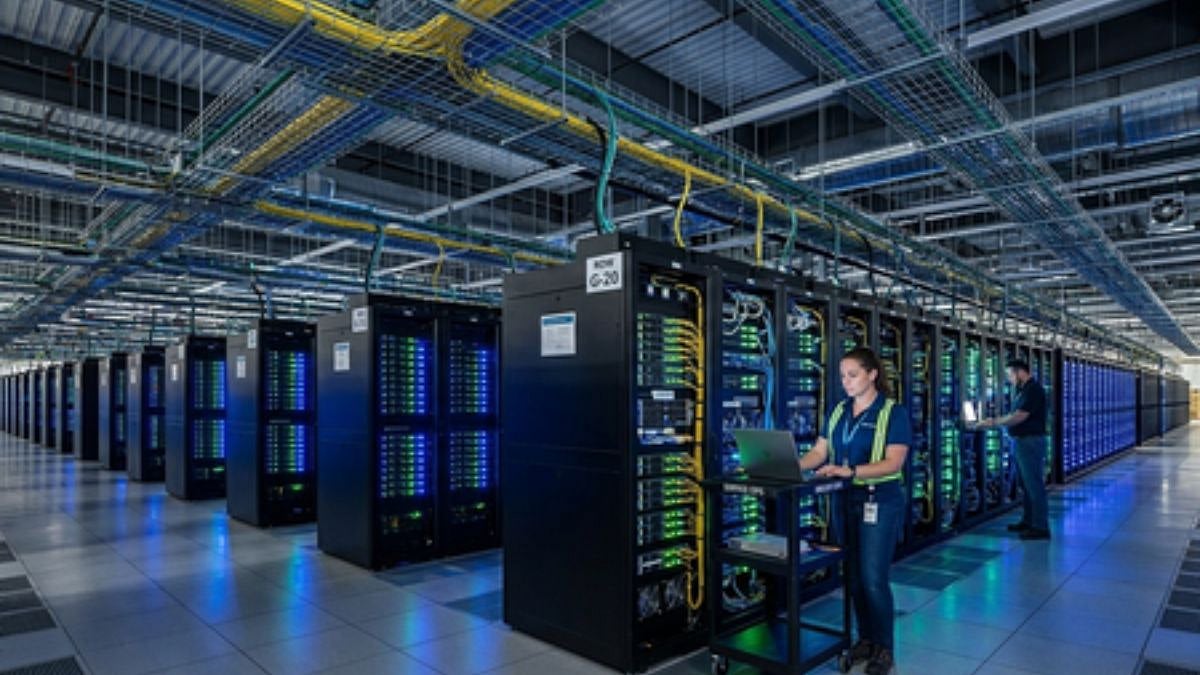
The United States is set to command approximately 80% of global computing power by 2028, according to Treasury Secretary Scott Bessent. This significant increase in computing capacity is attributed to the country's lead in Artificial Intelligence (AI) and its rising dominance in the field.
Speaking at a fireside conversation in Asheville, North Carolina, Bessent described the US as the world's AI superpower. He noted that the country's share of global computing capacity has risen rapidly, from 60% in 2025 to a projected 80% by 2028.
Bessent linked this expansion to President Donald Trump's regulatory, tax, and energy policies, which have created greater certainty for businesses investing in factories, technology, and infrastructure. He stated that these policies have laid the groundwork for the US economy and its growing dominance in AI.
The US is also benefiting from its position as a major energy producer and exporter, which has contributed to its growth in AI. Additionally, AI is becoming increasingly integrated into various sectors, including manufacturing, pharmaceuticals, and supply-chain management.
Private-sector representatives participated in a G20 session for the first time, discussing how they are integrating AI into their businesses. Bessent noted that this integration is resulting in increased productivity and precision manufacturing, which will contribute to employment and industrial expansion.
The transformation is still at an early stage, but Bessent believes that it will create new jobs and drive economic growth. He also pointed to a technology track being held in Chapel Hill, which showcases American technology companies and their innovations in AI.
The US AI infrastructure investment is set to surpass $1.4 trillion next year, fueling a new industrial revolution. This growth is expected to have a significant impact on the global economy and cement the US's position as a leader in AI.
The US's growing dominance in AI has significant implications for the global economy and the future of work. As AI continues to transform industries and create new opportunities, the US is well-positioned to reap the benefits of this growth.
In conclusion, the US's projected control of 80% of global computing power by 2028 is a significant milestone in its growing dominance in AI. With its strong economy, innovative technology sector, and favorable business environment, the US is poised to continue its lead in AI and drive economic growth in the years to come.
The impact of this growth will be felt across various sectors, from manufacturing to pharmaceuticals, and will create new opportunities for businesses and individuals alike. As the US continues to invest in AI and drive innovation, it is likely that its dominance in the field will only continue to grow.
The future of AI is exciting and full of possibilities, and the US is at the forefront of this revolution. With its strong foundation in technology and innovation, the US is well-positioned to continue its lead in AI and drive economic growth in the years to come.
As the world becomes increasingly dependent on technology and AI, the US's growing dominance in the field will have significant implications for the global economy and the future of work. It is likely that the US will continue to be a leader in AI and drive innovation in the years to come.
In the end, the US's projected control of 80% of global computing power by 2028 is a significant milestone in its growing dominance in AI. With its strong economy, innovative technology sector, and favorable business environment, the US is poised to continue its lead in AI and drive economic growth in the years to come.
Frequently asked questions
What percentage of global computing power will the US control by 2028?
The US is projected to control approximately 80% of global computing power by 2028.
What is driving the US's growth in AI?
The US's growth in AI is driven by its strong economy, innovative technology sector, and favorable business environment, as well as President Donald Trump's regulatory, tax, and energy policies.