Vasai Artist Creates Lord Vitthal Masterpiece on Peacock Feather
Artist Kaushik Dilip Jadhav crafts stunning painting, blending spirituality and art.
'%3E%3Crect%20width%3D'96'%20height%3D'96'%20fill%3D'%23B3261E'%2F%3E%3Ccircle%20cx%3D'30'%20cy%3D'24'%20r%3D'44'%20fill%3D'%23fff'%20opacity%3D'.12'%2F%3E%3Ccircle%20cx%3D'60'%20cy%3D'74'%20r%3D'40'%20fill%3D'%23000'%20opacity%3D'.10'%2F%3E%3C%2Fg%3E%3Cg%20fill%3D'%23fff'%3E%3Crect%20x%3D'29'%20y%3D'49'%20width%3D'8'%20height%3D'19'%20rx%3D'1'%2F%3E%3Crect%20x%3D'39'%20y%3D'40'%20width%3D'9'%20height%3D'28'%20rx%3D'1'%2F%3E%3Crect%20x%3D'50'%20y%3D'45'%20width%3D'8'%20height%3D'23'%20rx%3D'1'%2F%3E%3Crect%20x%3D'60'%20y%3D'53'%20width%3D'7'%20height%3D'15'%20rx%3D'1'%2F%3E%3Crect%20x%3D'41'%20y%3D'34'%20width%3D'5'%20height%3D'6'%2F%3E%3C%2Fg%3E%3C%2Fsvg%3E)
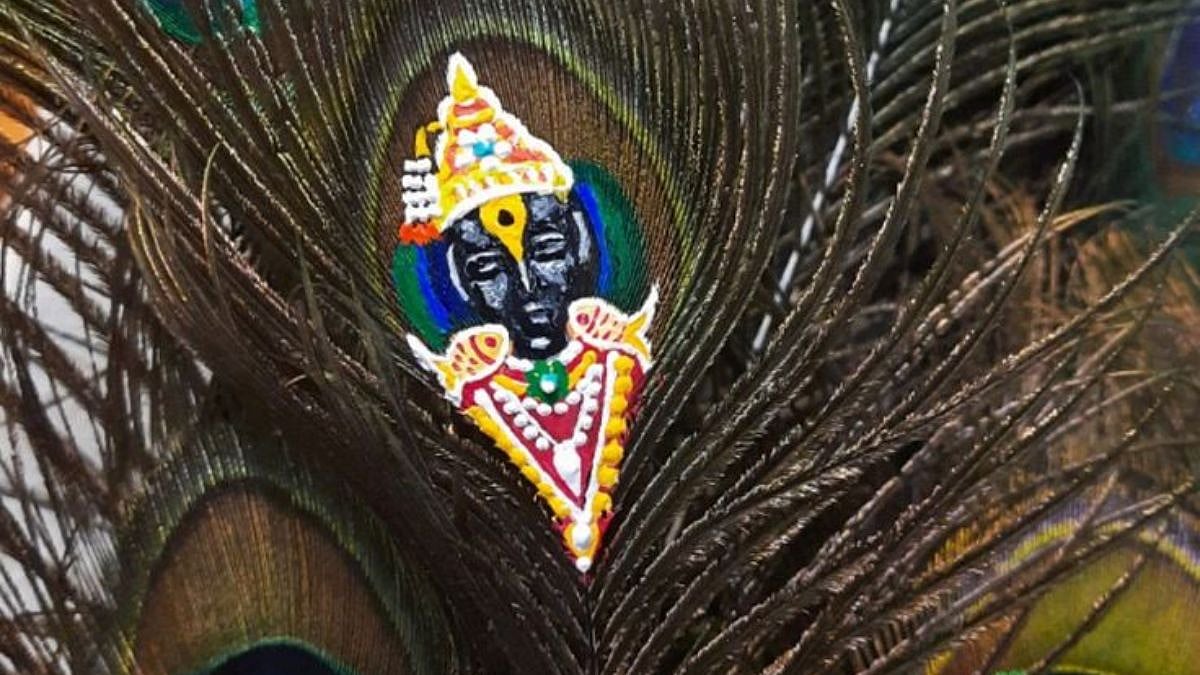
On the occasion of Ashadhi Ekadashi, a significant festival in the Warkari tradition, artist Kaushik Dilip Jadhav from Bhatane village in Vasai has created an impressive painting of Lord Vitthal on a peacock feather. This unique artwork was completed within just half an hour using watercolours.
The peacock feather, considered a symbol of beauty, purity, and nature in Indian culture, provided a delicate surface for the artist's brushstrokes. By maintaining the natural texture and colour patterns of the feather, Jadhav has demonstrated remarkable skill in creating such a detailed painting on a tiny surface.
The artwork reflects the artist's creativity, patience, and mastery of painting, as well as his devotion to the Warkari tradition. The Warkari tradition, which originated in Maharashtra, emphasizes the importance of devotion, simplicity, and self-discipline. The tradition is known for its vibrant festivals and processions, including the Ashadhi Ekadashi festival, which commemorates the arrival of pilgrims in Pandharpur.
Ashadhi Ekadashi is a significant festival in the Hindu calendar, typically celebrated in the month of July. It is a time for spiritual reflection, prayer, and devotion, and is often marked by processions, music, and dance. The festival is particularly significant in Maharashtra, where it is celebrated with great fervour and enthusiasm.
Jadhav's artwork has attracted the attention of art enthusiasts and is receiving appreciation at the local level. The unique creation is a testament to the artist's innovative approach to traditional themes and his ability to blend spirituality with artistic excellence.
The use of peacock feathers in art is not uncommon, but creating a detailed painting on such a delicate surface is a rare feat. Jadhav's achievement is a reflection of his dedication to his craft and his willingness to push the boundaries of traditional art forms.
In the context of Indian art, Jadhav's work is significant because it highlights the importance of preserving traditional techniques and themes while also innovating and experimenting with new forms and mediums. The artwork is also a testament to the enduring appeal of the Warkari tradition and its ability to inspire artistic expression.
The significance of Jadhav's artwork extends beyond the local level, as it represents a beautiful combination of devotion, creativity, and technical skill. The artwork is a reminder of the importance of preserving traditional art forms and the need to innovate and experiment with new techniques and mediums.
In conclusion, Kaushik Dilip Jadhav's masterpiece is a stunning example of artistic excellence and devotion to the Warkari tradition. The unique creation has attracted attention and appreciation, and is a testament to the artist's skill, creativity, and patience.
The artwork is also a reflection of the vibrant cultural heritage of Maharashtra, and the importance of preserving traditional themes and techniques. As a work of art, it is a significant contribution to the state's rich cultural landscape, and a reminder of the enduring appeal of the Warkari tradition.
Overall, Jadhav's masterpiece is a remarkable achievement that showcases his technical skill, creativity, and devotion to his craft. It is a testament to the power of art to inspire, to educate, and to bring people together in a shared celebration of beauty and spirituality.
The artwork is a significant addition to the cultural landscape of Vasai, and a reminder of the importance of preserving traditional art forms. It is also a testament to the artist's ability to innovate and experiment with new forms and mediums, while remaining true to his roots and his tradition.
In the end, Jadhav's masterpiece is a stunning example of the beauty and significance of Indian art, and a reminder of the importance of preserving traditional themes and techniques. It is a work of art that will continue to inspire and educate, and a testament to the enduring appeal of the Warkari tradition.
What it means for Mumbai is that the city's cultural landscape is enriched by such unique and innovative artworks, which showcase the creativity and skill of local artists. The artwork is a reminder of the importance of preserving traditional art forms and the need to innovate and experiment with new techniques and mediums.
The city's art scene is vibrant and diverse, with a wide range of artists and art forms on display. Jadhav's masterpiece is a significant contribution to this scene, and a testament to the city's reputation as a hub of creative expression and innovation.
In conclusion, Kaushik Dilip Jadhav's masterpiece is a stunning example of artistic excellence and devotion to the Warkari tradition. The unique creation has attracted attention and appreciation, and is a testament to the artist's skill, creativity, and patience.
Frequently asked questions
What is Ashadhi Ekadashi?
Ashadhi Ekadashi is a significant festival in the Hindu calendar, typically celebrated in the month of July, commemorating the arrival of pilgrims in Pandharpur.
What is the Warkari tradition?
The Warkari tradition is a spiritual and cultural movement that originated in Maharashtra, emphasizing devotion, simplicity, and self-discipline.