Nepal PM Balen Meets India, China Ambassadors Amid Protests
Nepal PM to hold talks with India and China ambassadors, ending envoy snub. Protests sparked diplomatic tensions.
'%3E%3Crect%20width%3D'96'%20height%3D'96'%20fill%3D'%234A235A'%2F%3E%3Ccircle%20cx%3D'30'%20cy%3D'24'%20r%3D'44'%20fill%3D'%23fff'%20opacity%3D'.12'%2F%3E%3Ccircle%20cx%3D'60'%20cy%3D'74'%20r%3D'40'%20fill%3D'%23000'%20opacity%3D'.10'%2F%3E%3C%2Fg%3E%3Cg%20fill%3D'none'%20stroke%3D'%23fff'%20stroke-width%3D'3'%3E%3Ccircle%20cx%3D'48'%20cy%3D'48'%20r%3D'16'%2F%3E%3Cellipse%20cx%3D'48'%20cy%3D'48'%20rx%3D'6.5'%20ry%3D'16'%2F%3E%3Cline%20x1%3D'32'%20y1%3D'42'%20x2%3D'64'%20y2%3D'42'%2F%3E%3Cline%20x1%3D'32'%20y1%3D'54'%20x2%3D'64'%20y2%3D'54'%2F%3E%3C%2Fg%3E%3C%2Fsvg%3E)
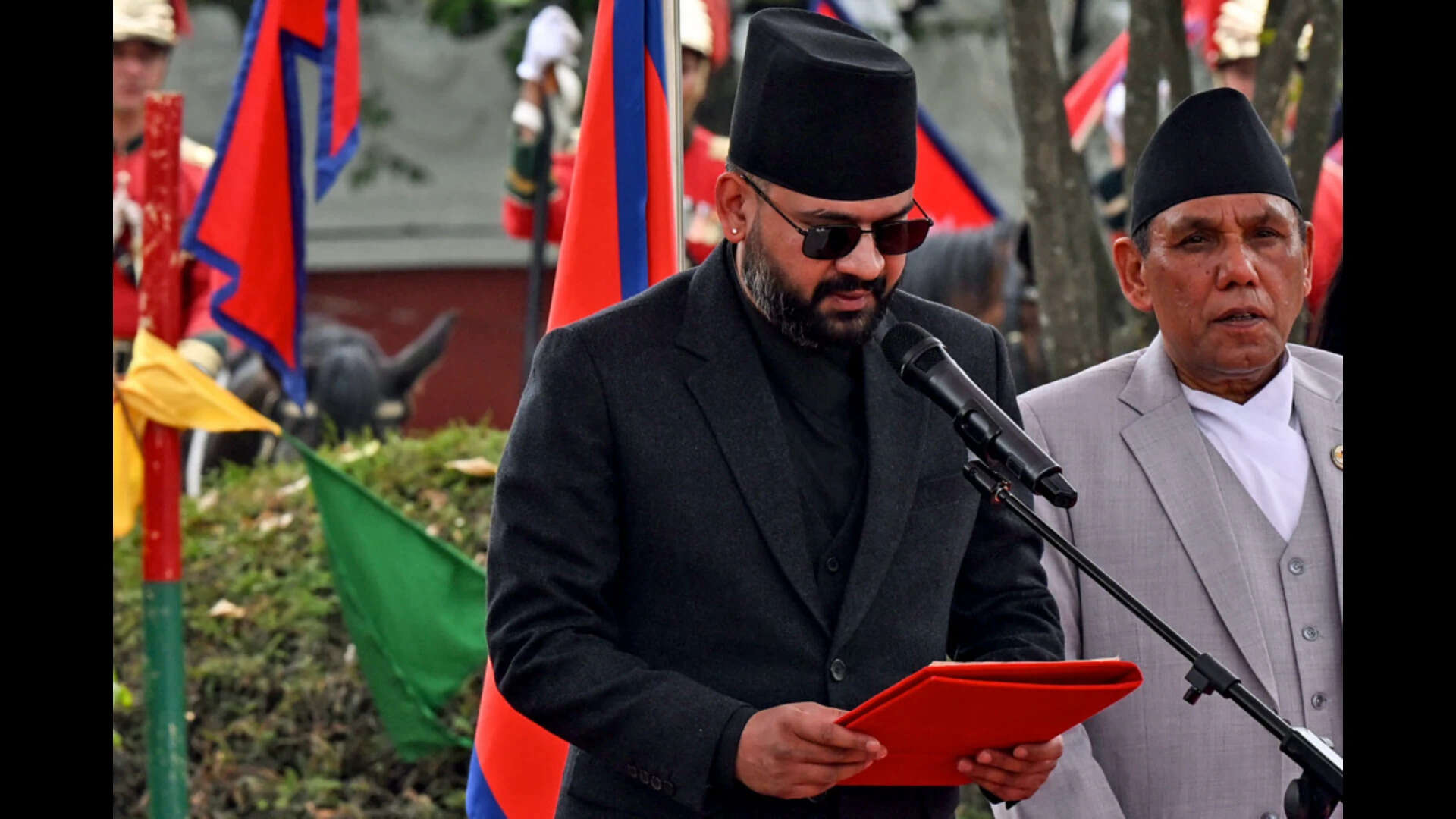
Nepal's Prime Minister, Balen, has decided to meet with the ambassadors of India and China, ending a recent snub that sparked protests and diplomatic tensions. The meetings, scheduled to take place on the same day, will be held in a one-on-one format, allowing for in-depth discussions between the Prime Minister and each envoy.
The decision to meet with the ambassadors comes after a period of strained relations between Nepal and its two neighboring countries. Protests had erupted in response to the perceived snub, with demonstrators expressing their discontent with the government's handling of diplomatic relations.
The meetings are expected to focus on a range of topics, including bilateral trade, security, and border disputes. The Prime Minister's decision to engage with the ambassadors is seen as a positive step towards easing tensions and improving relations with India and China.
Nepal's geographical location, sandwiched between India and China, makes its relationships with these two countries crucial to its economic and political stability. The country has historically maintained a delicate balance between its two powerful neighbors, seeking to avoid taking sides while pursuing its own national interests.
The protests that sparked the diplomatic tensions were largely driven by concerns over Nepal's sovereignty and the perceived influence of India and China on the country's internal affairs. The government's decision to meet with the ambassadors is likely to be viewed as a response to these concerns, aiming to reassure the public that Nepal's interests are being protected.
The one-on-one format of the meetings will allow for frank and open discussions between the Prime Minister and each envoy, providing an opportunity for both sides to express their concerns and work towards finding mutually beneficial solutions. The outcome of these meetings will be closely watched, both in Nepal and in the region, as they have the potential to shape the country's relationships with India and China in the coming months.
In the broader context, the meetings between the Prime Minister and the ambassadors reflect the complex and nuanced nature of diplomatic relations in the region. As Nepal navigates its relationships with India and China, it must balance its own national interests with the need to maintain good relations with its neighbors. The success of these meetings will depend on the ability of all parties to engage in constructive dialogue and find common ground.
The significance of these meetings extends beyond Nepal's borders, as they have implications for regional stability and cooperation. The ability of India, China, and Nepal to work together and address their differences through diplomatic channels is crucial to maintaining peace and prosperity in the region. As the meetings between the Prime Minister and the ambassadors take place, the international community will be watching closely, hoping for a positive outcome that will contribute to regional stability and cooperation.
In conclusion, the decision of Nepal's Prime Minister to meet with the ambassadors of India and China marks an important step towards easing diplomatic tensions and improving relations with these two countries. The meetings, scheduled to take place on the same day, will provide an opportunity for in-depth discussions and the exploration of mutually beneficial solutions. As Nepal navigates its complex relationships with India and China, the success of these meetings will be crucial to maintaining regional stability and cooperation.
Frequently asked questions
Why did Nepal's Prime Minister decide to meet with the India and China ambassadors?
The Prime Minister decided to meet with the ambassadors to ease diplomatic tensions and improve relations with India and China, following a period of strained relations and protests.
What topics are expected to be discussed during the meetings?
The meetings are expected to focus on a range of topics, including bilateral trade, security, and border disputes.