
RBI May Hike Rates as Liquidity Surplus Hits ₹10.3 Trillion
RBI considers rate hike, absorbs excess liquidity, and manages rupee and bond markets.
'%3E%3Crect%20width%3D'96'%20height%3D'96'%20fill%3D'%230B6E4F'%2F%3E%3Ccircle%20cx%3D'30'%20cy%3D'24'%20r%3D'44'%20fill%3D'%23fff'%20opacity%3D'.12'%2F%3E%3Ccircle%20cx%3D'60'%20cy%3D'74'%20r%3D'40'%20fill%3D'%23000'%20opacity%3D'.10'%2F%3E%3C%2Fg%3E%3Cg%20fill%3D'none'%20stroke%3D'%23fff'%20stroke-width%3D'3.2'%20stroke-linecap%3D'round'%20stroke-linejoin%3D'round'%3E%3Cpolyline%20points%3D'31%2C59%2041%2C49%2049%2C54%2063%2C37'%2F%3E%3Cpolyline%20points%3D'55%2C37%2063%2C37%2063%2C45'%2F%3E%3C%2Fg%3E%3C%2Fsvg%3E)
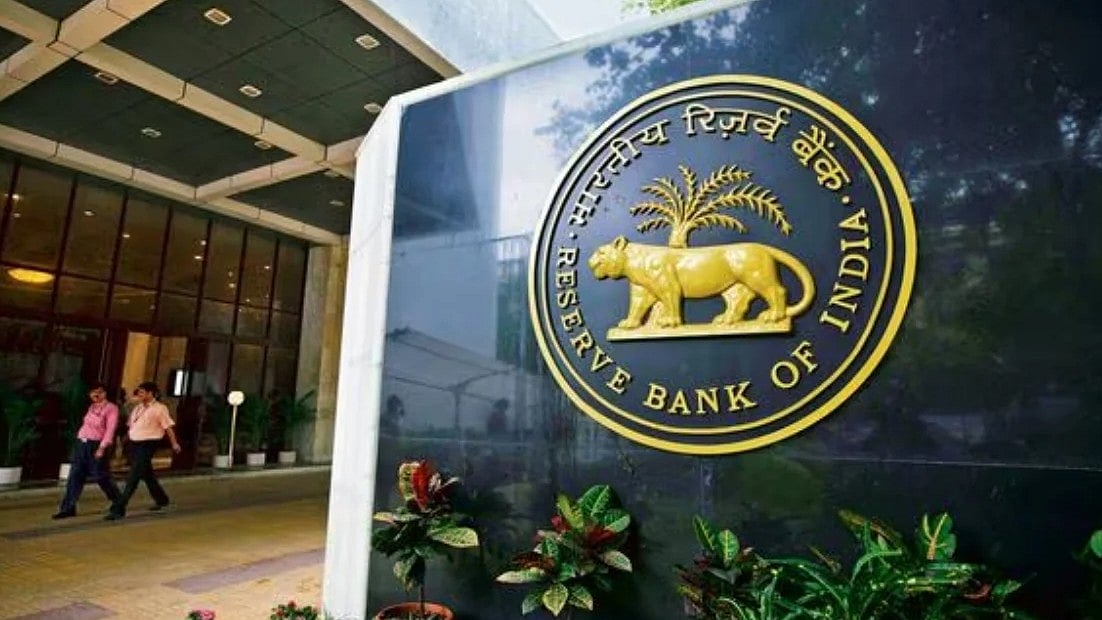
The Reserve Bank of India (RBI) may raise interest rates at its October monetary policy meeting due to a record ₹10.3 trillion liquidity surplus in the banking system.
The central bank has announced a ₹7 trillion variable rate reverse repo (VRRR) auction to absorb excess liquidity. This move comes as the banking system's liquidity surplus exceeded the previous high of ₹9.7 trillion recorded a day earlier.
The rise in liquidity has been driven by significant foreign currency inflows through the RBI's concessional swap facility. India's foreign exchange reserves climbed to a record $740.8 billion for the week ended August 28, supported mainly by an increase in foreign currency assets.
Market participants believe the RBI now faces a difficult choice between managing excess liquidity and addressing concerns around the rupee and bond markets. The VRRR auction has provided some relief to investors as the central bank allowed banks to seek premature reversal of funds parked under the facility.
Dealers said the move indicates that the RBI may avoid additional liquidity-tightening measures before the October policy meeting. Some market participants expect the possibility of a rate hike to gain importance as liquidity management becomes more challenging.
The sharp rise in reserves has largely been supported by Foreign Currency Non-Resident (Bank), or FCNR(B), deposits raised through the RBI's swap facility. Banks mobilised around $127.2 billion through the scheme, while the overall inflows through related channels crossed expectations.
Although the FCNR(B) deposit window closed on August 31, banks can continue accessing the swap facility for deposits already contracted until September 11. Economists expect foreign currency assets to rise further as additional inflows enter the system.
Analysts estimate FCAs could increase to around $640-650 billion in the coming weeks. While stronger reserves have improved India's external position and supported the rupee, the resulting liquidity surplus has complicated the RBI's monetary policy decisions.
The central bank will now have to balance growth support, inflation risks, and market stability ahead of the October review. This decision will be crucial in determining the direction of the Indian economy in the coming months.
In conclusion, the RBI's decision to hike interest rates will depend on its ability to manage the liquidity surplus and balance the competing demands of growth, inflation, and market stability. The October monetary policy meeting will be closely watched by market participants and economists as they await the RBI's decision.
The RBI's challenges in managing the liquidity surplus are a testament to the complex nature of monetary policy decisions. As the Indian economy continues to grow and evolve, the RBI will have to navigate these challenges to ensure stability and support growth.
The impact of the RBI's decision will be felt across the economy, from borrowers to investors. As the central bank weighs its options, market participants will be watching closely to see how the RBI balances its competing priorities.
The RBI's ability to manage the liquidity surplus and make the right decision on interest rates will be crucial in determining the direction of the Indian economy. The coming weeks will be critical in shaping the future of the economy, and the RBI's decision will be closely watched by all stakeholders.
In the end, the RBI's decision will have far-reaching consequences for the Indian economy. The central bank's ability to balance competing demands and make the right decision will be crucial in ensuring stability and supporting growth.
Frequently asked questions
What is the current liquidity surplus in the banking system?
The current liquidity surplus in the banking system is ₹10.3 trillion.
Why is the RBI considering a rate hike?
The RBI is considering a rate hike due to the record liquidity surplus in the banking system and the need to balance growth support, inflation risks, and market stability.