Gadkari Denies Personal Gain From Ethanol Program
Union Minister Nitin Gadkari faces allegations, calls them politically motivated. Ethanol a small part of sons' business.
'%3E%3Crect%20width%3D'96'%20height%3D'96'%20fill%3D'%231A5276'%2F%3E%3Ccircle%20cx%3D'30'%20cy%3D'24'%20r%3D'44'%20fill%3D'%23fff'%20opacity%3D'.12'%2F%3E%3Ccircle%20cx%3D'60'%20cy%3D'74'%20r%3D'40'%20fill%3D'%23000'%20opacity%3D'.10'%2F%3E%3C%2Fg%3E%3Cg%20fill%3D'%23fff'%3E%3Cpath%20d%3D'M31%2041%20L48%2031%20L65%2041%20Z'%2F%3E%3Crect%20x%3D'33'%20y%3D'43'%20width%3D'4'%20height%3D'17'%2F%3E%3Crect%20x%3D'41'%20y%3D'43'%20width%3D'4'%20height%3D'17'%2F%3E%3Crect%20x%3D'51'%20y%3D'43'%20width%3D'4'%20height%3D'17'%2F%3E%3Crect%20x%3D'59'%20y%3D'43'%20width%3D'4'%20height%3D'17'%2F%3E%3Crect%20x%3D'30'%20y%3D'62'%20width%3D'36'%20height%3D'4'%20rx%3D'1'%2F%3E%3C%2Fg%3E%3C%2Fsvg%3E)
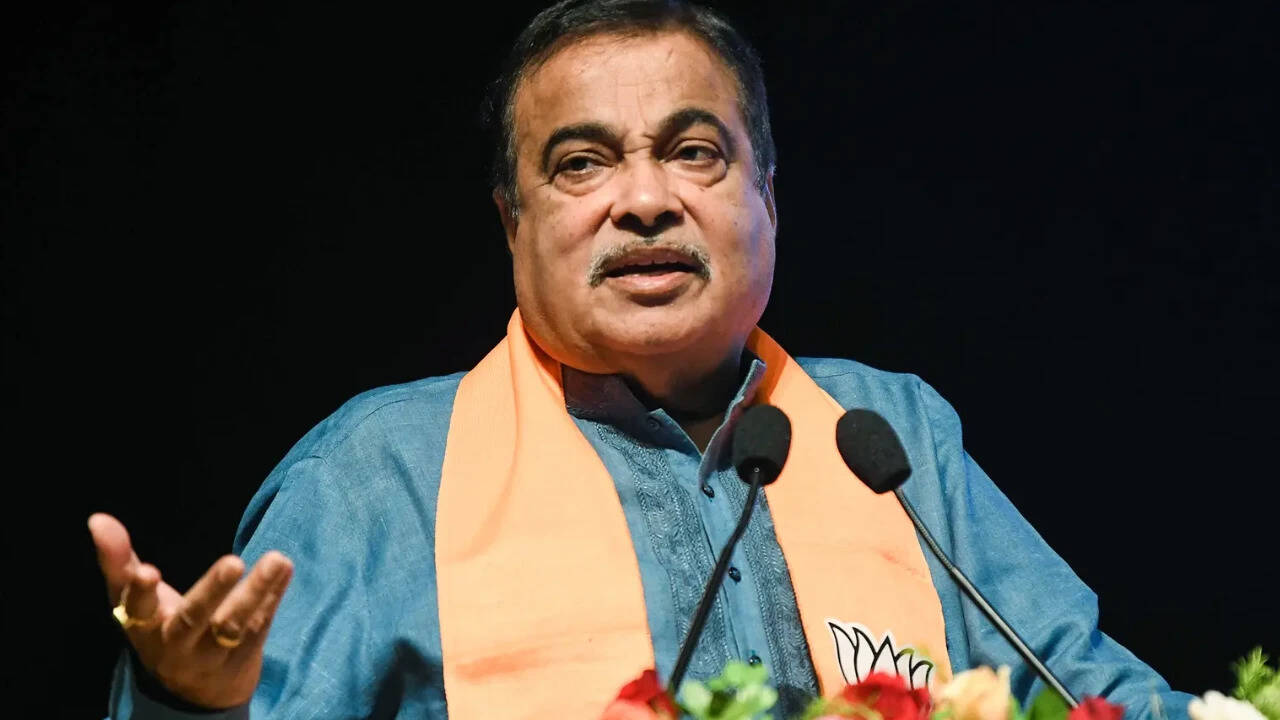
Union Minister Nitin Gadkari has denied allegations of personal gain from the ethanol blending program, stating that such claims are politically motivated and lack substance.
Gadkari emphasized his long-standing support for alternative fuels as a means to reduce pollution and dependence on imports. He has been a proponent of ethanol and other biofuels for many years, citing their potential to improve air quality and enhance energy security.
The minister clarified that his sons' business has only a minimal share in the ethanol sector, downplaying the notion of a conflict of interest. Gadkari's family is involved in various business ventures, but he maintained that their involvement in ethanol production is limited.
Gadkari also highlighted the historical backing of the ethanol blending program by previous governments, suggesting that the initiative is a longstanding policy objective rather than a personal pet project. The program has been in place for several years, with the goal of reducing the country's reliance on fossil fuels and promoting the use of renewable energy sources.
The ethanol blending program has been a subject of controversy in recent times, with some critics alleging that certain individuals and companies are benefiting unfairly from the initiative. However, Gadkari's supporters argue that the program is a crucial step towards reducing the country's carbon footprint and enhancing energy security.
The minister's denial of personal gain from the ethanol program is likely to spark further debate on the issue. While some may view his statements as an attempt to deflect criticism, others may see them as a genuine effort to clarify the facts and promote a policy initiative that he believes is in the national interest.
In the context of India's energy policy, the ethanol blending program is seen as a key component of the government's strategy to reduce dependence on imports and promote the use of renewable energy sources. The program has the potential to benefit farmers, who can sell their surplus crops to ethanol producers, and also reduce the country's reliance on fossil fuels.
The controversy surrounding the ethanol blending program highlights the challenges of implementing policy initiatives in a politically charged environment. While the program has the potential to bring significant benefits to the country, it also raises complex questions about conflict of interest, corruption, and the role of personal relationships in shaping policy decisions.
In conclusion, Gadkari's denial of personal gain from the ethanol program is a significant development in the ongoing debate about the initiative. As the country continues to grapple with the challenges of energy security and environmental sustainability, the ethanol blending program is likely to remain a subject of controversy and discussion. The outcome of this debate will have important implications for India's energy policy and the country's ability to reduce its reliance on fossil fuels.