SC Rules Elevator Manufacturers, Agencies, Owners Liable For Accidents
Supreme Court strengthens passenger safety, holds multiple parties liable for lift accidents. Victims can now seek compensation from any one party.
'%3E%3Crect%20width%3D'96'%20height%3D'96'%20fill%3D'%23B3261E'%2F%3E%3Ccircle%20cx%3D'30'%20cy%3D'24'%20r%3D'44'%20fill%3D'%23fff'%20opacity%3D'.12'%2F%3E%3Ccircle%20cx%3D'60'%20cy%3D'74'%20r%3D'40'%20fill%3D'%23000'%20opacity%3D'.10'%2F%3E%3C%2Fg%3E%3Cg%20fill%3D'%23fff'%3E%3Crect%20x%3D'29'%20y%3D'49'%20width%3D'8'%20height%3D'19'%20rx%3D'1'%2F%3E%3Crect%20x%3D'39'%20y%3D'40'%20width%3D'9'%20height%3D'28'%20rx%3D'1'%2F%3E%3Crect%20x%3D'50'%20y%3D'45'%20width%3D'8'%20height%3D'23'%20rx%3D'1'%2F%3E%3Crect%20x%3D'60'%20y%3D'53'%20width%3D'7'%20height%3D'15'%20rx%3D'1'%2F%3E%3Crect%20x%3D'41'%20y%3D'34'%20width%3D'5'%20height%3D'6'%2F%3E%3C%2Fg%3E%3C%2Fsvg%3E)
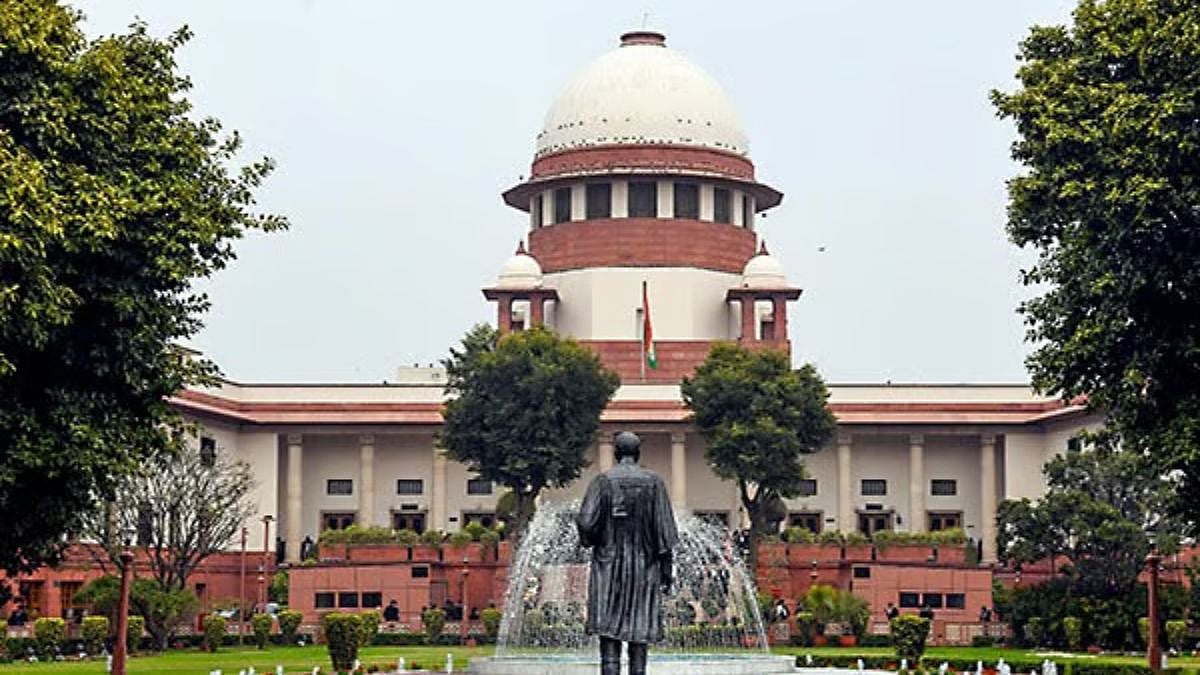
The Supreme Court has delivered a landmark judgment aimed at enhancing passenger safety in elevators. In a significant ruling, the court has held that elevator manufacturers, maintenance agencies, and building owners or managers are jointly and severally liable for lift accidents. This means that victims or their families can recover the entire compensation from any one of the liable parties, who may later settle liability among themselves.
The verdict was delivered by a Bench of Justices P.S. Narasimha and Alok Aradhe, who upheld compensation of more than ₹3.01 crore, along with interest, to the family of former diplomat and R&AW officer Vipin Handa. Handa lost his life in a lift accident at the agency's headquarters in New Delhi on March 20, 2003. The judgment comes after more than two decades of litigation.
In a significant legal observation, the Supreme Court held that elevators should be treated as 'common carriers', similar to buses, trains, and aircraft. The court said that once a passenger enters a lift, they surrender control over their safety and place complete trust in those responsible for designing, installing, maintaining, and operating the elevator. This imposes a heightened duty of care on all stakeholders.
The judgment makes it clear that liability in lift accidents is shared among elevator manufacturers and installers, maintenance agencies, and building owners or management. Victims or their families can seek the full compensation from any one of these parties. The responsible entities can subsequently resolve how the liability is to be shared among themselves.
The court upheld the findings of the National Consumer Disputes Redressal Commission (NCDRC), which had apportioned liability as follows: 70% to Otis Elevator Company (India) Ltd., 25% to Military Engineering Services (which supervised maintenance), and 5% to building management/user. The compensation of ₹3,01,48,195 was also upheld, along with 9% annual interest from the date of the accident.
The court observed that the lift involved in the accident had a history of repeated defects. Despite being aware of the recurring issues, the authorities failed to take adequate safety measures or declare the elevator unsafe for public use, ultimately leading to the fatal accident.
The judgment places greater responsibility on Resident Welfare Associations (RWAs), apartment complexes, commercial establishments, and institutions to ensure the safety of elevators in their buildings. It is expected to have a significant impact on the way elevators are maintained and operated in the country.
The Supreme Court's verdict is a significant step towards strengthening passenger safety in elevators. By holding multiple parties liable for lift accidents, the court has ensured that victims or their families can seek compensation without having to establish which party was directly responsible. This is expected to prevent agencies from shifting blame onto one another and delay justice for victims.
In conclusion, the Supreme Court's judgment is a landmark ruling that enhances passenger safety in elevators. It is expected to have a significant impact on the way elevators are maintained and operated in the country, and will provide relief to victims or their families who have suffered due to lift accidents.
The judgment is also expected to lead to improved safety measures in elevators, with building owners and management taking greater responsibility for ensuring the safety of passengers. This will ultimately lead to a reduction in the number of lift accidents and provide a safer environment for passengers.
Overall, the Supreme Court's verdict is a significant step towards enhancing passenger safety in elevators, and is expected to have a positive impact on the lives of millions of people who use elevators every day.
Frequently asked questions
Who is liable for elevator accidents in India?
Elevator manufacturers, maintenance agencies, and building owners or managers are jointly and severally liable for lift accidents.
Can victims seek compensation from any one party?
Yes, victims or their families can recover the entire compensation from any one of the liable parties, who may later settle liability among themselves.