Bombay High Court Rules on Noise Pollution
Noise pollution rules clarified, cultural events affected
'%3E%3Crect%20width%3D'96'%20height%3D'96'%20fill%3D'%23B3261E'%2F%3E%3Ccircle%20cx%3D'30'%20cy%3D'24'%20r%3D'44'%20fill%3D'%23fff'%20opacity%3D'.12'%2F%3E%3Ccircle%20cx%3D'60'%20cy%3D'74'%20r%3D'40'%20fill%3D'%23000'%20opacity%3D'.10'%2F%3E%3C%2Fg%3E%3Cg%20fill%3D'%23fff'%3E%3Crect%20x%3D'29'%20y%3D'49'%20width%3D'8'%20height%3D'19'%20rx%3D'1'%2F%3E%3Crect%20x%3D'39'%20y%3D'40'%20width%3D'9'%20height%3D'28'%20rx%3D'1'%2F%3E%3Crect%20x%3D'50'%20y%3D'45'%20width%3D'8'%20height%3D'23'%20rx%3D'1'%2F%3E%3Crect%20x%3D'60'%20y%3D'53'%20width%3D'7'%20height%3D'15'%20rx%3D'1'%2F%3E%3Crect%20x%3D'41'%20y%3D'34'%20width%3D'5'%20height%3D'6'%2F%3E%3C%2Fg%3E%3C%2Fsvg%3E)
The Bombay High Court has dealt with the failure to implement the Noise Pollution Rules, 2000, in a significant decision. The court held that the culture of noise is not protected under Article 25 of the Constitution, and that noise is also an air pollutant.
The court's decision came in the case of Dr Mahesh Vijay Bedekar, where it was argued that the use of loudspeakers during cultural or religious events was a fundamental right. However, the court ruled that this right is not absolute and must be balanced with the right to silence and freedom from unwanted sound.
The Noise Pollution Rules, 2000, prescribe ambient noise limits for different areas, including industrial, commercial, residential, and silence zones. The rules also provide for restrictions on the use of loudspeakers and public-address systems in public places.
In a related development, the Collector, Chairman, Member Secretary, or Regional Officers of the Maharashtra Pollution Control Board have been authorized to file complaints under Section 15 read with Section 19(a) of the Environment (Protection) Act.
The issue of noise pollution has been a subject of debate, with some arguing that it is a cultural issue, while others see it as a scientific one. The court's decision has clarified the rules and regulations surrounding noise pollution, and has provided a framework for balancing the right to cultural expression with the right to silence.
The decision has also been influenced by previous court rulings, including the Dr M. Ismail Faruqui case, where the Apex Court held that Article 25 of the Constitution does not extend to a right to worship at any and every place.
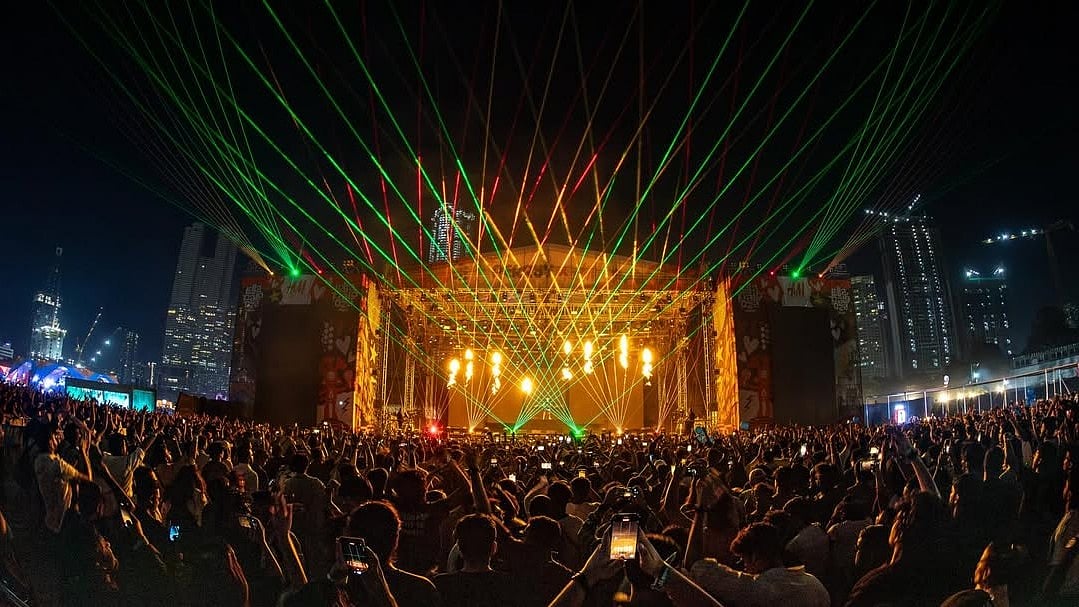
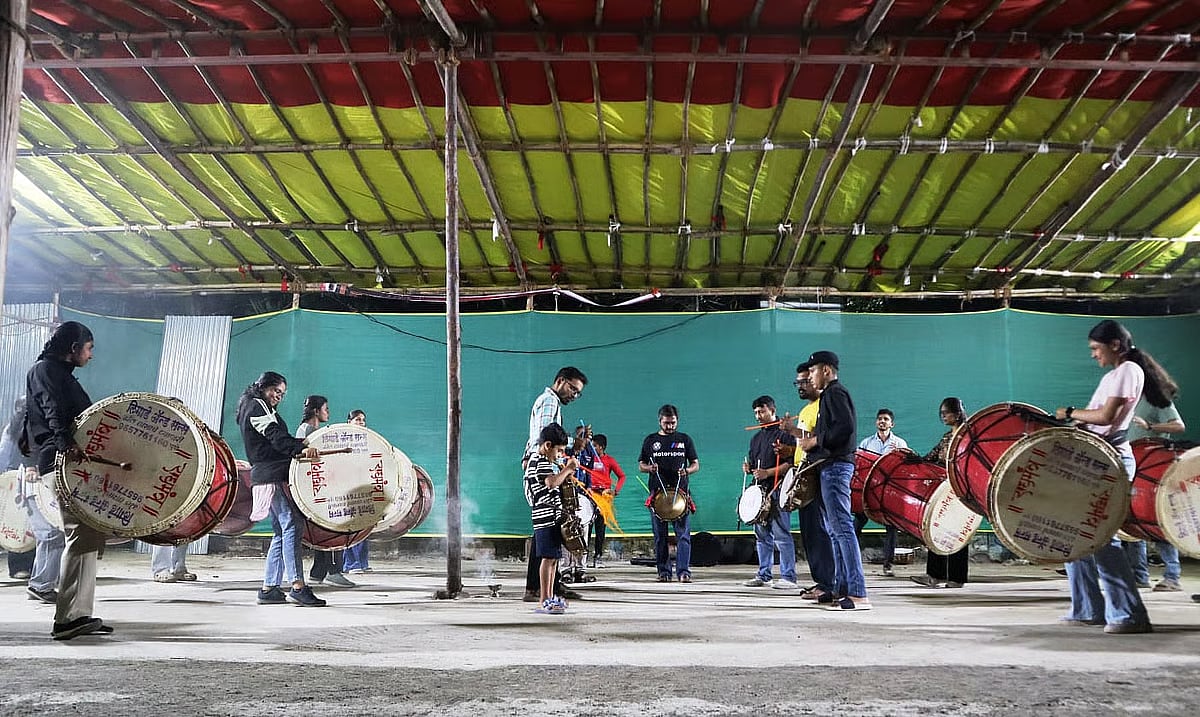
In another significant development, the Chhatrapati Sambhajinagar witnessed a DJ-free Ganesh immersion procession last year, following Solapur. This move was seen as a step towards reducing noise pollution during cultural events.
The Rules prescribe ambient noise limits of 75/70 dB(A) Leq for industrial areas, 65/55 for commercial areas, 55/45 for residential areas, and 50/40 for silence zones, during the day/night respectively. Silence zones extend at least 100 meters around specified institutions.
Noise pollution can also be dealt with under Sections 270, 292, and 293 of the BNS. In the Dr Kalyani Mandke case, the NGT held that the total capacity of loudspeakers in a pandal should be limited to 100 W unless the pandal is more than 40 meters in length.
The court's decision has significant implications for cultural events and festivals in the state, and has provided a framework for balancing the right to cultural expression with the right to silence.
The issue of noise pollution is a complex one, and requires a nuanced approach that takes into account both cultural and scientific considerations. The court's decision has provided a significant step towards addressing this issue, and has clarified the rules and regulations surrounding noise pollution.
In conclusion, the Bombay High Court's decision on noise pollution has significant implications for cultural events and festivals in the state. The decision has clarified the rules and regulations surrounding noise pollution, and has provided a framework for balancing the right to cultural expression with the right to silence.
Frequently asked questions
What are the ambient noise limits prescribed by the Noise Pollution Rules, 2000?
The rules prescribe ambient noise limits of 75/70 dB(A) Leq for industrial areas, 65/55 for commercial areas, 55/45 for residential areas, and 50/40 for silence zones, during the day/night respectively.
Can the use of loudspeakers during cultural or religious events be restricted?
Yes, the use of loudspeakers during cultural or religious events can be restricted, and the court has ruled that this right is not absolute and must be balanced with the right to silence and freedom from unwanted sound.