Delhi Apartment Flooded After Fire Pipeline Bursts
A Delhi household's apartment was flooded after a fire pipeline burst, damaging furniture and belongings. A viral video shows water gushing from the ceiling, sparking concerns over construction standards.
'%3E%3Crect%20width%3D'96'%20height%3D'96'%20fill%3D'%23B3261E'%2F%3E%3Ccircle%20cx%3D'30'%20cy%3D'24'%20r%3D'44'%20fill%3D'%23fff'%20opacity%3D'.12'%2F%3E%3Ccircle%20cx%3D'60'%20cy%3D'74'%20r%3D'40'%20fill%3D'%23000'%20opacity%3D'.10'%2F%3E%3C%2Fg%3E%3Cg%20fill%3D'%23fff'%3E%3Crect%20x%3D'29'%20y%3D'49'%20width%3D'8'%20height%3D'19'%20rx%3D'1'%2F%3E%3Crect%20x%3D'39'%20y%3D'40'%20width%3D'9'%20height%3D'28'%20rx%3D'1'%2F%3E%3Crect%20x%3D'50'%20y%3D'45'%20width%3D'8'%20height%3D'23'%20rx%3D'1'%2F%3E%3Crect%20x%3D'60'%20y%3D'53'%20width%3D'7'%20height%3D'15'%20rx%3D'1'%2F%3E%3Crect%20x%3D'41'%20y%3D'34'%20width%3D'5'%20height%3D'6'%2F%3E%3C%2Fg%3E%3C%2Fsvg%3E)
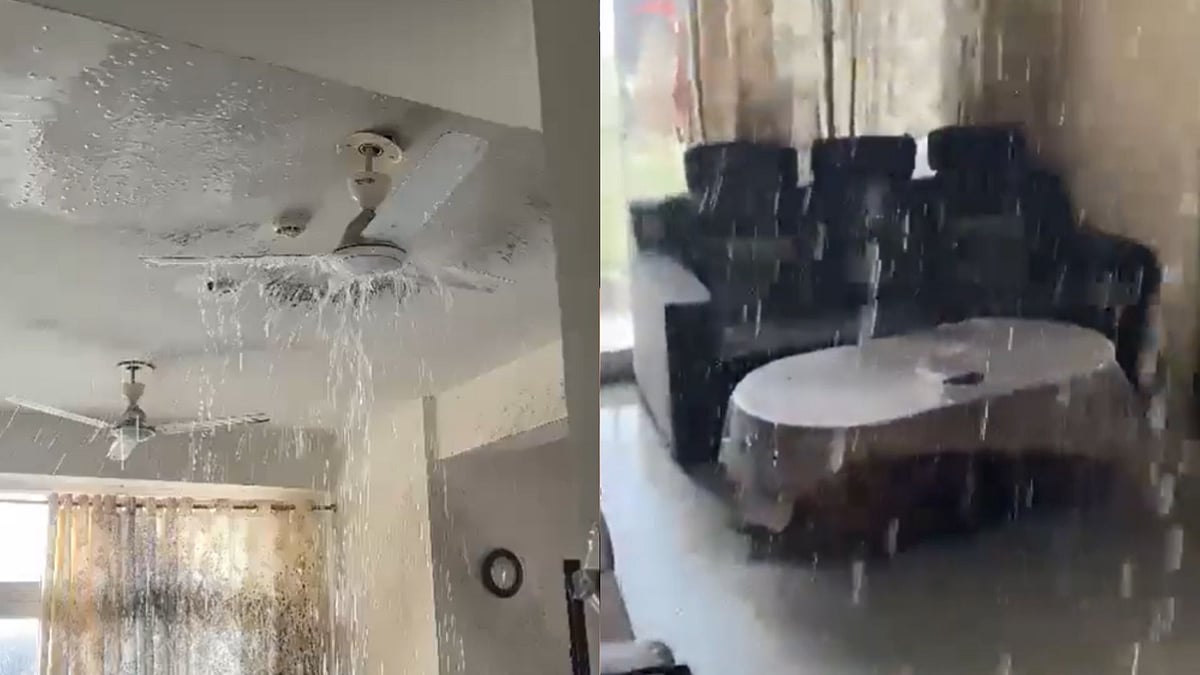
A shocking incident occurred in a Delhi apartment when a fire pipeline burst, causing water to flood the living room and damage household belongings. The incident was captured in a viral video shared on social media, which shows water gushing from the ceiling like heavy rain.
The video, shared by user Sanju Goyal, alleges that the flooding was triggered by the failure of a fire alarm pipeline connected to a flat on the 13th floor. According to Goyal, poor-quality pipeline installation caused the pipe to burst, leading to extensive damage inside the apartment. The affected family had invested between Rs 1.5 crore and Rs 2 crore in purchasing the property, making the incident even more devastating.
The social media post accompanying the video claims that neither the builder nor the housing society's maintenance agency accepted responsibility for the damage caused by the leak. The affected residents have lodged an FIR against the maintenance agency, seeking accountability for the incident and the losses suffered. Goyal alleged that inferior construction materials had been used during the project's development, resulting in infrastructure failures.
The incident has triggered a debate on construction standards and maintenance practices in residential housing societies. Many users have raised questions about the quality of construction and maintenance in high-rise residential projects, with some calling for a thorough investigation into the matter.
The viral clip has generated widespread discussion online, with many users expressing outrage and concern over the incident. Some have alleged that corruption and the use of inferior construction materials are to blame for the incident. The incident has highlighted the need for stricter regulations and quality control measures in the construction industry to prevent such incidents in the future.
The affected residents are seeking justice and compensation for the damages suffered. The incident has also raised concerns about the safety and security of residents in high-rise buildings, with many calling for regular maintenance and inspections to prevent such incidents.
In conclusion, the incident in the Delhi apartment has sparked a wider debate on construction standards and maintenance practices in residential housing societies. It has highlighted the need for stricter regulations and quality control measures to prevent such incidents in the future.
The incident has also raised questions about the accountability of builders and maintenance agencies in such cases. The affected residents are seeking justice and compensation for the damages suffered, and it remains to be seen how the authorities will respond to the incident.
As the debate continues, one thing is clear: the incident has highlighted the need for greater transparency and accountability in the construction industry. It has also raised concerns about the safety and security of residents in high-rise buildings, and the need for regular maintenance and inspections to prevent such incidents.
The incident is a reminder that owning a home is a major financial milestone for most families, and it is essential to ensure that the construction and maintenance of residential buildings meet the highest standards of quality and safety.
In the end, the incident in the Delhi apartment has sparked a wider conversation about the need for stricter regulations and quality control measures in the construction industry. It has highlighted the importance of transparency and accountability in the construction industry, and the need for regular maintenance and inspections to prevent such incidents in the future.
Frequently asked questions
What caused the flooding in the Delhi apartment?
The flooding was caused by the burst of a fire alarm pipeline connected to a flat on the 13th floor.
How much did the affected family invest in the property?
The affected family had invested between Rs 1.5 crore and Rs 2 crore in purchasing the property.