Nashik Dam Water Storage Reaches 82% Capacity
Nashik's dam water storage crosses 82%, several reservoirs at full capacity. Water releases begin to maintain safe levels.
'%3E%3Crect%20width%3D'96'%20height%3D'96'%20fill%3D'%23B3261E'%2F%3E%3Ccircle%20cx%3D'30'%20cy%3D'24'%20r%3D'44'%20fill%3D'%23fff'%20opacity%3D'.12'%2F%3E%3Ccircle%20cx%3D'60'%20cy%3D'74'%20r%3D'40'%20fill%3D'%23000'%20opacity%3D'.10'%2F%3E%3C%2Fg%3E%3Cg%20fill%3D'%23fff'%3E%3Crect%20x%3D'29'%20y%3D'49'%20width%3D'8'%20height%3D'19'%20rx%3D'1'%2F%3E%3Crect%20x%3D'39'%20y%3D'40'%20width%3D'9'%20height%3D'28'%20rx%3D'1'%2F%3E%3Crect%20x%3D'50'%20y%3D'45'%20width%3D'8'%20height%3D'23'%20rx%3D'1'%2F%3E%3Crect%20x%3D'60'%20y%3D'53'%20width%3D'7'%20height%3D'15'%20rx%3D'1'%2F%3E%3Crect%20x%3D'41'%20y%3D'34'%20width%3D'5'%20height%3D'6'%2F%3E%3C%2Fg%3E%3C%2Fsvg%3E)
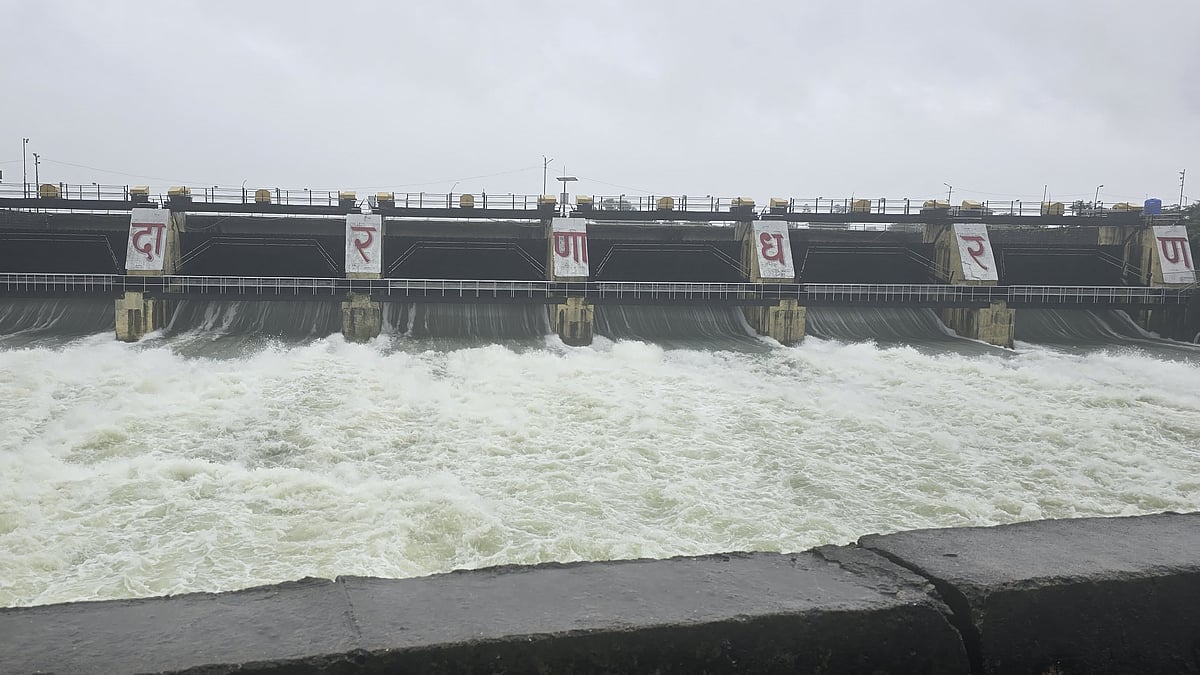
Nashik district's major dams have reached an average usable water storage of 82.24%, with several reservoirs reaching full capacity. This has raised hopes of an uninterrupted water supply for the city and surrounding areas in the coming months.
The district's 22 major dams are currently holding a significant amount of water, with overall storage ranging between 82.28% and 87.47%. Major dam complexes, including Gangapur, Darna, and Girna, have recorded satisfactory water levels. As a result, authorities have started controlled water releases to maintain safe storage levels.
Around 2,000 cusecs of water is currently being released from the Gangapur Dam, while the Darna complex is discharging nearly 8,020 cusecs. Water is also being released from Nandur-Madhyameshwar at a rate of 22,770 cusecs. The district has received abundant rainfall this monsoon, leading to a sharp rise in reservoir levels.
Despite earlier forecasts of below-normal rainfall due to the expected impact of El Niño, Nashik has recorded one of the best monsoon performances in Maharashtra this season. By the end of July, the district had received around 98.3% of its normal rainfall, with rainfall levels significantly above average. This has helped fill many reservoirs across the district.
Among the major reservoirs, the Gangapur dam complex is storing 88.35% of its capacity, while the Darna Dam has reached nearly 86%. Water storage in the Girna valley stands at 94.60%. Several dams, including Alandi, Bham, Waghad, Ozarkhed, and Tisgaon, have reached 100% capacity, while Bhavli is nearly full.
Other important reservoirs have also recorded healthy storage levels. Kashyapi is at 93.20%, Gautami-Godavari at 90.85%, Kadwa at around 90%, Girna at approximately 92%, and Karanjwan at 80.98%. The district also recorded widespread rainfall over the weekend, with Surgana receiving the highest rainfall at 36.8 mm.
The healthy reservoir levels have brought relief to the agriculture sector and are expected to ensure adequate water availability in the months ahead. However, with water being released from several dams, the administration has advised residents to stay away from riverbanks and areas close to reservoirs as a precaution.
The significant water storage in Nashik's dams is a welcome development for the district, which has been experiencing a good monsoon season. The water releases from the dams will help maintain safe storage levels and ensure that the water supply remains uninterrupted in the coming months.
In conclusion, the high water storage levels in Nashik's dams are a positive sign for the district's water supply and agriculture sector. With the monsoon season expected to continue, the district can expect to receive more rainfall, which will further boost the water storage levels.
The water storage levels in Nashik's dams have significant implications for the district's residents, farmers, and the environment. The adequate water supply will help support the agriculture sector, which is a crucial part of the district's economy. Additionally, the water releases from the dams will help maintain the ecological balance of the rivers and surrounding areas.
Overall, the high water storage levels in Nashik's dams are a welcome development for the district, and the administration's efforts to maintain safe storage levels and ensure uninterrupted water supply are commendable.
The situation will continue to be monitored, and the administration will take necessary steps to ensure that the water supply remains uninterrupted and the reservoirs remain at safe levels.
Frequently asked questions
What is the current water storage level in Nashik's dams?
The current water storage level in Nashik's dams is 82.24%.
Which reservoirs have reached full capacity in Nashik?
Several dams, including Alandi, Bham, Waghad, Ozarkhed, and Tisgaon, have reached 100% capacity.