Colombia Earthquake Kills 20, Triggers Building Collapses
A 7.4-magnitude earthquake hits western Colombia, killing at least 20 people and injuring dozens. Buildings collapse, trapping residents under debris.
'%3E%3Crect%20width%3D'96'%20height%3D'96'%20fill%3D'%23B3261E'%2F%3E%3Ccircle%20cx%3D'30'%20cy%3D'24'%20r%3D'44'%20fill%3D'%23fff'%20opacity%3D'.12'%2F%3E%3Ccircle%20cx%3D'60'%20cy%3D'74'%20r%3D'40'%20fill%3D'%23000'%20opacity%3D'.10'%2F%3E%3C%2Fg%3E%3Cg%20fill%3D'%23fff'%3E%3Crect%20x%3D'29'%20y%3D'49'%20width%3D'8'%20height%3D'19'%20rx%3D'1'%2F%3E%3Crect%20x%3D'39'%20y%3D'40'%20width%3D'9'%20height%3D'28'%20rx%3D'1'%2F%3E%3Crect%20x%3D'50'%20y%3D'45'%20width%3D'8'%20height%3D'23'%20rx%3D'1'%2F%3E%3Crect%20x%3D'60'%20y%3D'53'%20width%3D'7'%20height%3D'15'%20rx%3D'1'%2F%3E%3Crect%20x%3D'41'%20y%3D'34'%20width%3D'5'%20height%3D'6'%2F%3E%3C%2Fg%3E%3C%2Fsvg%3E)
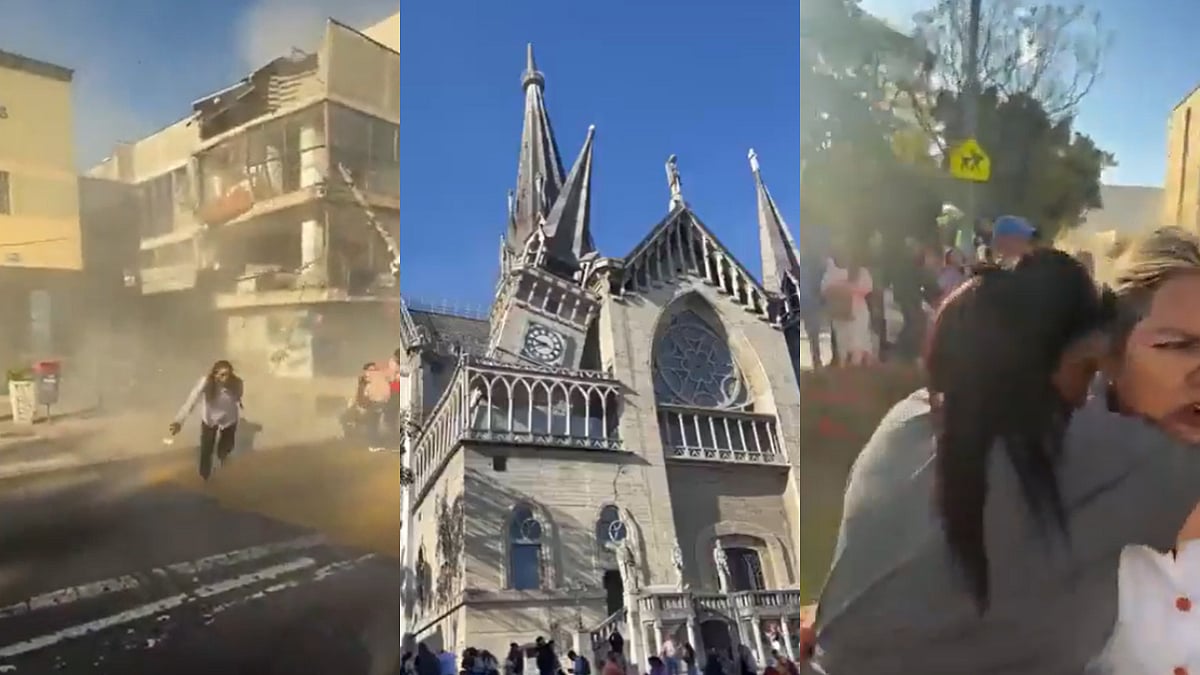
A powerful 7.4-magnitude earthquake struck western Colombia on Monday, leaving at least 20 people feared dead and dozens of buildings collapsed. The earthquake, which had its epicentre in the Choco region, about 400 kilometres west of Bogota, prompted people to evacuate their homes and was felt as far away as the capital, Bogota, and neighbouring Ecuador.
According to local officials, at least 18 people were killed in Pereira and two in Manizales. The US Geological Survey (USGS) reported that the earthquake struck at a depth of 107 kilometres. Cities across western Colombia were left badly damaged, with residents and rescue workers searching through the rubble as authorities warned of possible aftershocks.
Jorge Moncayo, a 64-year-old taxi driver in Cali, Colombia's third-biggest city, described the scene as buildings collapsed after the earthquake. 'My entire house shook,' Moncayo said. 'I've never lived through such a powerful earthquake.' Residents and rescue workers in Cali were already searching through the rubble of collapsed buildings on Monday morning.
In Manizales, a city in Colombia's coffee-producing mountains, one of the towers of the neo-Gothic cathedral collapsed and fell on the nave. Manizales Mayor Jorge Eduardo Rojas said two people had died in the city 'because of the quake' and urged residents to remain outside because of the risk of aftershocks.
Choco Governor Nubia Cordoba reported injuries and serious damage to buildings in Quibdo, the regional capital with a population of about 130,000. Footage shared by local media outlets showed homes and small buildings collapsing in Pereira, Cali, and Quibdo. In Cali, a city of 2 million people, Mayor Alejandro Eder said residents were trapped in at least 19 buildings that had collapsed.
Small earthquakes, locally known as 'temblores,' are common in central and western Colombia, but earthquakes above magnitude 6.0 are rare. In 1999, a magnitude-6.2 earthquake near Armenia killed more than 1,100 people.
Colombia's newly inaugurated President Abelardo de la Espriella said on Monday that he had personally taken charge of the government's emergency response to the earthquake. The president's move comes as the country struggles to cope with the aftermath of the disaster.
The earthquake has left a trail of destruction across western Colombia, with many cities and towns badly affected. As rescue workers continue to search for survivors, the country is bracing itself for possible aftershocks.
The international community has offered its support to Colombia in the wake of the disaster. The earthquake is a devastating reminder of the power of nature and the importance of disaster preparedness and response.
In the coming days, the full extent of the damage and the number of casualties are likely to become clearer. For now, the people of Colombia are coming to terms with the aftermath of the earthquake and working to rebuild their lives and communities.
The earthquake has significant implications for Colombia and the wider region. It highlights the need for effective disaster preparedness and response strategies, as well as the importance of international cooperation and support in times of crisis.
As the situation continues to unfold, one thing is clear: the people of Colombia will need all the support they can get to recover from this devastating disaster.
Frequently asked questions
What was the magnitude of the earthquake that hit Colombia?
The earthquake had a magnitude of 7.4.
How many people were killed in the earthquake?
At least 20 people were killed in the earthquake.