KGMU Bans Non-Veg Food in Hostels
King George's Medical University sparks controversy with non-veg food ban. Opposition leaders criticize move.
'%3E%3Crect%20width%3D'96'%20height%3D'96'%20fill%3D'%231A5276'%2F%3E%3Ccircle%20cx%3D'30'%20cy%3D'24'%20r%3D'44'%20fill%3D'%23fff'%20opacity%3D'.12'%2F%3E%3Ccircle%20cx%3D'60'%20cy%3D'74'%20r%3D'40'%20fill%3D'%23000'%20opacity%3D'.10'%2F%3E%3C%2Fg%3E%3Cg%20fill%3D'%23fff'%3E%3Cpath%20d%3D'M31%2041%20L48%2031%20L65%2041%20Z'%2F%3E%3Crect%20x%3D'33'%20y%3D'43'%20width%3D'4'%20height%3D'17'%2F%3E%3Crect%20x%3D'41'%20y%3D'43'%20width%3D'4'%20height%3D'17'%2F%3E%3Crect%20x%3D'51'%20y%3D'43'%20width%3D'4'%20height%3D'17'%2F%3E%3Crect%20x%3D'59'%20y%3D'43'%20width%3D'4'%20height%3D'17'%2F%3E%3Crect%20x%3D'30'%20y%3D'62'%20width%3D'36'%20height%3D'4'%20rx%3D'1'%2F%3E%3C%2Fg%3E%3C%2Fsvg%3E)
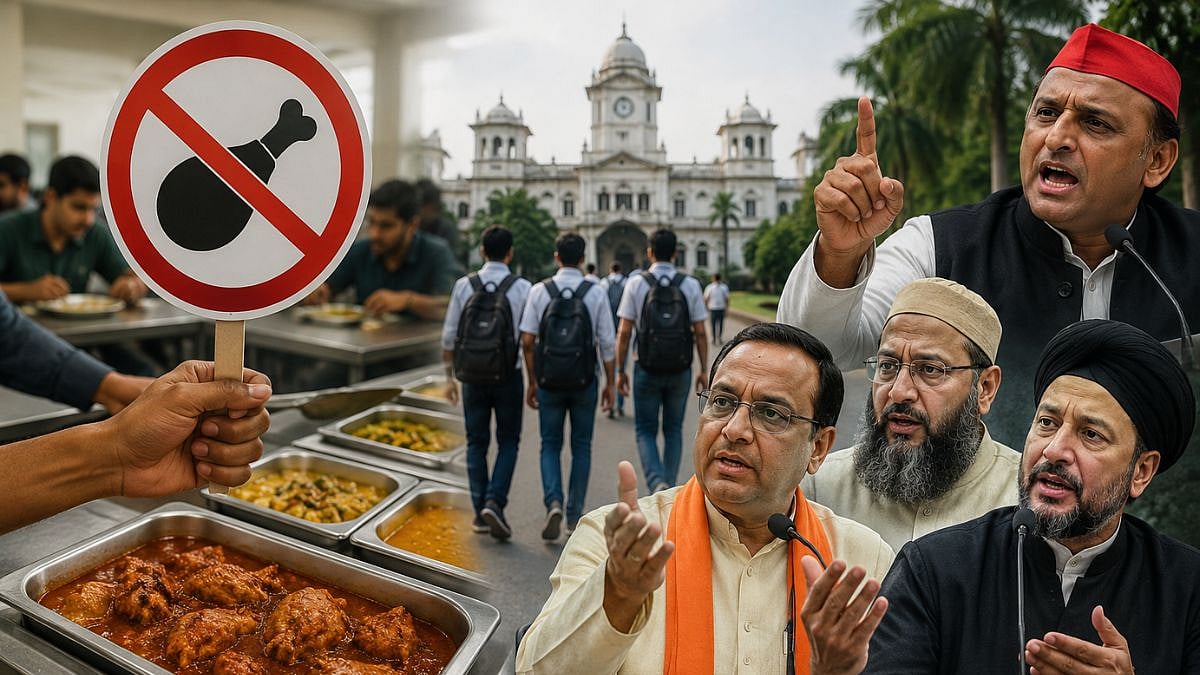
A recent decision by the King George's Medical University (KGMU) in Lucknow to ban non-vegetarian food in all hostel messes and canteens has led to a political controversy. The ban, which was announced by KGMU Chief Provost Prof. Kamal Kumar Sawlani on Tuesday, directs that non-vegetarian food should neither be cooked nor served in hostel messes and canteens.
The order, which came into effect immediately, asks hostel authorities to include protein-rich vegetarian food in students' meals to ensure adequate nutrition. This move has been criticized by opposition leaders, with Samajwadi Party spokesperson Fakhrul Hasan Chand describing the order as a 'Tughlaqi diktat' and questioning its selective application.
Chand asked if Governor Anandiben Patel would issue a similar order for BJP MPs who eat fish and rice in West Bengal, and why the ideology changes only after coming to Uttar Pradesh. Lucknow Eidgah Imam Maulana Khalid Rasheed Firangi Mahali also called for the order to be withdrawn, saying that more than 61 per cent of Indians consume non-vegetarian food and that it is beneficial for human health from a medical perspective.
However, Shia cleric Maulana Yasoob Abbas said that the issue should not be politicized and that those who wish to eat non-vegetarian food can do so outside the campus. BJP Rajya Sabha MP Dinesh Sharma defended the university's decision, saying that educational institutions are empowered to determine the menu served to students.
KGMU has 18 hostels where non-vegetarian food was served three times a week until the latest order. The university was founded in 1905 as King George's Medical College and was granted university status in 2002. The decision has revived the debate over dietary choices and institutional autonomy, with political and religious leaders taking sharply different positions.
The controversy highlights the challenges faced by educational institutions in balancing the dietary preferences of students with the need to promote a particular ideology or value system. While some argue that the ban is an infringement on the rights of students who prefer non-vegetarian food, others see it as a legitimate exercise of the university's autonomy.
The debate is also reflective of the broader cultural and political landscape of India, where dietary choices are often closely tied to religious and cultural identities. The fact that the ban has been defended by BJP leaders and some religious figures, while being criticized by opposition leaders and other religious figures, highlights the deeply politicized nature of the issue.
In the end, the decision by KGMU to ban non-vegetarian food in its hostels is a complex issue that raises important questions about institutional autonomy, dietary choices, and cultural identity. While the controversy is likely to continue, it is clear that the decision has sparked a important debate about the role of educational institutions in shaping the values and preferences of students.
The KGMU controversy is a significant development in the context of India's ongoing debates about education, culture, and identity. As the country continues to navigate the complexities of diversity and pluralism, such controversies are likely to arise, highlighting the need for nuanced and informed discussions about the role of educational institutions in shaping the values and preferences of students.
In conclusion, the ban on non-vegetarian food in KGMU hostels is a controversial issue that has sparked a heated debate about dietary choices, institutional autonomy, and cultural identity. While the decision has been defended by some as a legitimate exercise of the university's autonomy, others have criticized it as an infringement on the rights of students who prefer non-vegetarian food. As the controversy continues to unfold, it is clear that the issue is complex and multifaceted, and that it will require careful consideration and nuanced discussion to resolve.