Giant Grass To Clean Ukraine War Damage
Scientists test giant Miscanthus to restore war-damaged land. NATO project aims to remove pollutants.
'%3E%3Crect%20width%3D'96'%20height%3D'96'%20fill%3D'%234A235A'%2F%3E%3Ccircle%20cx%3D'30'%20cy%3D'24'%20r%3D'44'%20fill%3D'%23fff'%20opacity%3D'.12'%2F%3E%3Ccircle%20cx%3D'60'%20cy%3D'74'%20r%3D'40'%20fill%3D'%23000'%20opacity%3D'.10'%2F%3E%3C%2Fg%3E%3Cg%20fill%3D'none'%20stroke%3D'%23fff'%20stroke-width%3D'3'%3E%3Ccircle%20cx%3D'48'%20cy%3D'48'%20r%3D'16'%2F%3E%3Cellipse%20cx%3D'48'%20cy%3D'48'%20rx%3D'6.5'%20ry%3D'16'%2F%3E%3Cline%20x1%3D'32'%20y1%3D'42'%20x2%3D'64'%20y2%3D'42'%2F%3E%3Cline%20x1%3D'32'%20y1%3D'54'%20x2%3D'64'%20y2%3D'54'%2F%3E%3C%2Fg%3E%3C%2Fsvg%3E)
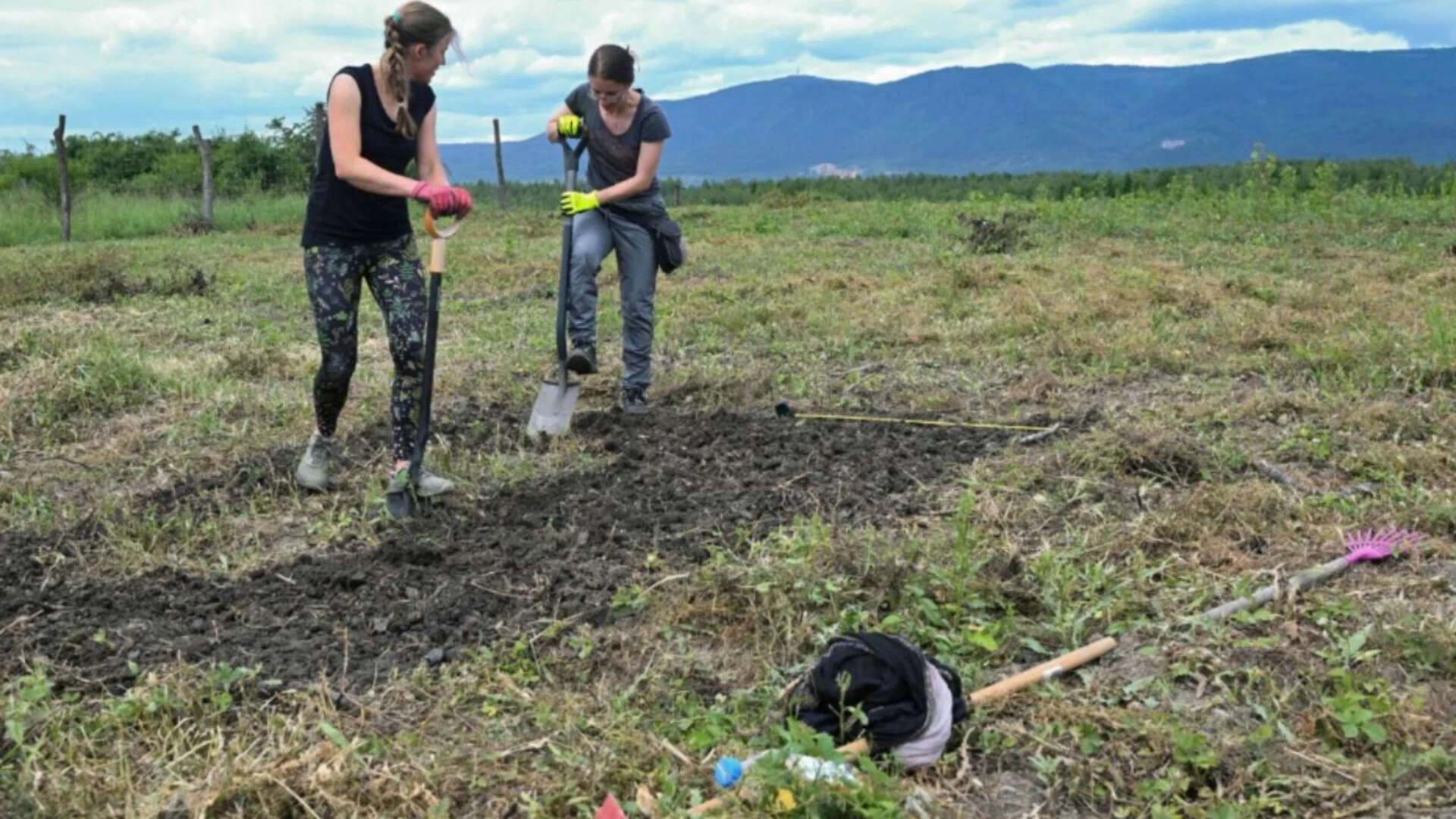
Scientists in the Czech Republic are conducting research on the potential of giant Miscanthus, a fast-growing perennial grass, to help restore Ukraine's war-damaged farmland. The project, backed by NATO, aims to utilize this grass to remove pollutants from contaminated soil, improve soil health, and ultimately make the land suitable for farming again.
The research is focused on the unique properties of giant Miscanthus, which has been found to be effective in absorbing pollutants from the soil. By planting this grass in war-damaged areas, scientists hope to create a natural remediation process that can help to restore the land to its former state.
The project has significant implications for Ukraine, where large areas of farmland have been damaged due to the ongoing conflict. The use of giant Miscanthus could provide a sustainable solution for restoring these areas, allowing farmers to return to their land and resume agricultural activities.
In addition to its potential for soil remediation, giant Miscanthus is also a valuable source of biomass for renewable energy. The grass can be harvested and used to produce biofuels, heat, and electricity, providing a sustainable alternative to fossil fuels.
The Czech Republic's involvement in the project is significant, as the country has expertise in the field of biomass production and soil remediation. The research is being conducted in collaboration with Ukrainian scientists, who are working to identify the most effective methods for planting and cultivating giant Miscanthus in war-damaged areas.
The project is part of a broader effort by NATO to support Ukraine's recovery from the conflict. The organization is providing funding and expertise to support a range of initiatives, from demining and reconstruction to environmental remediation and sustainable development.
The use of giant Miscanthus to restore war-damaged land is a innovative approach that could have far-reaching implications for Ukraine and other countries affected by conflict. By providing a sustainable solution for soil remediation and biomass production, this project could help to support the country's economic recovery and promote environmental sustainability.
In the context of Ukraine's ongoing conflict, the project is a significant step towards restoring the country's agricultural sector and promoting environmental sustainability. The use of giant Miscanthus could provide a valuable tool for farmers and communities affected by the conflict, allowing them to rebuild and recover in a sustainable way.
Overall, the project to use giant Miscanthus to restore Ukraine's war-damaged farmland is an important initiative that could have significant benefits for the country's environment, economy, and communities. By supporting sustainable development and environmental remediation, the project is helping to promote a more resilient and sustainable future for Ukraine.
The success of this project could also have implications for other countries affected by conflict, where environmental damage and soil pollution are significant challenges. The use of giant Miscanthus could provide a model for sustainable soil remediation and biomass production, promoting environmental sustainability and supporting economic recovery in post-conflict regions.
In conclusion, the project to use giant Miscanthus to restore Ukraine's war-damaged farmland is a significant initiative that could have far-reaching implications for the country's environment, economy, and communities. By providing a sustainable solution for soil remediation and biomass production, the project is helping to promote a more resilient and sustainable future for Ukraine and other countries affected by conflict.
Frequently asked questions
What is the purpose of the giant Miscanthus project in Ukraine?
The project aims to remove pollutants from contaminated soil, improve soil health, and make the land suitable for farming again.
What are the potential benefits of using giant Miscanthus for soil remediation?
The grass can absorb pollutants, improve soil health, and provide a source of biomass for renewable energy.