Moshi Tragedy: Victims Died From Injuries, Internal Bleeding
Preliminary post-mortem reports reveal severe injuries, not suffocation, as cause of death. Nine workers lost their lives in the Moshi garbage depot tragedy.
'%3E%3Crect%20width%3D'96'%20height%3D'96'%20fill%3D'%23B3261E'%2F%3E%3Ccircle%20cx%3D'30'%20cy%3D'24'%20r%3D'44'%20fill%3D'%23fff'%20opacity%3D'.12'%2F%3E%3Ccircle%20cx%3D'60'%20cy%3D'74'%20r%3D'40'%20fill%3D'%23000'%20opacity%3D'.10'%2F%3E%3C%2Fg%3E%3Cg%20fill%3D'%23fff'%3E%3Crect%20x%3D'29'%20y%3D'49'%20width%3D'8'%20height%3D'19'%20rx%3D'1'%2F%3E%3Crect%20x%3D'39'%20y%3D'40'%20width%3D'9'%20height%3D'28'%20rx%3D'1'%2F%3E%3Crect%20x%3D'50'%20y%3D'45'%20width%3D'8'%20height%3D'23'%20rx%3D'1'%2F%3E%3Crect%20x%3D'60'%20y%3D'53'%20width%3D'7'%20height%3D'15'%20rx%3D'1'%2F%3E%3Crect%20x%3D'41'%20y%3D'34'%20width%3D'5'%20height%3D'6'%2F%3E%3C%2Fg%3E%3C%2Fsvg%3E)
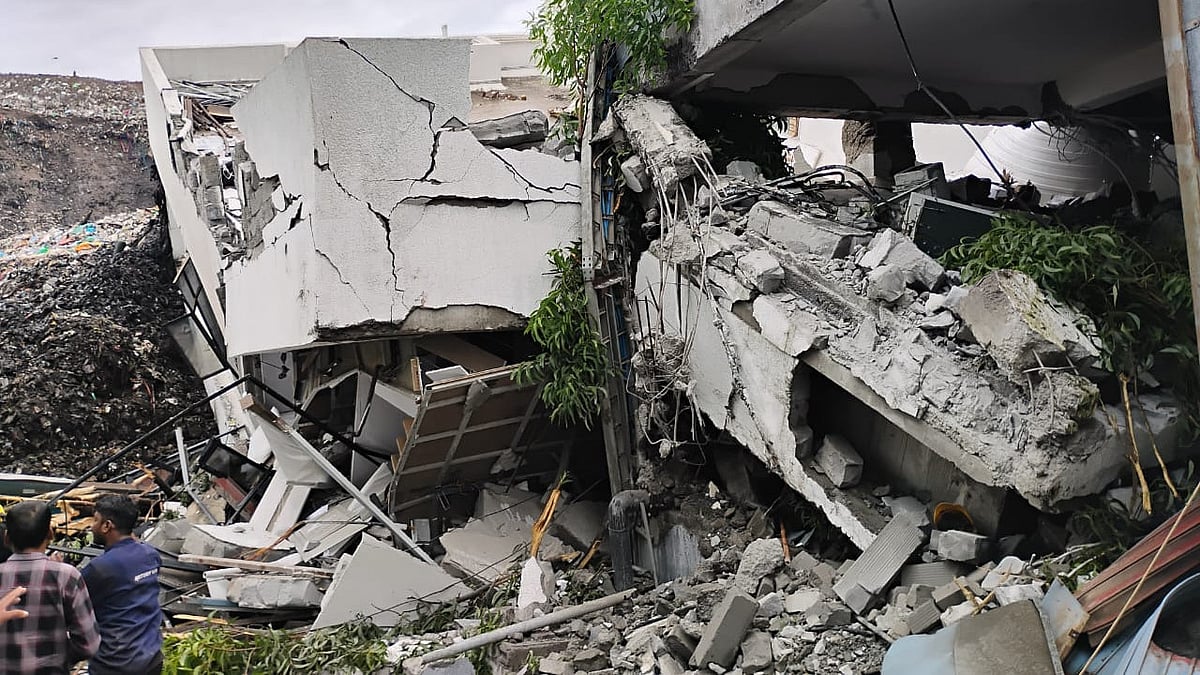
A devastating tragedy occurred on July 8 at the Pimpri-Chinchwad Municipal Corporation's Waste-to-Energy plant in Moshi, Pune, when a massive rain-soaked heap of legacy waste collapsed onto the administrative building, resulting in the loss of nine lives.
Preliminary post-mortem findings indicate that the victims died due to severe injuries and internal bleeding, rather than suffocation. The post-mortem examinations were conducted at Yashwantrao Chavan Memorial (YCM) Hospital in Pimpri, where medical experts revealed that the bodies showed multiple fractures in the legs, arms, back, and head, along with extensive injuries caused by heavy debris.
According to doctors, the victims suffered massive internal bleeding after being crushed under concrete slabs and other structural debris. The collapse caused the building to tilt under the weight of the garbage mound, trapping workers beneath concrete slabs, furniture, glass panels, electrical wiring, and waste. The crushing injuries severely damaged vital organs, including the chest, abdomen, and legs, leading to fatal blood loss within a short period.
The PCMC Commissioner, Dr. Vijay Suryawanshi, has ordered a preliminary inquiry into the tragedy and directed officials to register a case against the contractor. The municipal corporation has also announced an ex gratia payment of Rs 10 lakh each to the families of the nine workers who lost their lives.
The funeral of the victims was held in different locations, including Bhose in Solapur district's Pandharpur taluka, Chhatrapati Sambhajinagar, and Moshi. Union Minister of State Ramdas Athawale visited YCM Hospital on Sunday to meet the injured workers and expressed his condolences to the families of the victims. He emphasized the need for the civic administration to strengthen preventive measures, inspect vulnerable locations across the city, conduct structural safety audits, and improve emergency response systems to prevent similar incidents.
The Moshi tragedy has raised concerns about the safety and well-being of workers in the waste management sector. The incident highlights the need for regular safety audits and emergency preparedness to prevent such tragedies in the future. The PCMC has been directed to take immediate action to prevent similar incidents and ensure the safety of workers and citizens.
The tragedy has also brought to light the tragic stories of the victims, who included newlyweds, young fathers, and sole breadwinners. The loss of life has been devastating for the families of the victims, who are now struggling to come to terms with the tragedy.
In the aftermath of the tragedy, the PCMC has been criticized for its handling of the situation. Despite the municipal commissioner directing officials to register a case in connection with the tragedy, no FIR had been registered till 11 pm on Sunday. Senior Police Inspector Ganesh Jamadar of the MIDC Bhosari Police Station confirmed that no case had been filed at that time.
The Moshi tragedy is a stark reminder of the need for improved safety measures and emergency preparedness in the waste management sector. The incident has raised concerns about the safety and well-being of workers and citizens, and highlights the need for regular safety audits and emergency preparedness to prevent such tragedies in the future.
The tragedy has significant implications for the city of Pune and the state of Maharashtra. It highlights the need for improved safety measures and emergency preparedness in the waste management sector, and raises concerns about the safety and well-being of workers and citizens. The incident is a reminder of the importance of prioritizing safety and taking proactive measures to prevent such tragedies in the future.