Arctic Foxes Alter Alaskan Islands' Ecosystems
Fur traders introduce Arctic foxes, seabirds decline, islands change. Foxes prey on seabirds, affecting soil and vegetation.
'%3E%3Crect%20width%3D'96'%20height%3D'96'%20fill%3D'%231B5E20'%2F%3E%3Ccircle%20cx%3D'30'%20cy%3D'24'%20r%3D'44'%20fill%3D'%23fff'%20opacity%3D'.12'%2F%3E%3Ccircle%20cx%3D'60'%20cy%3D'74'%20r%3D'40'%20fill%3D'%23000'%20opacity%3D'.10'%2F%3E%3C%2Fg%3E%3Cg%3E%3Ccircle%20cx%3D'48'%20cy%3D'48'%20r%3D'15'%20fill%3D'%23fff'%2F%3E%3Cpath%20d%3D'M43%2034%20Q50%2048%2043%2062'%20fill%3D'none'%20stroke%3D'%238a94a6'%20stroke-width%3D'2.4'%2F%3E%3Cpath%20d%3D'M47%2033%20Q54%2048%2047%2063'%20fill%3D'none'%20stroke%3D'%238a94a6'%20stroke-width%3D'1.8'%20stroke-dasharray%3D'1.5%203'%2F%3E%3C%2Fg%3E%3C%2Fsvg%3E)
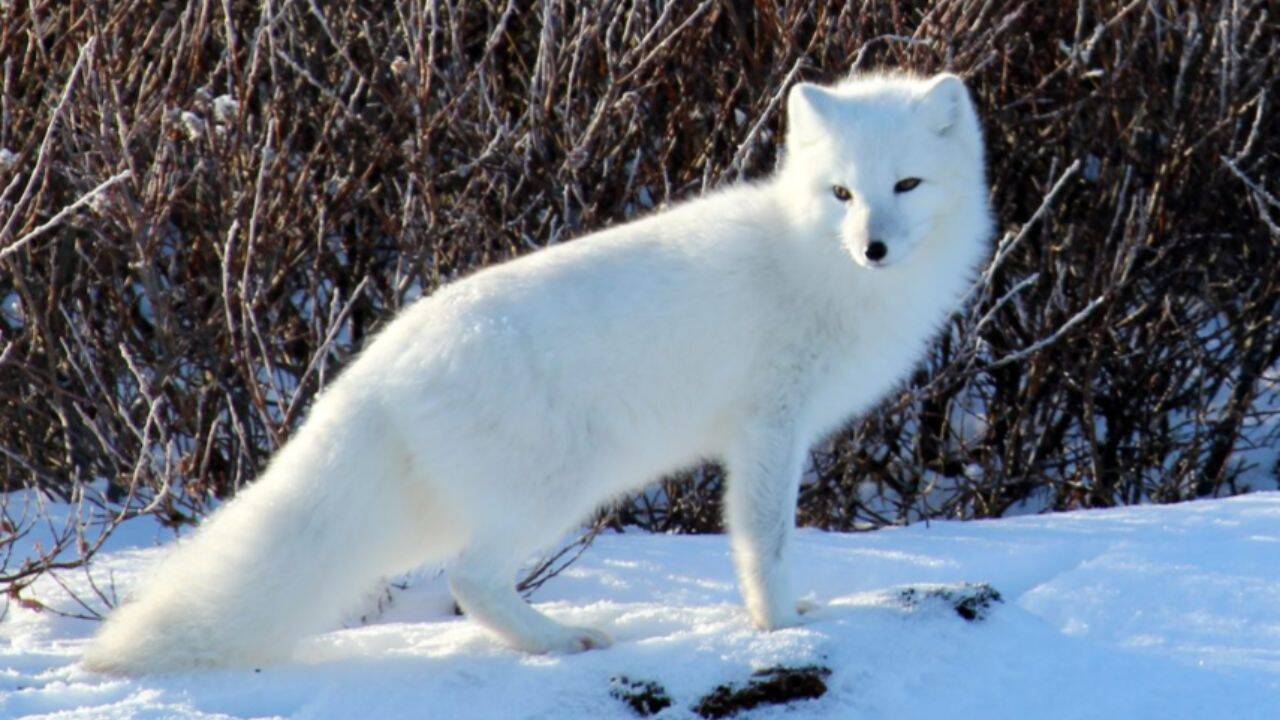
Arctic foxes were introduced to over 400 Alaskan islands by fur traders, leading to an unexpected transformation of the ecosystem. The primary cause of this change was the foxes' predation on seabirds, which significantly reduced the amount of nutrient-rich guano deposited on the islands.
Guano, the excrement of seabirds, acts as a natural fertilizer, enriching the soil with essential nutrients. With the decline of seabirds due to fox predation, the flow of guano from the ocean to the land decreased substantially.
Researchers conducted a study to compare the ecosystems of fox-free islands with those infested by foxes. The results showed a stark contrast between the two types of islands. Fox-free islands had a significantly higher population of seabirds, richer soil quality, and a greater abundance of grass.
In contrast, islands with foxes had fewer seabirds, poorer soil quality, and a shift in vegetation towards shrubs and forbs. This change in vegetation is likely due to the reduced nutrient input from guano, which favored the growth of shrubs and forbs over grass.
The introduction of Arctic foxes to Alaskan islands highlights the potential for invasive species to drastically alter ecosystems. The impact of these foxes on seabird populations and the subsequent change in soil and vegetation composition demonstrates the complex and interconnected nature of island ecosystems.
The study's findings have important implications for conservation efforts, emphasizing the need to consider the potential consequences of introducing non-native species to sensitive ecosystems.
In the context of island ecosystems, the balance between species and their environment is delicate. The introduction of an invasive species like the Arctic fox can have far-reaching and unpredictable effects, as seen in the case of Alaskan islands.
The transformation of these islands serves as a reminder of the importance of preserving the natural balance of ecosystems and the potential risks associated with human activities like fur trading, which can have unintended and long-lasting consequences on the environment.
The impact of Arctic foxes on Alaskan islands is a significant example of how human actions can alter ecosystems, leading to changes in species composition, soil quality, and vegetation. This example highlights the need for careful consideration and management of invasive species to prevent similar transformations in other sensitive ecosystems.
In conclusion, the introduction of Arctic foxes to Alaskan islands has led to a significant alteration of the ecosystem, with far-reaching consequences for seabird populations, soil quality, and vegetation composition. This example serves as a reminder of the importance of preserving the natural balance of ecosystems and the need for careful management of invasive species.
Frequently asked questions
What happened to the seabirds on Alaskan islands with Arctic foxes?
The seabirds declined in number due to predation by the Arctic foxes.
How did the introduction of Arctic foxes affect the vegetation on Alaskan islands?
The introduction of Arctic foxes led to a shift in vegetation from grass to shrubs and forbs due to the reduced nutrient input from guano.