Nepal Flood Hits Historic Himalayan Trade Route
Floods affect ancient trade corridor, Nepal's lifeline to Tibet and India. Historic route once carried rice, salt, and wool.
'%3E%3Crect%20width%3D'96'%20height%3D'96'%20fill%3D'%234A235A'%2F%3E%3Ccircle%20cx%3D'30'%20cy%3D'24'%20r%3D'44'%20fill%3D'%23fff'%20opacity%3D'.12'%2F%3E%3Ccircle%20cx%3D'60'%20cy%3D'74'%20r%3D'40'%20fill%3D'%23000'%20opacity%3D'.10'%2F%3E%3C%2Fg%3E%3Cg%20fill%3D'none'%20stroke%3D'%23fff'%20stroke-width%3D'3'%3E%3Ccircle%20cx%3D'48'%20cy%3D'48'%20r%3D'16'%2F%3E%3Cellipse%20cx%3D'48'%20cy%3D'48'%20rx%3D'6.5'%20ry%3D'16'%2F%3E%3Cline%20x1%3D'32'%20y1%3D'42'%20x2%3D'64'%20y2%3D'42'%2F%3E%3Cline%20x1%3D'32'%20y1%3D'54'%20x2%3D'64'%20y2%3D'54'%2F%3E%3C%2Fg%3E%3C%2Fsvg%3E)
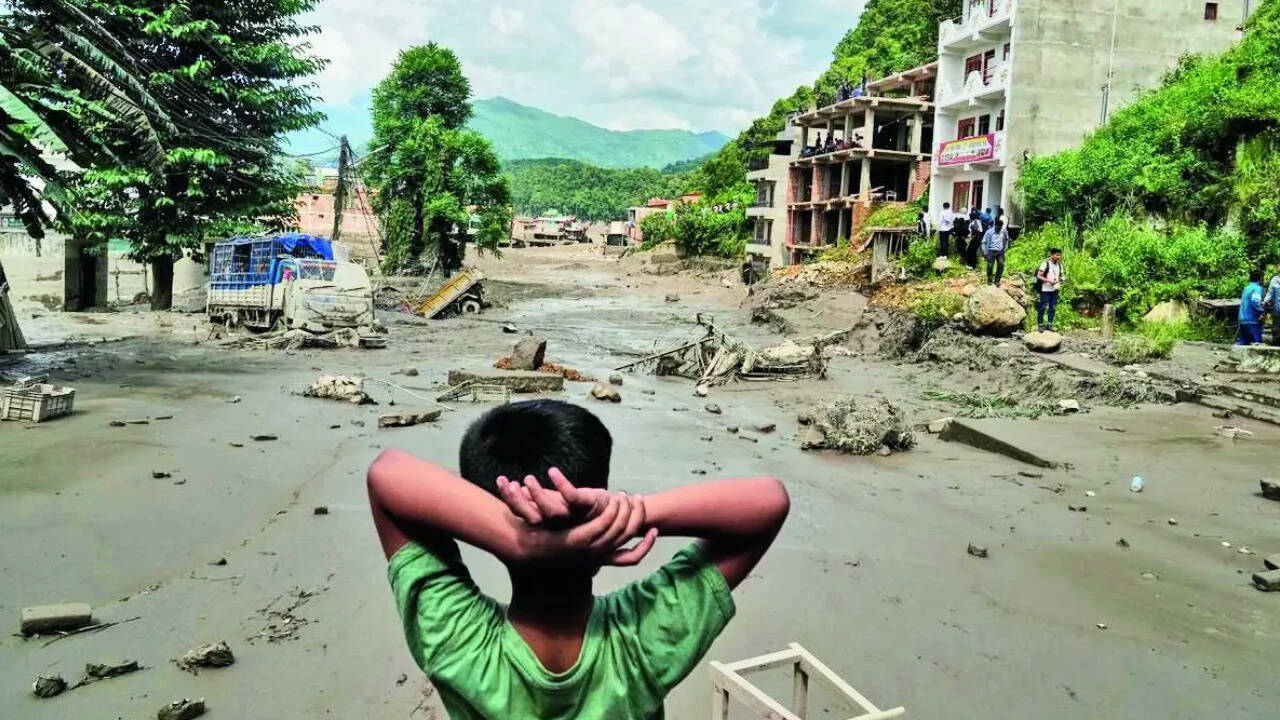
The recent floods in Nepal have severely impacted a centuries-old trade route that once connected the country to Tibet and India. This historic corridor, which runs through the Bhote Koshi valley, was a vital pathway for the exchange of goods such as rice, salt, and wool.
For centuries, mule caravans traversed this route, carrying grain from Nepal to Gyirong, a town in Tibet, where traders would exchange them for salt and wool. The salt, which was highly valued in Nepal's middle hills, would then be transported further south towards India. Newar merchant communities also settled in Tibetan trading towns, facilitating the exchange of goods and cultural practices.
The route played a significant role in the region's history, with Nepalese troops using it during invasions of Tibet in 1788 and 1791. However, Chinese and Tibetan forces counter-attacked in 1792, marking a significant turning point in the region's history.
The Bhote Koshi valley, which is prone to flooding due to its location in the Himalayas, has been severely affected by the recent floods. The floods have disrupted trade and commerce in the region, causing significant economic losses. The impact of the floods on the local communities and the environment is also a major concern.
The historic trade route, which once thrived with activity, is now a shadow of its former self. The floods have highlighted the vulnerability of the region to natural disasters and the need for sustainable development practices. The Nepalese government and international organizations are working together to provide relief and support to the affected communities.
The floods in Nepal have also raised concerns about the impact of climate change on the region. The Himalayas are particularly vulnerable to climate change, with rising temperatures and changing precipitation patterns affecting the region's fragile ecosystem. The floods are a stark reminder of the need for urgent action to address the challenges posed by climate change.
In conclusion, the recent floods in Nepal have severely impacted a historic trade route that once connected the country to Tibet and India. The route, which was once a thriving pathway for the exchange of goods and cultural practices, is now a shadow of its former self. The floods have highlighted the need for sustainable development practices and urgent action to address the challenges posed by climate change.
The impact of the floods on the local communities and the environment is a major concern, and the Nepalese government and international organizations are working together to provide relief and support. The historic trade route, which once played a significant role in the region's history, is now a reminder of the need for urgent action to address the challenges posed by climate change.
The region's history and culture are deeply intertwined with the trade route, and the floods have raised concerns about the preservation of the region's cultural heritage. The Nepalese government and international organizations are working together to preserve the region's cultural heritage and support the local communities affected by the floods.
The floods in Nepal have also highlighted the need for regional cooperation and international support to address the challenges posed by climate change. The historic trade route, which once connected Nepal to Tibet and India, is now a reminder of the need for urgent action to address the challenges posed by climate change and to preserve the region's cultural heritage.
Frequently asked questions
What was the significance of the Bhote Koshi valley trade route?
The Bhote Koshi valley trade route was a vital pathway for the exchange of goods such as rice, salt, and wool between Nepal, Tibet, and India.
How have the recent floods affected the trade route?
The recent floods have severely impacted the trade route, disrupting trade and commerce in the region and causing significant economic losses.