IIT Madras Develops Chemical-Free Antibacterial Surface
IIT Madras invents surface that kills bacteria without chemicals.
'%3E%3Crect%20width%3D'96'%20height%3D'96'%20fill%3D'%23B3261E'%2F%3E%3Ccircle%20cx%3D'30'%20cy%3D'24'%20r%3D'44'%20fill%3D'%23fff'%20opacity%3D'.12'%2F%3E%3Ccircle%20cx%3D'60'%20cy%3D'74'%20r%3D'40'%20fill%3D'%23000'%20opacity%3D'.10'%2F%3E%3C%2Fg%3E%3Cg%20fill%3D'%23fff'%3E%3Crect%20x%3D'29'%20y%3D'49'%20width%3D'8'%20height%3D'19'%20rx%3D'1'%2F%3E%3Crect%20x%3D'39'%20y%3D'40'%20width%3D'9'%20height%3D'28'%20rx%3D'1'%2F%3E%3Crect%20x%3D'50'%20y%3D'45'%20width%3D'8'%20height%3D'23'%20rx%3D'1'%2F%3E%3Crect%20x%3D'60'%20y%3D'53'%20width%3D'7'%20height%3D'15'%20rx%3D'1'%2F%3E%3Crect%20x%3D'41'%20y%3D'34'%20width%3D'5'%20height%3D'6'%2F%3E%3C%2Fg%3E%3C%2Fsvg%3E)
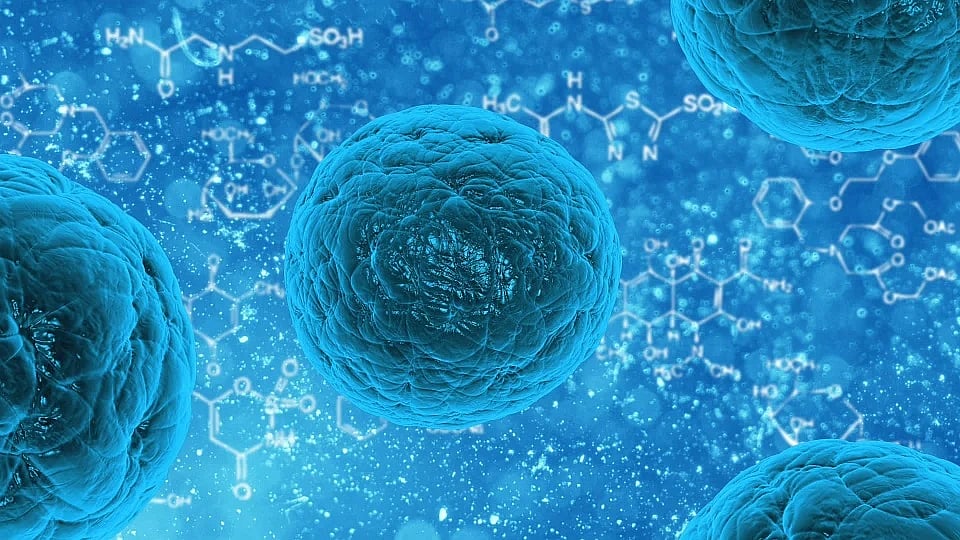
The Indian Institute of Technology (IIT), Madras, has patented a groundbreaking chemical-free antibacterial surface that can physically eliminate harmful bacteria. This innovation aims to address the growing issue of Antimicrobial Resistance (AMR), where disease-causing bacteria become resistant to conventional treatments.
According to Professor Parasuraman Swaminathan, the technology developed does not involve chemical action but rather specially engineered nanostructures that kill bacteria by rupturing their cell walls upon contact. These surfaces are safe for human cells to attach and proliferate on, but bacteria experience severe mechanical stress that ruptures and disintegrates their cell walls.
The research findings have been published in the reputable peer-reviewed journal ACS Applied Biomaterials. The researchers fabricated the antibacterial surfaces using a customized low-pressure plasma process known as Reactive Ion Etching (RIE), which creates dense arrays of nanoscale protrusions on flexible silicone substrates.
Unlike conventional antibacterial coatings that rely on chemical agents, the process does not introduce any additional antibacterial materials onto the surface. The team tested the surfaces against three different bacterial species, including both Gram-positive and Gram-negative bacteria, and found that the nanograss structures demonstrated strong bactericidal activity by rupturing bacterial cells.
The discovery of a unique stiff surface layer on the silicone substrate, consisting of mixed oxyfluorinated compounds, was a significant finding of the study. This layer enables efficient transfer of mechanical forces to the bacterial cells, enhancing the bactericidal action of the nanostructures.
The researchers believe that this approach significantly reduces the risk of bacteria developing resistance while offering a long-lasting and environmentally sustainable solution for biomedical and public health applications. AMR is one of the most pressing healthcare challenges globally, and this innovation demonstrates a fundamentally different strategy to tackle bacterial contamination.
The development of this chemical-free antibacterial surface has the potential to revolutionize the way we approach healthcare and public health. By providing a safe and effective way to eliminate harmful bacteria, this technology could help to reduce the spread of infections and improve patient outcomes.
In the context of the growing concern about AMR, this innovation is a significant step forward. The World Health Organization (WHO) has identified AMR as one of the biggest threats to global health, and the development of new technologies and strategies to combat it is crucial.
The IIT Madras team's work on this project is a testament to the importance of interdisciplinary research and collaboration. By bringing together experts from different fields, they have been able to develop a innovative solution to a complex problem.
In conclusion, the development of a chemical-free antibacterial surface by IIT Madras is a significant breakthrough in the fight against AMR. This technology has the potential to make a major impact on public health and healthcare, and its development is a testament to the power of innovation and collaboration.
The implications of this technology are far-reaching, and it could have a major impact on the way we approach healthcare and public health. As the world continues to grapple with the challenges of AMR, innovations like this will be crucial in the fight against this growing threat.
Overall, the development of this chemical-free antibacterial surface is a major achievement, and it has the potential to make a significant difference in the lives of people around the world. It is a testament to the power of innovation and collaboration, and it highlights the importance of continued research and development in this area.
The future of this technology looks promising, and it is likely that we will see further developments and innovations in this area in the coming years. As the world continues to evolve and new challenges emerge, it is innovations like this that will help us to stay ahead of the curve and to address the complex problems that we face.
In the end, the development of a chemical-free antibacterial surface by IIT Madras is a significant step forward in the fight against AMR, and it has the potential to make a major impact on public health and healthcare. It is a testament to the power of innovation and collaboration, and it highlights the importance of continued research and development in this area.
Frequently asked questions
What is Antimicrobial Resistance (AMR)?
AMR is the ability of disease-causing bacteria to become resistant to conventional treatments.
How does the IIT Madras surface kill bacteria?
The surface kills bacteria by rupturing their cell walls using specially engineered nanostructures.