MP Elephant Population Reaches 97, WII Study Begins
Madhya Pradesh's elephant population is near 100, WII starts 3-year study, Human-elephant conflict on rise
'%3E%3Crect%20width%3D'96'%20height%3D'96'%20fill%3D'%23B3261E'%2F%3E%3Ccircle%20cx%3D'30'%20cy%3D'24'%20r%3D'44'%20fill%3D'%23fff'%20opacity%3D'.12'%2F%3E%3Ccircle%20cx%3D'60'%20cy%3D'74'%20r%3D'40'%20fill%3D'%23000'%20opacity%3D'.10'%2F%3E%3C%2Fg%3E%3Cg%20fill%3D'%23fff'%3E%3Crect%20x%3D'29'%20y%3D'49'%20width%3D'8'%20height%3D'19'%20rx%3D'1'%2F%3E%3Crect%20x%3D'39'%20y%3D'40'%20width%3D'9'%20height%3D'28'%20rx%3D'1'%2F%3E%3Crect%20x%3D'50'%20y%3D'45'%20width%3D'8'%20height%3D'23'%20rx%3D'1'%2F%3E%3Crect%20x%3D'60'%20y%3D'53'%20width%3D'7'%20height%3D'15'%20rx%3D'1'%2F%3E%3Crect%20x%3D'41'%20y%3D'34'%20width%3D'5'%20height%3D'6'%2F%3E%3C%2Fg%3E%3C%2Fsvg%3E)
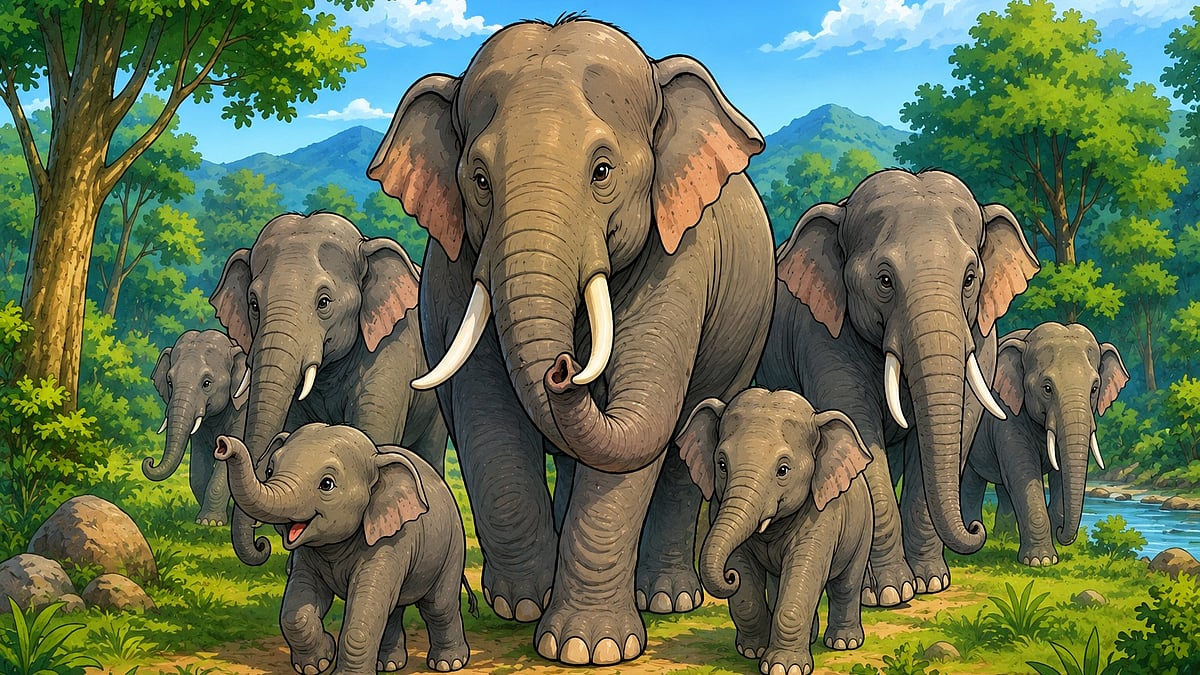
The elephant population in Madhya Pradesh has reached nearly 97, with 70 of them residing in the Bandhavgarh Tiger Reserve. This increase in elephant population has led to a rise in human-elephant conflict, with several instances of elephants killing villagers in the last few years.
According to Bandhavgarh Tiger Reserve field director Anupam Sahay, the reserve alone has around 60-70 elephants, and when combined with the elephants in Shahdol and Sidhi, the total count reaches 97. The movement of elephants towards villages poses a significant risk of human-elephant conflict.
To mitigate this issue, a specialist team from the Wildlife Institute of India (WII) has started a three-year research study in the Bandhavgarh Tiger Reserve. The study aims to identify elephant corridors and pinpoint areas of conflict between elephants and humans. The research will focus on elephant corridors in the Eco Centre Tala area of Bandhavgarh and the Sanjay Tiger Reserve in Sidhi.
The study is expected to provide valuable insights into the behavior and habitat of elephants in the region, which will help in implementing conservation measures. The findings of the study may also be useful in other eastern parts of the state, particularly in Mandla, Sidhi, and Shahdol, where elephant herds are often spotted.
In recent years, there have been several instances of human-elephant conflict in the region, resulting in the loss of human life. In May 2025, two wild elephants killed three villagers in the Beohari forest range of Shahdol district. Similarly, three wild elephants killed two people near the Bandhavgarh Tiger Reserve.
The WII study is a significant step towards addressing the issue of human-elephant conflict in the region. By understanding the behavior and habitat of elephants, conservation efforts can be tailored to reduce the risk of conflict and promote coexistence between humans and elephants.
The rise in human-elephant conflict is a concern for the local population, and the WII study is expected to provide a solution to this issue. The study will also help in developing strategies to reduce the risk of conflict and promote conservation of elephants in the region.
In the long run, the WII study is expected to have a significant impact on the conservation of elephants in Madhya Pradesh. By reducing human-elephant conflict, the study will help in promoting the coexistence of humans and elephants, which is essential for the conservation of these majestic creatures.
The conservation of elephants is crucial for maintaining the ecological balance in the region. Elephants play a vital role in shaping their ecosystems, and their loss can have significant consequences for the environment. Therefore, it is essential to take measures to reduce human-elephant conflict and promote the conservation of these magnificent creatures.
In conclusion, the WII study is a significant step towards addressing the issue of human-elephant conflict in Madhya Pradesh. By understanding the behavior and habitat of elephants, conservation efforts can be tailored to reduce the risk of conflict and promote coexistence between humans and elephants. This study is expected to have a significant impact on the conservation of elephants in the region and will help in promoting the coexistence of humans and elephants,
Frequently asked questions
What is the current elephant population in Madhya Pradesh?
The current elephant population in Madhya Pradesh is nearly 97.
What is the main objective of the WII study?
The main objective of the WII study is to identify elephant corridors and pinpoint areas of conflict between elephants and humans.