Indian Social Media Post Falsely Claims Iran Nuke Admission
A fake social media post from India spreads to Israeli PM Netanyahu, US ambassador Mike Waltz. False claim about Iran's nuclear program goes viral.
'%3E%3Crect%20width%3D'96'%20height%3D'96'%20fill%3D'%234A235A'%2F%3E%3Ccircle%20cx%3D'30'%20cy%3D'24'%20r%3D'44'%20fill%3D'%23fff'%20opacity%3D'.12'%2F%3E%3Ccircle%20cx%3D'60'%20cy%3D'74'%20r%3D'40'%20fill%3D'%23000'%20opacity%3D'.10'%2F%3E%3C%2Fg%3E%3Cg%20fill%3D'none'%20stroke%3D'%23fff'%20stroke-width%3D'3'%3E%3Ccircle%20cx%3D'48'%20cy%3D'48'%20r%3D'16'%2F%3E%3Cellipse%20cx%3D'48'%20cy%3D'48'%20rx%3D'6.5'%20ry%3D'16'%2F%3E%3Cline%20x1%3D'32'%20y1%3D'42'%20x2%3D'64'%20y2%3D'42'%2F%3E%3Cline%20x1%3D'32'%20y1%3D'54'%20x2%3D'64'%20y2%3D'54'%2F%3E%3C%2Fg%3E%3C%2Fsvg%3E)
A recent incident highlights the rapid spread of misinformation on social media, with a false claim about Iran's nuclear program traveling from an Indian social media account to the highest levels of government.
The claim, which originated on an Indian X account with around 175,000 followers, alleged that Brig. Gen. Ahmad Vahidi, commander of Iran's Islamic Revolutionary Guards Corps, had said Iran would not give up its pursuit of nuclear weapons as long as Israel and the United States possessed them.
Despite lacking evidence, the claim spread rapidly across social media, with an Israeli television channel airing it as Iran's first public admission of developing a nuclear bomb. The claim was also shared by Israeli Prime Minister Benjamin Netanyahu's son, Yair Netanyahu, a political commentator.
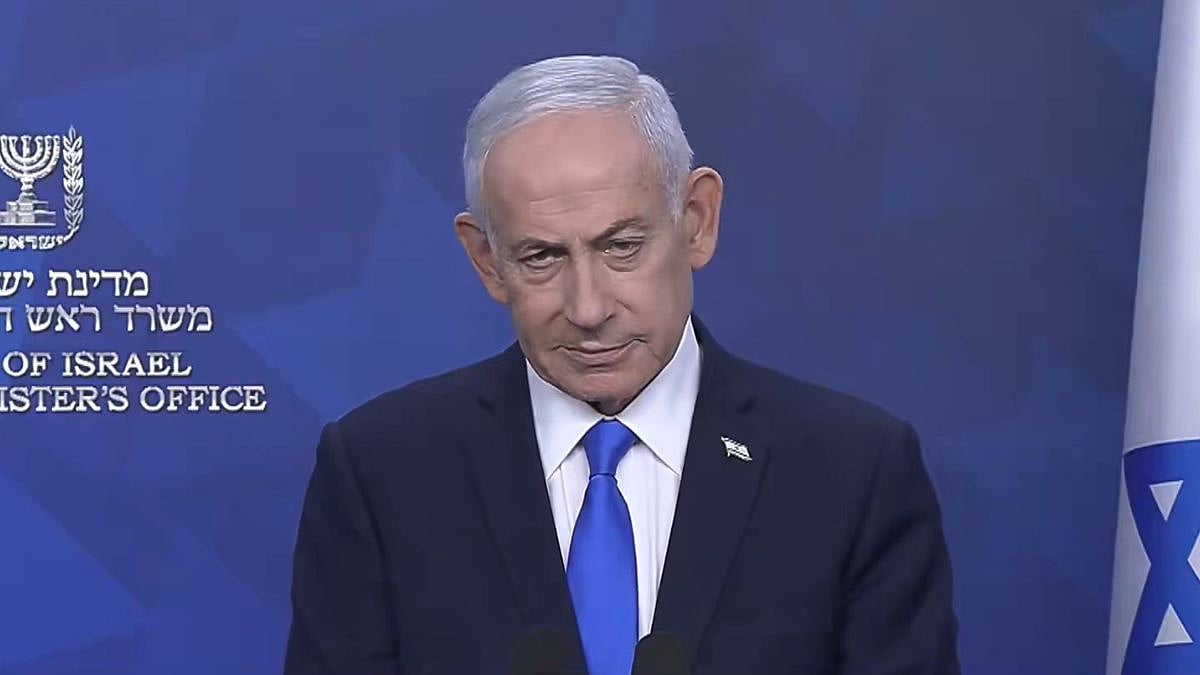
Less than three hours after the claim first appeared, it was cited by Prime Minister Benjamin Netanyahu in a speech at Mount Herzl, Israel's national cemetery in Jerusalem. The claim also reached Washington, with Trump administration's ambassador to the United Nations Mike Waltz sharing it on X.
The New York Times traced the origins of the claim, finding that it had been amplified by several Indian and Israeli social media accounts before reaching the highest levels of government. The account that first posted the claim had around 175,000 followers, and it was later shared by another Indian account with roughly 82,000 followers.
An Israeli account called Mossad Commentary, which shares its name with Israel's intelligence agency but has no confirmed links to it, also amplified the claim. The account suggested that Iran was deliberately stalling talks, and the claim was later aired by Israel's Channel 14.
Iran's Foreign Ministry spokesman Esmail Baghaei rejected the post, terming it as false. The incident highlights the dangers of misinformation on social media, particularly in the context of international conflicts.
The US-Iran war is being fought not just in the skies or around the Strait of Hormuz, but also across social media. Misinformation, memes, and competing claims are emerging as another battleground, influencing the course of the war and stalled ceasefire efforts in real time.
The incident also raises questions about the role of social media in spreading misinformation and the need for fact-checking and verification. As social media continues to play a major role in shaping public opinion and influencing government decisions, it is essential to ensure that the information being shared is accurate and reliable.
In the context of the US-Iran war, the spread of misinformation can have serious consequences, including escalating tensions and undermining ceasefire efforts. It is essential for governments, social media companies, and individuals to work together to prevent the spread of misinformation and promote fact-based discourse.
The impact of this incident is a reminder that social media can be a powerful tool for spreading information, but it can also be used to spread misinformation. It is crucial to be aware of the sources of information and to verify the accuracy of claims before sharing them.
In conclusion, the spread of the false claim about Iran's nuclear program highlights the need for fact-checking and verification on social media. It also underscores the importance of being aware of the sources of information and the potential consequences of spreading misinformation.
Frequently asked questions
What was the false claim about Iran's nuclear program?
The claim alleged that Brig. Gen. Ahmad Vahidi, commander of Iran's Islamic Revolutionary Guards Corps, had said Iran would not give up its pursuit of nuclear weapons as long as Israel and the United States possessed them.
How did the claim spread?
The claim originated on an Indian X account and was later shared by several Indian and Israeli social media accounts, including an Israeli television channel and the son of Israeli Prime Minister Benjamin Netanyahu.