Mumbai Autos Avoid Key Routes Due to Marathi Checks
Auto drivers evade language checks, may go to court. Service shortage hits commuters.
'%3E%3Crect%20width%3D'96'%20height%3D'96'%20fill%3D'%23B3261E'%2F%3E%3Ccircle%20cx%3D'30'%20cy%3D'24'%20r%3D'44'%20fill%3D'%23fff'%20opacity%3D'.12'%2F%3E%3Ccircle%20cx%3D'60'%20cy%3D'74'%20r%3D'40'%20fill%3D'%23000'%20opacity%3D'.10'%2F%3E%3C%2Fg%3E%3Cg%20fill%3D'%23fff'%3E%3Crect%20x%3D'29'%20y%3D'49'%20width%3D'8'%20height%3D'19'%20rx%3D'1'%2F%3E%3Crect%20x%3D'39'%20y%3D'40'%20width%3D'9'%20height%3D'28'%20rx%3D'1'%2F%3E%3Crect%20x%3D'50'%20y%3D'45'%20width%3D'8'%20height%3D'23'%20rx%3D'1'%2F%3E%3Crect%20x%3D'60'%20y%3D'53'%20width%3D'7'%20height%3D'15'%20rx%3D'1'%2F%3E%3Crect%20x%3D'41'%20y%3D'34'%20width%3D'5'%20height%3D'6'%2F%3E%3C%2Fg%3E%3C%2Fsvg%3E)
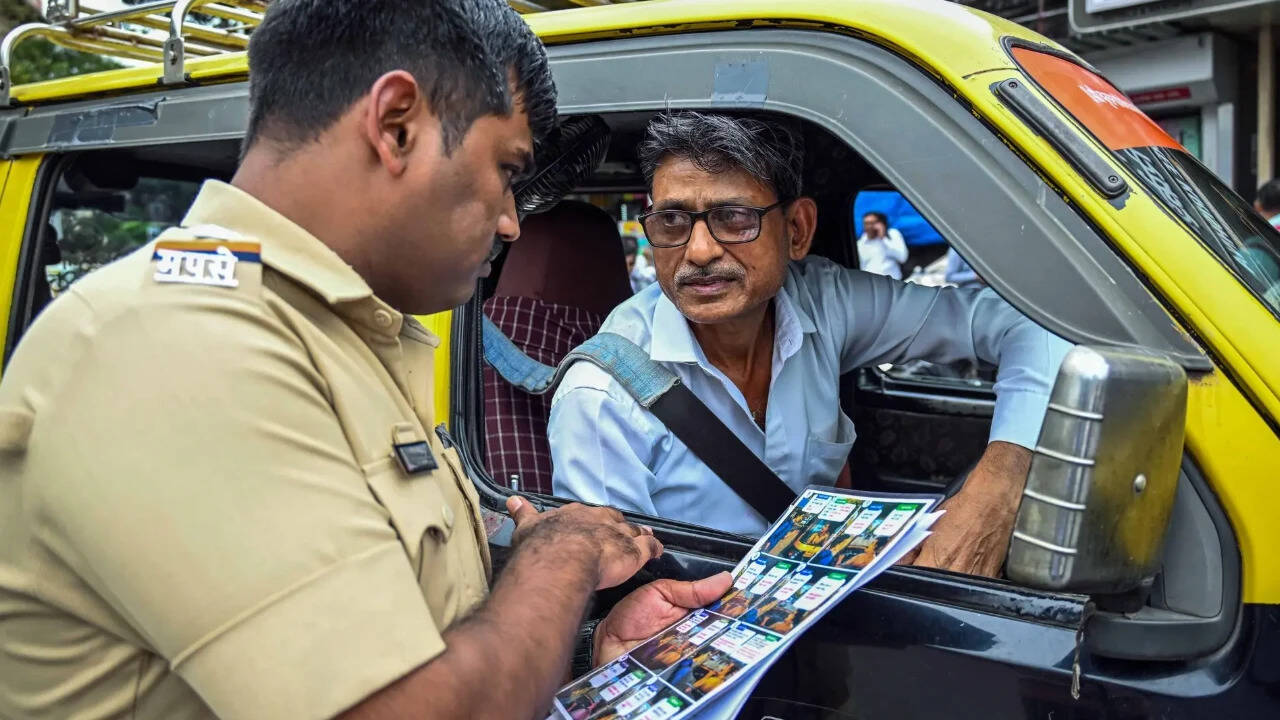
Auto and taxi drivers in Mumbai are altering their routes to avoid government checks that enforce the use of the Marathi language. This move comes as a response to the strict implementation of Marathi language requirements for auto and taxi drivers operating in the city.
Many drivers are now using alternative routes and relying on WhatsApp groups to stay informed about the locations and timings of these enforcement activities. This strategy allows them to avoid areas where checks are being conducted, thereby minimizing the risk of being penalized for not adhering to the Marathi language rules.
The situation has led to a temporary shortage of auto and taxi services on key routes, causing inconvenience to commuters who rely on these modes of transportation. Some drivers have even stopped providing services, further exacerbating the shortage.
A group of auto drivers is planning to challenge the show-cause notices they have received in court, citing that the training provided by the government to learn Marathi was inadequate. The drivers argue that the training did not sufficiently equip them with the necessary language skills to comply with the requirements.
The government, however, claims that it had provided the necessary training to help drivers learn Marathi. The dispute over the adequacy of the training has added to the tension between the government and the auto drivers.
The Marathi language enforcement is part of a broader initiative to promote the use of the local language in official and public services. While the intention behind the policy is to promote regional language and culture, its implementation has posed challenges for auto and taxi drivers who are not fluent in Marathi.
As the situation unfolds, it remains to be seen how the court will rule on the matter if the drivers decide to proceed with their challenge. The outcome will have significant implications for the auto and taxi services in Mumbai, as well as the commuters who depend on them.
The development highlights the complexities of implementing language policies in a multilingual city like Mumbai. It also underscores the need for effective communication and training to ensure that all stakeholders are equipped to comply with the requirements.
In conclusion, the Marathi language checks have led to a significant disruption in auto and taxi services in Mumbai, with drivers avoiding key routes and contemplating legal action. The issue serves as a reminder of the challenges that can arise when implementing language policies in diverse urban environments.
Frequently asked questions
Why are auto drivers in Mumbai avoiding key routes?
Auto drivers are avoiding key routes in Mumbai to evade government checks that enforce the use of the Marathi language.
What action are auto drivers planning to take against the show-cause notices?
A group of auto drivers is planning to challenge the show-cause notices in court, citing inadequate training to learn Marathi.