World Navigates Chaos Amid Wars and Policies
Global disruptions post-COVID, wars and policies test resilience.
'%3E%3Crect%20width%3D'96'%20height%3D'96'%20fill%3D'%234A235A'%2F%3E%3Ccircle%20cx%3D'30'%20cy%3D'24'%20r%3D'44'%20fill%3D'%23fff'%20opacity%3D'.12'%2F%3E%3Ccircle%20cx%3D'60'%20cy%3D'74'%20r%3D'40'%20fill%3D'%23000'%20opacity%3D'.10'%2F%3E%3C%2Fg%3E%3Cg%20fill%3D'none'%20stroke%3D'%23fff'%20stroke-width%3D'3'%3E%3Ccircle%20cx%3D'48'%20cy%3D'48'%20r%3D'16'%2F%3E%3Cellipse%20cx%3D'48'%20cy%3D'48'%20rx%3D'6.5'%20ry%3D'16'%2F%3E%3Cline%20x1%3D'32'%20y1%3D'42'%20x2%3D'64'%20y2%3D'42'%2F%3E%3Cline%20x1%3D'32'%20y1%3D'54'%20x2%3D'64'%20y2%3D'54'%2F%3E%3C%2Fg%3E%3C%2Fsvg%3E)
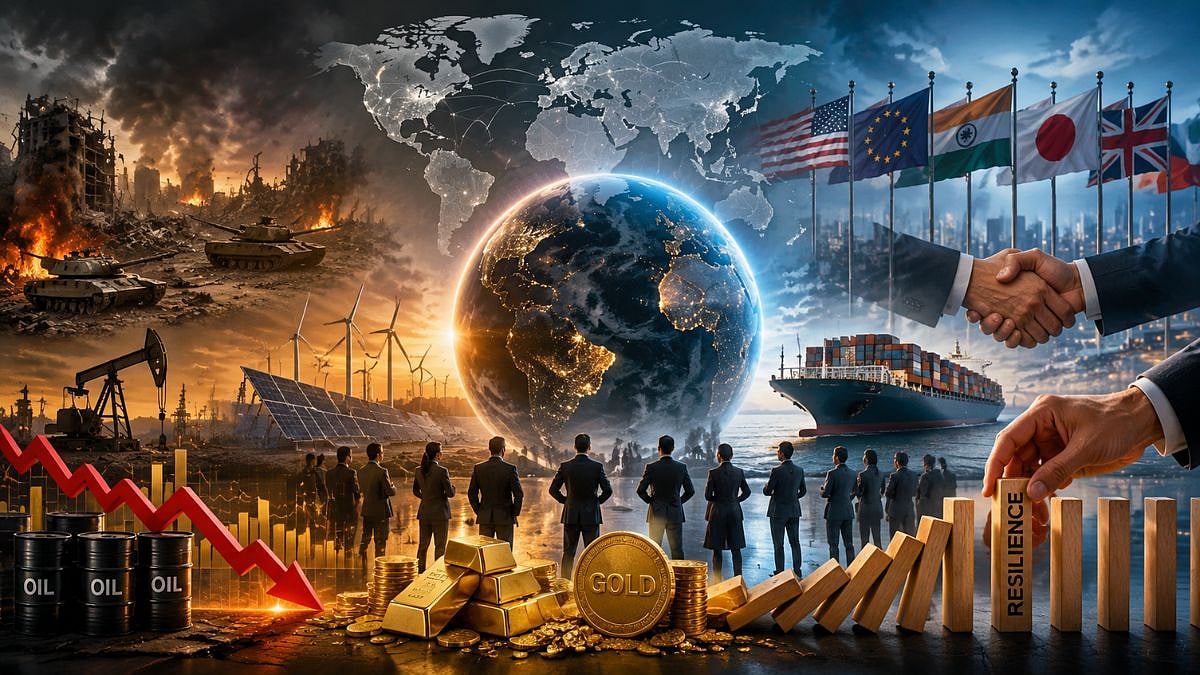
The world has faced numerous disruptions since the COVID-19 pandemic, including wars and unconventional policies pursued by the US. Despite these challenges, the global economy has not entered a recession, and inflation has remained under control. However, market volatility has been significant, with erratic currency and bond movements, while stock indices have generally performed well.
The ongoing war between Russia and Ukraine has led to an embargo on Russia, with its foreign exchange reserves being frozen. The international community has imposed sanctions on Russia, although some exceptions have been made for gas imports. In contrast, the Israel-Hamas conflict has not resulted in sanctions against Israel, despite widespread condemnation.
In recent years, the US has taken several actions that have impacted the global economy. In 2025, President Trump unilaterally raised tariff rates, prompting countries to negotiate deals to reduce these rates. The following year, the US invaded Iran, despite claiming to have destroyed its nuclear facilities earlier. The international community's response to these actions has been muted, with some European countries expressing mild protests but not openly condemning the US.
To mitigate the effects of these shocks, countries have taken steps to create buffers. One significant development has been the shift towards renewable energy sources, which has reduced the world's dependence on oil. The US has become the largest producer of oil, ensuring its self-reliance and reducing global demand. As a result, the US has started exporting oil, which could help offset any potential output cuts by OPEC.
The changing energy landscape has also prompted GCC countries to re-examine their economic models, which are currently heavily reliant on energy exports. Some countries, like the UAE, have diversified their economies and emerged as global financial centers.
The world's ability to navigate these challenges is a testament to its resilience. However, the ongoing volatility and unpredictability of global events mean that countries must remain vigilant and continue to create buffers to protect their economies.
The US's actions have also raised questions about the role of ethics in international relations. The temporary waivers on importing from Russia during the Iran war highlight the flexibility of ethical considerations in the face of geopolitical interests.
In conclusion, the world has demonstrated its ability to navigate global chaos, but the ongoing disruptions and unpredictability of international events mean that countries must remain alert and adaptable to mitigate the effects of these shocks.
The global economy's resilience in the face of these challenges is a positive sign, but it also underscores the need for continued vigilance and cooperation among nations to address the complex and interconnected challenges of the 21st century.
As the world continues to evolve and face new challenges, it is essential to recognize the importance of creating buffers and diversifying economies to reduce dependence on single products or industries. By doing so, countries can better navigate the complexities of the global economy and reduce their vulnerability to external shocks.
The shift towards renewable energy sources is a significant step in this direction, and it is likely to have far-reaching implications for the global economy and international relations. As the world continues to transition towards a more sustainable and diversified economy, it is essential to prioritize cooperation and diplomacy to address the challenges that lie ahead.
In the end, the world's ability to navigate global chaos will depend on its ability to adapt and evolve in response to changing circumstances. By creating buffers, diversifying economies, and prioritizing cooperation and diplomacy, countries can reduce their vulnerability to external shocks and build a more resilient and sustainable global economy.
Frequently asked questions
What has been the impact of the Russia-Ukraine war on the global economy?
The war has led to an embargo on Russia and a freeze on its foreign exchange reserves, but the global economy has not entered a recession.
How has the US's actions impacted the global economy?
The US's unilateral actions, such as raising tariff rates and invading Iran, have contributed to market volatility and prompted countries to create buffers to mitigate the effects of these shocks.