Kejriwal, Sisodia Stage Sit-in Near PM Residence
AAP leaders protest, march stopped. Kejriwal and Sisodia stage sit-in.
'%3E%3Crect%20width%3D'96'%20height%3D'96'%20fill%3D'%231A5276'%2F%3E%3Ccircle%20cx%3D'30'%20cy%3D'24'%20r%3D'44'%20fill%3D'%23fff'%20opacity%3D'.12'%2F%3E%3Ccircle%20cx%3D'60'%20cy%3D'74'%20r%3D'40'%20fill%3D'%23000'%20opacity%3D'.10'%2F%3E%3C%2Fg%3E%3Cg%20fill%3D'%23fff'%3E%3Cpath%20d%3D'M31%2041%20L48%2031%20L65%2041%20Z'%2F%3E%3Crect%20x%3D'33'%20y%3D'43'%20width%3D'4'%20height%3D'17'%2F%3E%3Crect%20x%3D'41'%20y%3D'43'%20width%3D'4'%20height%3D'17'%2F%3E%3Crect%20x%3D'51'%20y%3D'43'%20width%3D'4'%20height%3D'17'%2F%3E%3Crect%20x%3D'59'%20y%3D'43'%20width%3D'4'%20height%3D'17'%2F%3E%3Crect%20x%3D'30'%20y%3D'62'%20width%3D'36'%20height%3D'4'%20rx%3D'1'%2F%3E%3C%2Fg%3E%3C%2Fsvg%3E)
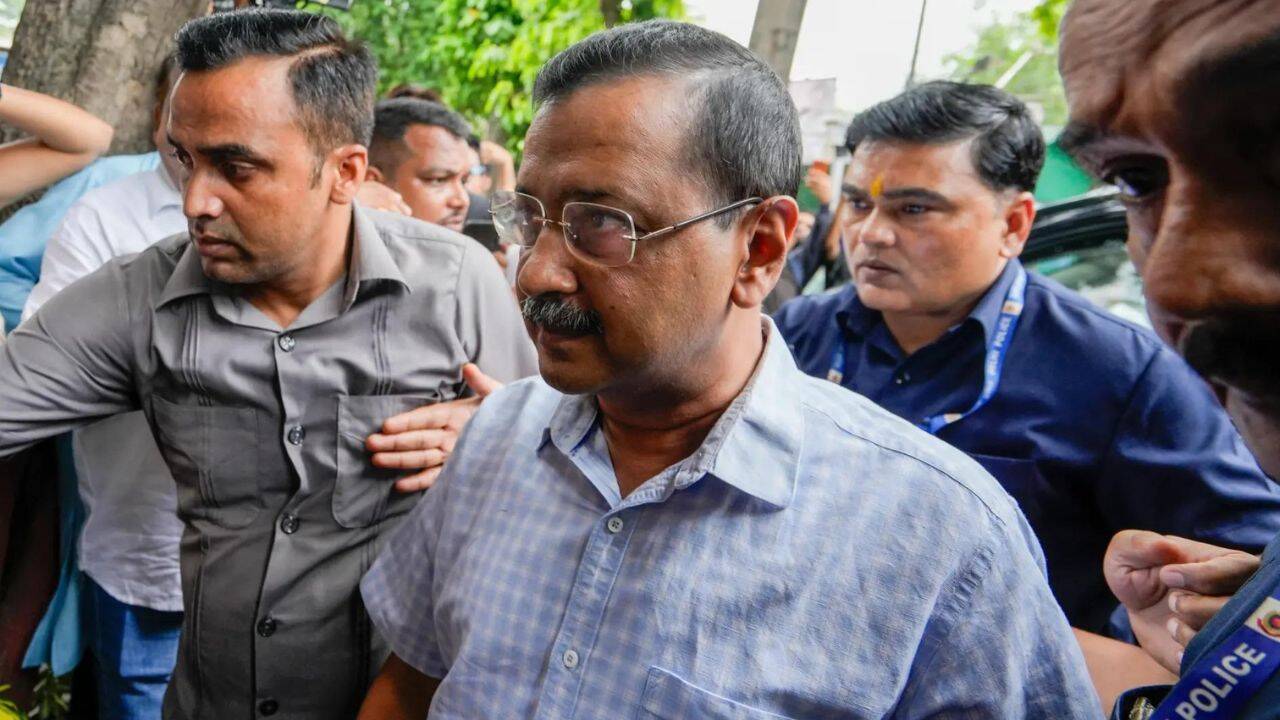
Delhi Chief Minister Arvind Kejriwal and his deputy Manish Sisodia staged a sit-in near the Prime Minister's residence in New Delhi after their march was stopped by the police. The Aam Aadmi Party (AAP) leaders were protesting against the Central government's policies.
The march, which began earlier in the day, was intended to reach the Prime Minister's residence, but was halted by the police at a certain point. Kejriwal and Sisodia, along with other AAP leaders, then decided to stage a sit-in, refusing to leave until their demands were met.
The AAP has been critical of the Central government's policies, particularly with regards to the recent arrests of party leaders. The party has accused the government of trying to silence its leaders and stifle dissent. Kejriwal and Sisodia's sit-in is a continuation of the party's protests against the government.
The police had made elaborate arrangements to prevent the march from reaching the Prime Minister's residence, deploying large numbers of personnel and barricades. Despite this, the AAP leaders were able to gather a significant crowd of supporters, who joined them in their protest.
The AAP's protests have been gaining momentum in recent days, with the party accusing the Central government of trying to undermine its authority in Delhi. The party has also accused the government of trying to intimidate its leaders and workers.
The sit-in by Kejriwal and Sisodia is likely to escalate the tensions between the AAP and the Central government. The AAP has vowed to continue its protests until its demands are met, while the government has maintained that it will not be swayed by the party's agitation.
The AAP's protests have significant implications for the city of Delhi, where the party is in power. The party's leaders have accused the Central government of trying to interfere in the city's affairs, and have vowed to protect the city's autonomy.
In the context of Indian politics, the AAP's protests are a reflection of the growing tensions between the Central government and the opposition parties. The AAP's agitation is likely to be watched closely by other opposition parties, who may see it as a model for their own protests against the government.
The significance of the AAP's protests lies in their ability to mobilize public support and put pressure on the government. The party's leaders have been able to tap into the frustrations of the public, who are increasingly disillusioned with the government's policies. As the protests continue, it remains to be seen how the government will respond, and what implications this will have for the city of Delhi and the country as a whole.
The AAP's protests are a reminder that the relationship between the Central government and the state governments is complex and often contentious. The party's agitation highlights the need for greater cooperation and understanding between the different levels of government, and the importance of protecting the autonomy of the states.
In conclusion, the sit-in by Kejriwal and Sisodia is a significant development in the ongoing protests by the AAP against the Central government. The party's agitation has significant implications for the city of Delhi and the country as a whole, and is likely to be watched closely by other opposition parties. As the protests continue, it remains to be seen how the government will respond, and what implications this will have for the future of Indian politics.
Frequently asked questions
Why are Kejriwal and Sisodia protesting?
They are protesting against the Central government's policies, particularly the recent arrests of AAP leaders.
What is the significance of the AAP's protests?
The protests have significant implications for the city of Delhi and the country as a whole, and highlight the need for greater cooperation between the Central government and the state governments.