Pakistan Air Force Faces Funding Crisis
Pakistan's air force struggles with old planes and low funds. Economic constraints threaten future procurements.
'%3E%3Crect%20width%3D'96'%20height%3D'96'%20fill%3D'%234A235A'%2F%3E%3Ccircle%20cx%3D'30'%20cy%3D'24'%20r%3D'44'%20fill%3D'%23fff'%20opacity%3D'.12'%2F%3E%3Ccircle%20cx%3D'60'%20cy%3D'74'%20r%3D'40'%20fill%3D'%23000'%20opacity%3D'.10'%2F%3E%3C%2Fg%3E%3Cg%20fill%3D'none'%20stroke%3D'%23fff'%20stroke-width%3D'3'%3E%3Ccircle%20cx%3D'48'%20cy%3D'48'%20r%3D'16'%2F%3E%3Cellipse%20cx%3D'48'%20cy%3D'48'%20rx%3D'6.5'%20ry%3D'16'%2F%3E%3Cline%20x1%3D'32'%20y1%3D'42'%20x2%3D'64'%20y2%3D'42'%2F%3E%3Cline%20x1%3D'32'%20y1%3D'54'%20x2%3D'64'%20y2%3D'54'%2F%3E%3C%2Fg%3E%3C%2Fsvg%3E)
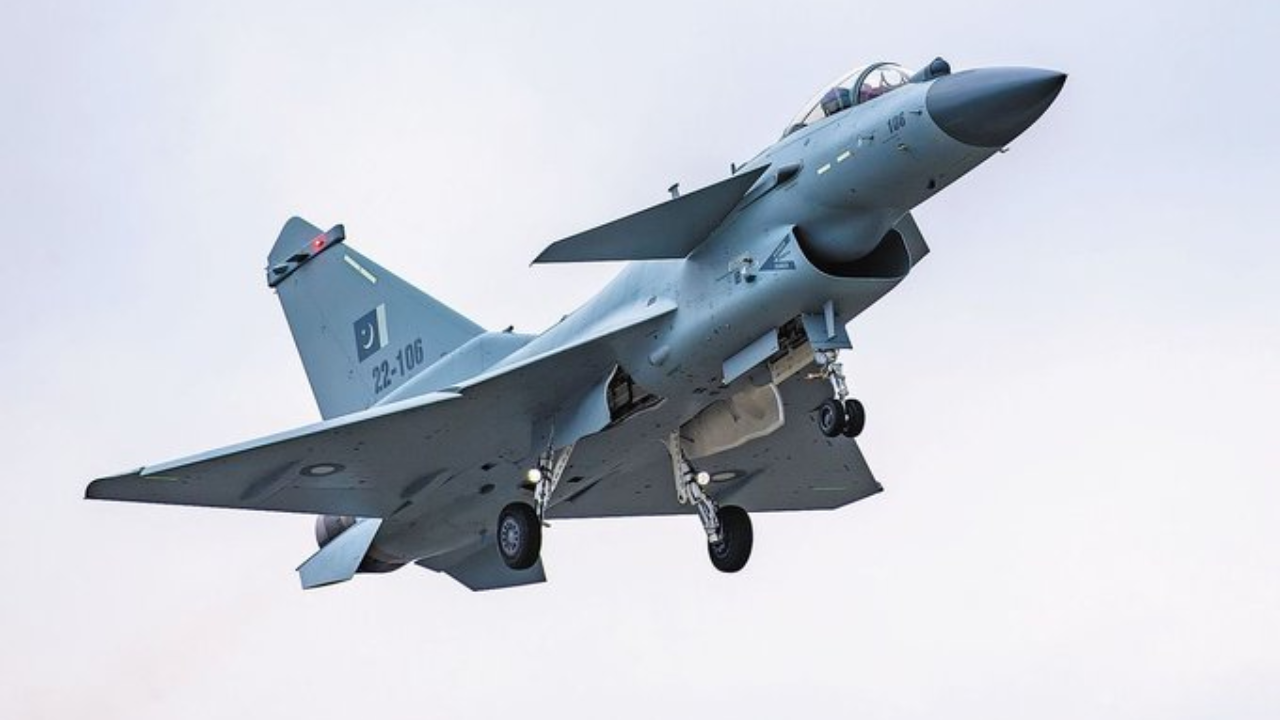
The Pakistani air force is facing significant challenges as its older aircraft near the end of their service life. Despite efforts to maintain combat mass through diverse aircraft acquisitions and upgrades, the force is struggling to keep up with rising procurement and maintenance costs.
Global air forces have reduced their numbers since the Cold War, with the exception of China, which has seen significant growth in its air force. However, Pakistan's economic constraints may hinder its ability to fund future fighter procurements, putting the air force's capabilities at risk.
The Pakistani air force has traditionally relied on a mix of aircraft from different countries, including the US, China, and France. However, as these aircraft age, the air force is facing increasing maintenance costs, which are further straining its limited budget.
In recent years, the air force has attempted to upgrade its fleet with new acquisitions, including the Chinese-made JF-17 fighter jet. However, these efforts have been hindered by economic constraints, which have limited the air force's ability to purchase new aircraft.
The implications of the Pakistani air force's funding crisis are significant, not only for the country's defense capabilities but also for regional stability. A weakened air force could limit Pakistan's ability to respond to external threats, potentially creating a power vacuum in the region.
The Pakistani government has attempted to address the air force's funding crisis through various measures, including increasing the defense budget and seeking foreign aid. However, these efforts have been limited, and the air force continues to face significant challenges in maintaining its capabilities.
In the context of regional air power dynamics, Pakistan's air force is facing increasing competition from neighboring countries, particularly India, which has been rapidly modernizing its air force in recent years. The Indian air force has acquired new aircraft, including the French-made Rafale fighter jet, and has also developed its own indigenous fighter jet, the Tejas.
As the Pakistani air force struggles to maintain its capabilities, it is likely to face significant challenges in the coming years. The air force's ability to respond to external threats will be limited, and its regional influence will likely be diminished.
In conclusion, the Pakistani air force's funding crisis has significant implications for regional stability and defense capabilities. The air force's struggles to maintain its capabilities will likely have far-reaching consequences, not only for Pakistan but also for the wider region.
Frequently asked questions
What is the current state of the Pakistani air force?
The Pakistani air force is facing significant challenges due to old aircraft and limited funding.
How does the Pakistani air force's funding crisis affect regional stability?
A weakened Pakistani air force could limit the country's ability to respond to external threats, potentially creating a power vacuum in the region.