Rajasthan's Shekhawati Havelis Enter UNESCO Tentative List
Shekhawati havelis recognized globally, boosting Rajasthan's heritage bid. Inclusion in UNESCO's Tentative List to promote heritage tourism.
'%3E%3Crect%20width%3D'96'%20height%3D'96'%20fill%3D'%231A5276'%2F%3E%3Ccircle%20cx%3D'30'%20cy%3D'24'%20r%3D'44'%20fill%3D'%23fff'%20opacity%3D'.12'%2F%3E%3Ccircle%20cx%3D'60'%20cy%3D'74'%20r%3D'40'%20fill%3D'%23000'%20opacity%3D'.10'%2F%3E%3C%2Fg%3E%3Cg%20fill%3D'%23fff'%3E%3Cpath%20d%3D'M31%2041%20L48%2031%20L65%2041%20Z'%2F%3E%3Crect%20x%3D'33'%20y%3D'43'%20width%3D'4'%20height%3D'17'%2F%3E%3Crect%20x%3D'41'%20y%3D'43'%20width%3D'4'%20height%3D'17'%2F%3E%3Crect%20x%3D'51'%20y%3D'43'%20width%3D'4'%20height%3D'17'%2F%3E%3Crect%20x%3D'59'%20y%3D'43'%20width%3D'4'%20height%3D'17'%2F%3E%3Crect%20x%3D'30'%20y%3D'62'%20width%3D'36'%20height%3D'4'%20rx%3D'1'%2F%3E%3C%2Fg%3E%3C%2Fsvg%3E)
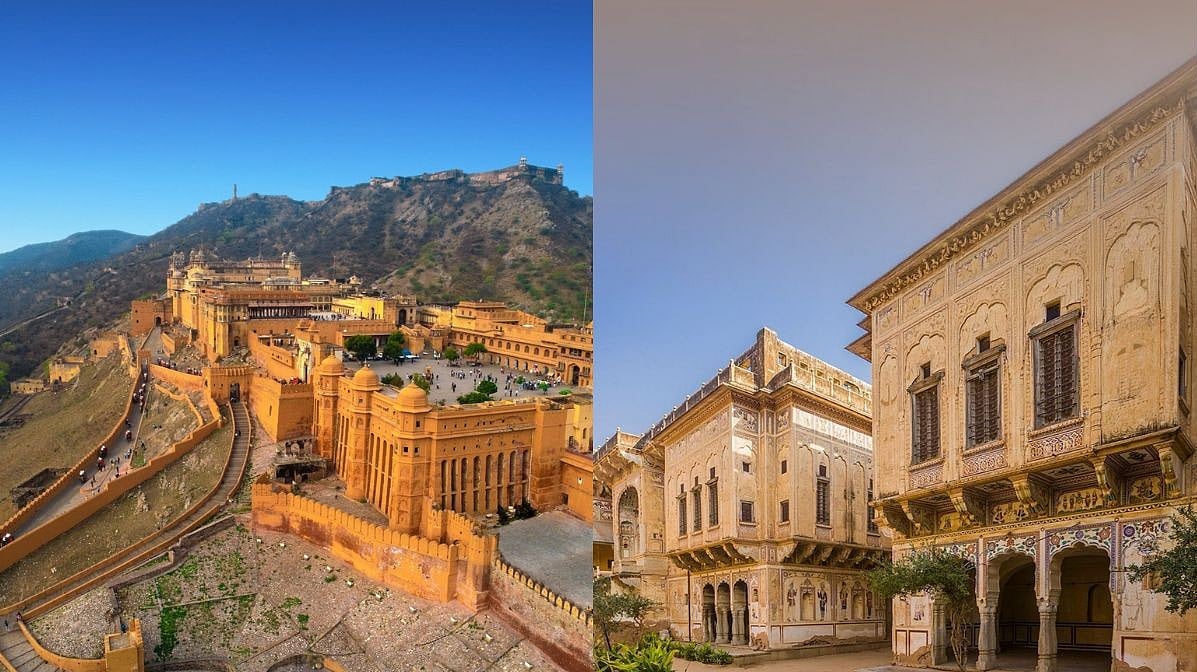
Rajasthan's iconic Shekhawati havelis have been included in UNESCO's Tentative List, marking a significant milestone in the state's efforts to secure World Heritage status for its distinctive architectural and artistic legacy.
The nomination covers historic havelis and heritage properties across 14 key locations in the Shekhawati region, including Alsisar, Bissau, Chirawa, Churu, Dundlod, Fatehpur, Jhunjhunu, Khetri, Laxmangarh, Mandawa, Mahansar, Nawalgarh, Ramgarh, and Sikar.
Deputy Chief Minister of Rajasthan Diya Kumari expressed pride and satisfaction over the inclusion, stating that it strengthens the state's efforts to preserve this extraordinary heritage and present it to the world. The inclusion is also expected to create new opportunities for heritage tourism and local communities.
The Shekhawati havelis are renowned for their distinctive architecture and extraordinary fresco paintings, which preserve a visual record of the region's artistic traditions and social and cultural life. The murals depict a range of subjects, including religious and mythological themes, portraits, and scenes from everyday life.
The concentration and diversity of these painted havelis have earned Shekhawati a distinctive place in Rajasthan's architectural and cultural landscape, making the region an important destination for heritage and cultural tourism.
Inclusion in UNESCO's Tentative List is expected to provide further momentum to efforts for documentation, conservation, restoration, and sustainable management of Shekhawati's historic built heritage. For Rajasthan, the move also carries significant tourism potential, with the potential to emerge as a stronger destination for international heritage travelers.
The inclusion is expected to strengthen Rajasthan's efforts to balance heritage conservation with tourism development, while raising greater awareness of Shekhawati's architectural legacy at the national and international level.
The recognition of Shekhawati havelis by UNESCO is a significant step towards promoting India's rich cultural heritage globally. It is expected to have a positive impact on the local economy and community, while also showcasing the country's diverse architectural and artistic traditions.
In the coming years, the state government plans to focus on the conservation and restoration of these historic havelis, while also promoting sustainable tourism practices in the region. This is expected to not only preserve the cultural heritage of Shekhawati but also provide economic benefits to the local community.
Overall, the inclusion of Shekhawati havelis in UNESCO's Tentative List is a significant achievement for Rajasthan and a major step towards promoting India's cultural heritage globally.
The move is expected to have a lasting impact on the region's tourism industry, with the potential to attract more visitors and promote cultural exchange between India and other countries. As the state government continues to work towards preserving and promoting the cultural heritage of Shekhawati, it is likely that the region will emerge as a major destination for heritage tourism in the coming years.
In conclusion, the recognition of Shekhawati havelis by UNESCO is a significant milestone in the state's efforts to promote its cultural heritage globally. It is expected to have a positive impact on the local economy and community, while also showcasing the country's diverse architectural and artistic traditions.
Frequently asked questions
What is the significance of Shekhawati havelis being included in UNESCO's Tentative List?
The inclusion is a significant milestone in Rajasthan's efforts to secure World Heritage status for its distinctive architectural and artistic legacy, and is expected to promote heritage tourism and conservation.
What are the key locations covered in the nomination?
The nomination covers 14 key locations in the Shekhawati region, including Alsisar, Bissau, Chirawa, Churu, Dundlod, Fatehpur, Jhunjhunu, Khetri, Laxmangarh, Mandawa, Mahansar, Nawalgarh, Ramgarh, and Sikar.