Rajasthan's Lehariya Fabric Mimics Shifting Desert Sands
Lehariya's wave-like stripes, traditional tie-and-dye technique, and cultural significance
'%3E%3Crect%20width%3D'96'%20height%3D'96'%20fill%3D'%23B3261E'%2F%3E%3Ccircle%20cx%3D'30'%20cy%3D'24'%20r%3D'44'%20fill%3D'%23fff'%20opacity%3D'.12'%2F%3E%3Ccircle%20cx%3D'60'%20cy%3D'74'%20r%3D'40'%20fill%3D'%23000'%20opacity%3D'.10'%2F%3E%3C%2Fg%3E%3Cg%20fill%3D'%23fff'%3E%3Crect%20x%3D'29'%20y%3D'49'%20width%3D'8'%20height%3D'19'%20rx%3D'1'%2F%3E%3Crect%20x%3D'39'%20y%3D'40'%20width%3D'9'%20height%3D'28'%20rx%3D'1'%2F%3E%3Crect%20x%3D'50'%20y%3D'45'%20width%3D'8'%20height%3D'23'%20rx%3D'1'%2F%3E%3Crect%20x%3D'60'%20y%3D'53'%20width%3D'7'%20height%3D'15'%20rx%3D'1'%2F%3E%3Crect%20x%3D'41'%20y%3D'34'%20width%3D'5'%20height%3D'6'%2F%3E%3C%2Fg%3E%3C%2Fsvg%3E)
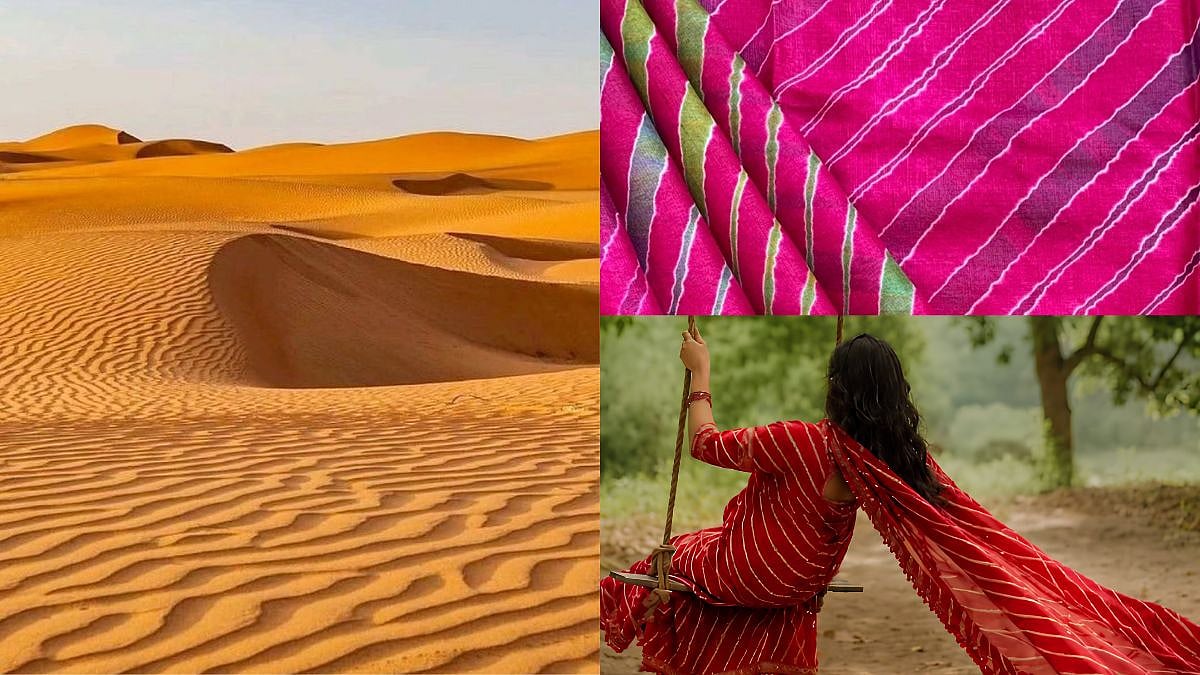
Rajasthan's vibrant textile traditions are renowned for their striking colours and intricate patterns. Among these, Lehariya stands out for its distinctive wave-like stripes that appear to flow across the fabric. The name 'Lehariya' comes from the Hindi word 'lehar', meaning wave, which reflects the rippling patterns created through the traditional tie-and-dye technique.
Lehariya is closely associated with Rajasthan, particularly Jaipur, and has long been a popular choice for colourful turbans, sarees, dupattas, and other traditional garments. Its flowing design is often compared to the shifting waves of sand in the Thar Desert, making it a visual representation of Rajasthan's landscape and cultural identity.
The signature diagonal, zig-zag stripes of Lehariya run across multicoloured cotton and silk fabrics. This unique design is created using the bandhani tie-and-dye technique, where the fabric is rolled diagonally and then tied at regular intervals before being dyed. The tightly secured sections resist the dye, which creates characteristic diagonal and signature stripes.
The process of creating Lehariya can be repeated using different colours, resulting in vibrant multi-coloured patterns. Unlike printed designs, the distinctive waves are formed through the manipulation of the fabric itself. Complex Lehariya designs can take up to nine colours, with intricate pieces taking skilled artisans up to a month to complete.
Traditionally, salt was used during the dyeing process to help fix the colour, which helped prevent it from blending or muddying between shades. The roots of Lehariya go back to 17th-century Rajasthan, where royal families supported the craft, with each royal house having its own colours and patterns.
Lehariya represents the rich textile heritage of Rajasthan and is a symbol of the state's cultural identity. The craft has historically been associated with traditional clothing and festive occasions and continues to be worn during celebrations, weddings, and cultural events.
Over time, Lehariya has also found its way into contemporary fashion, with designers incorporating its distinctive patterns into modern sarees, dresses, scarves, and accessories while retaining the essence of the traditional craft. The diagonal stripe patterns of Lehariya are directly inspired by the wind-swept sand dunes and ripples formed by hot winds blowing across the Thar Desert in Rajasthan.
In conclusion, Lehariya is a unique and significant part of Rajasthan's textile heritage, with its wave-like stripes and traditional tie-and-dye technique making it a visual representation of the state's landscape and cultural identity. Its cultural significance and aesthetic appeal have made it a popular choice for traditional and contemporary fashion, ensuring its continued relevance and importance in modern times.
The craft of Lehariya is a testament to the skill and creativity of Rajasthan's artisans, who have perfected the technique over centuries. As a result, Lehariya has become an integral part of Rajasthan's cultural identity, symbolizing the state's rich heritage and traditional values.
In the context of Indian textiles, Lehariya is a significant example of the country's diverse and vibrant craft traditions. The craft has been recognized and appreciated globally, with many designers and fashion enthusiasts incorporating Lehariya patterns into their designs.
Overall, Lehariya is a remarkable example of Rajasthan's textile heritage, with its unique wave-like stripes and traditional tie-and-dye technique making it a significant part of the state's cultural identity. Its continued relevance and importance in modern times are a testament to the craft's enduring appeal and significance.
The significance of Lehariya extends beyond its aesthetic appeal, as it represents the rich cultural heritage of Rajasthan. The craft has been an integral part of the state's traditional clothing and festive occasions, and its continued popularity is a reflection of the state's strong cultural identity.
In modern times, Lehariya has evolved to incorporate contemporary designs and styles, while retaining the essence of the traditional craft. This evolution has ensured the craft's continued relevance and importance, making it a significant part of Rajasthan's cultural landscape.
In conclusion, Lehariya is a unique and significant part of Rajasthan's textile heritage, with its wave-like stripes and traditional tie-and-dye technique making it a visual representation of the state's landscape and cultural identity. Its cultural significance, aesthetic appeal, and continued relevance have made it a popular choice for traditional and contemporary fashion, ensuring its importance in modern times.
Frequently asked questions
What is Lehariya fabric?
Lehariya is a traditional textile from Rajasthan, known for its distinctive wave-like stripes.
How is Lehariya made?
Lehariya is made using the bandhani tie-and-dye technique, where the fabric is rolled diagonally and then tied at regular intervals before being dyed.