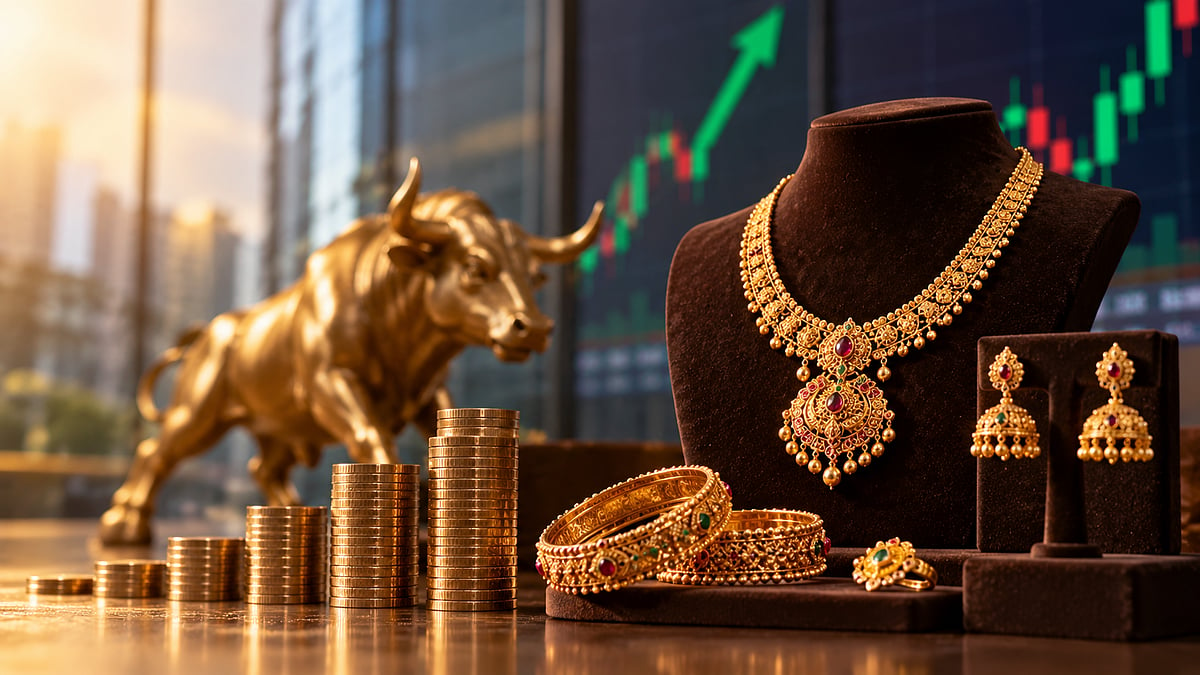
Gold Prices Drop Amid Strong US Payroll Report
Gold prices fell due to a strong US payroll report. Will they continue to drop?
'%3E%3Crect%20width%3D'96'%20height%3D'96'%20fill%3D'%230B6E4F'%2F%3E%3Ccircle%20cx%3D'30'%20cy%3D'24'%20r%3D'44'%20fill%3D'%23fff'%20opacity%3D'.12'%2F%3E%3Ccircle%20cx%3D'60'%20cy%3D'74'%20r%3D'40'%20fill%3D'%23000'%20opacity%3D'.10'%2F%3E%3C%2Fg%3E%3Cg%20fill%3D'none'%20stroke%3D'%23fff'%20stroke-width%3D'3.2'%20stroke-linecap%3D'round'%20stroke-linejoin%3D'round'%3E%3Cpolyline%20points%3D'31%2C59%2041%2C49%2049%2C54%2063%2C37'%2F%3E%3Cpolyline%20points%3D'55%2C37%2063%2C37%2063%2C45'%2F%3E%3C%2Fg%3E%3C%2Fsvg%3E)
Gold prices experienced a significant decline following the release of a strong US nonfarm payroll report. The report, which indicated a robust labor market, led to expectations of further interest rate hikes by the Federal Reserve. This, in turn, caused gold prices to slump.
However, comments from the NY Fed President Williams and the Fed Governor Waller in the first week of September brought some relief to the gold market. Their dovish remarks helped to mitigate the impact of the strong payroll report and the hawkish speech by Fed Chair Warsh at the Jackson Hole Symposium.
The US nonfarm payroll report is a key indicator of the labor market's health, and its strength suggests that the economy is still growing. This growth, combined with inflation concerns, has led to expectations of further interest rate hikes. As a result, gold prices, which are often seen as a hedge against inflation and economic uncertainty, have fallen.
The Federal Reserve's monetary policy decisions, particularly with regards to interest rates, have a significant impact on gold prices. When interest rates rise, the opportunity cost of holding gold increases, leading to a decrease in demand and, subsequently, a drop in prices.
The gold market is closely watching the Federal Reserve's actions and comments from its officials. Any indication of a change in the Fed's stance on interest rates could lead to a shift in gold prices.
In the context of the current economic situation, gold prices are likely to remain volatile. The strong US payroll report and the Fed's hawkish stance have contributed to the decline in gold prices. However, the dovish comments from some Fed officials have provided some support to the market.
The decline in gold prices has significant implications for investors and consumers. For those looking to buy gold, the current prices may present a buying opportunity. On the other hand, for those who have already invested in gold, the decline in prices may be a cause for concern.
In conclusion, the gold market is experiencing a period of uncertainty, with prices influenced by various factors, including the US payroll report, the Fed's monetary policy decisions, and comments from its officials. As the economic situation continues to evolve, gold prices are likely to remain volatile, and investors should be prepared for further fluctuations.
The current situation in the gold market highlights the importance of staying informed about economic developments and their potential impact on investment decisions. As the Federal Reserve continues to navigate the economy, gold prices will likely remain sensitive to changes in interest rates and monetary policy.
The gold price prediction for today and the coming days will depend on various factors, including the Fed's actions and comments from its officials. Investors should closely monitor the market and adjust their investment strategies accordingly.
What it means for India is that the decline in gold prices could lead to an increase in demand, particularly during the festive season. The current prices may be attractive to consumers, leading to an increase in sales. However, the volatility in the gold market also poses a risk to investors, and they should exercise caution when making investment decisions.
Overall, the gold market is experiencing a period of uncertainty, and prices are likely to remain volatile in the coming days. Investors and consumers should stay informed about economic developments and adjust their strategies accordingly.
Frequently asked questions
Why did gold prices drop recently?
Gold prices dropped due to a strong US nonfarm payroll report, which led to expectations of further interest rate hikes by the Federal Reserve.
What is the current outlook for gold prices?
The gold market is expected to remain volatile, with prices influenced by various factors, including the US payroll report, the Fed's monetary policy decisions, and comments from its officials.