Nepal Flood Alert Delayed 38 Minutes After Glacier Collapse
Nepal's early-warning system failed, delaying alerts 38 minutes. Over 1,100 killed, 4,858 missing.
'%3E%3Crect%20width%3D'96'%20height%3D'96'%20fill%3D'%234A235A'%2F%3E%3Ccircle%20cx%3D'30'%20cy%3D'24'%20r%3D'44'%20fill%3D'%23fff'%20opacity%3D'.12'%2F%3E%3Ccircle%20cx%3D'60'%20cy%3D'74'%20r%3D'40'%20fill%3D'%23000'%20opacity%3D'.10'%2F%3E%3C%2Fg%3E%3Cg%20fill%3D'none'%20stroke%3D'%23fff'%20stroke-width%3D'3'%3E%3Ccircle%20cx%3D'48'%20cy%3D'48'%20r%3D'16'%2F%3E%3Cellipse%20cx%3D'48'%20cy%3D'48'%20rx%3D'6.5'%20ry%3D'16'%2F%3E%3Cline%20x1%3D'32'%20y1%3D'42'%20x2%3D'64'%20y2%3D'42'%2F%3E%3Cline%20x1%3D'32'%20y1%3D'54'%20x2%3D'64'%20y2%3D'54'%2F%3E%3C%2Fg%3E%3C%2Fsvg%3E)
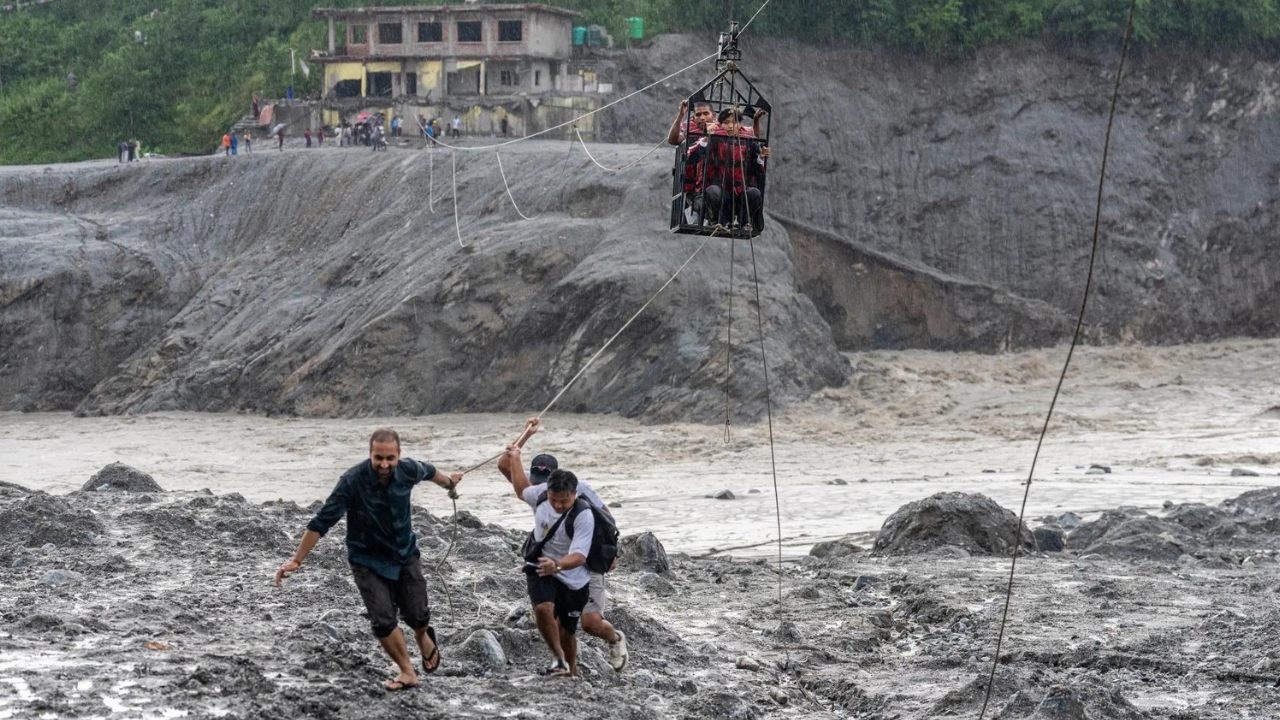
A massive ice-and-rock collapse in the upper Himalayan region on August 26 triggered a sudden surge into the Bhotekoshi river system, causing widespread destruction across northern Nepal.
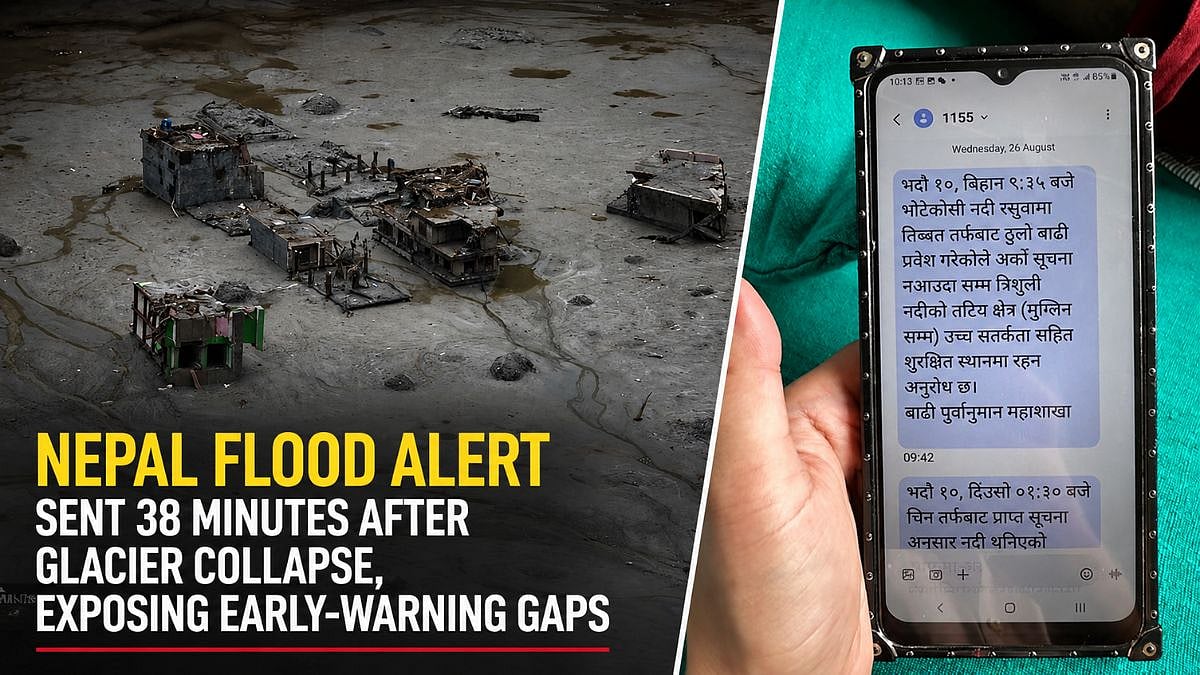
The disaster has exposed gaps in Nepal's early-warning system, with alerts reaching downstream communities only after the glacier collapse had triggered the disaster. Nepalese authorities sent more than 6 lakh SMS alerts to people across several downstream districts at around 9:15 am on August 26.
However, the messages were sent about 38 minutes after the initial glacier collapse. The delay left communities close to the flood's path with little time to evacuate. The monitoring network was also disrupted during the disaster.
The Syabrubesi hydrological station stopped transmitting shortly after the flooding began, cutting off a key source of real-time information. Authorities were subsequently informed that a major flood had entered the Bhotekoshi from the Tibetan side.
At least 1,127 people have been killed, while 4,858 remained missing as of September 2, according to Nepal Police. Rescue teams continued search operations, including at hydropower projects where workers are believed to be trapped inside flooded tunnels.
The scale of the disaster has intensified concerns over whether communities downstream of Himalayan glaciers have enough time to respond to sudden hazards. The flash flood has also highlighted shortcomings in cross-border information sharing.
Since the collapse occurred on the Tibetan side, Nepal did not receive an immediate automated warning from across the border. Experts have called for Nepal, China, and India to develop stronger real-time mechanisms for sharing information on sudden glacier collapses, floods, and other hazards across the Himalayan region.
The disaster has underscored the need for systems capable of detecting such events close to their source and rapidly transmitting warnings across borders, particularly for communities directly downstream.
In the aftermath of the disaster, there is a growing need for effective early-warning systems to prevent such tragedies in the future. The international community must come together to develop and implement robust systems for sharing information and providing timely warnings to communities at risk.
Frequently asked questions
What was the delay in sending flood alerts in Nepal?
The flood alerts were sent 38 minutes after the initial glacier collapse.
How many people were killed or missing in the Nepal floods?
At least 1,127 people were killed, and 4,858 remained missing as of September 2.