Petrol Prices Could Have Hit ₹125 Without Ethanol Blending
Ethanol blending saved consumers ₹30 per litre. Petrol could have cost ₹125 per litre.
'%3E%3Crect%20width%3D'96'%20height%3D'96'%20fill%3D'%231A5276'%2F%3E%3Ccircle%20cx%3D'30'%20cy%3D'24'%20r%3D'44'%20fill%3D'%23fff'%20opacity%3D'.12'%2F%3E%3Ccircle%20cx%3D'60'%20cy%3D'74'%20r%3D'40'%20fill%3D'%23000'%20opacity%3D'.10'%2F%3E%3C%2Fg%3E%3Cg%20fill%3D'%23fff'%3E%3Cpath%20d%3D'M31%2041%20L48%2031%20L65%2041%20Z'%2F%3E%3Crect%20x%3D'33'%20y%3D'43'%20width%3D'4'%20height%3D'17'%2F%3E%3Crect%20x%3D'41'%20y%3D'43'%20width%3D'4'%20height%3D'17'%2F%3E%3Crect%20x%3D'51'%20y%3D'43'%20width%3D'4'%20height%3D'17'%2F%3E%3Crect%20x%3D'59'%20y%3D'43'%20width%3D'4'%20height%3D'17'%2F%3E%3Crect%20x%3D'30'%20y%3D'62'%20width%3D'36'%20height%3D'4'%20rx%3D'1'%2F%3E%3C%2Fg%3E%3C%2Fsvg%3E)
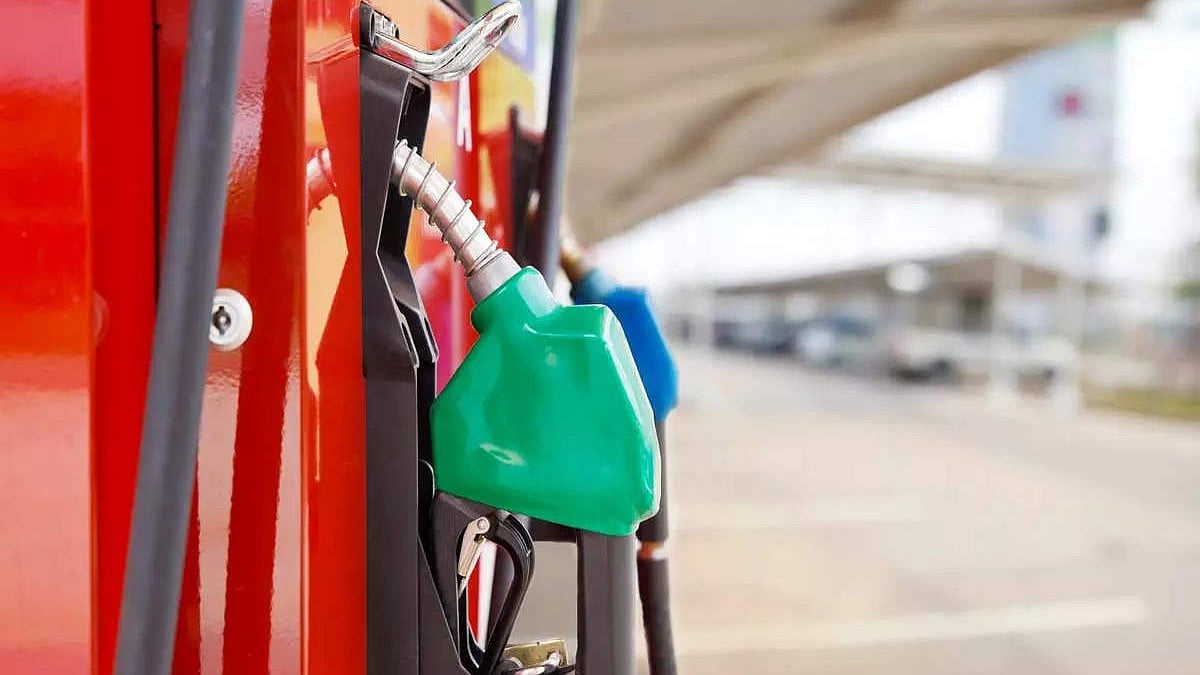
The Indian government's ethanol blending programme has been credited with protecting consumers from a significant increase in petrol prices during a period of high global crude oil prices. According to the petroleum ministry, petrol prices in Delhi could have risen to ₹125 per litre if oil companies had not blended ethanol into fuel when international crude prices reached $135 per barrel.
Instead, consumers paid ₹94.77 per litre as ethanol accounted for 20% of petrol under the E20 blending programme. The government said E20 petrol helped reduce the impact of rising crude prices and provided savings of nearly ₹30 per litre for consumers during the peak of the crisis.
The ministry also rejected claims that foodgrains meant for public distribution were being diverted for ethanol production. It clarified that subsidised rice from the Food Corporation of India (FCI) was not being used to support ethanol manufacturing.
Petrol and diesel prices remained unchanged for around 75 days after the West Asia conflict began on February 28, despite fluctuations in international crude markets. Fuel prices were later increased by ₹7.5 per litre in May.
Currently, E20 petrol with 91-octane rating is priced at ₹102.12 per litre in Delhi, while 100-octane petrol costs ₹169 per litre. Road Transport and Highways Minister Nitin Gadkari recently addressed concerns related to E20 fuel in Parliament.
He said vehicle owners could experience a reduction in mileage and that some rubber components in older BS-III vehicles may need replacement. However, he reiterated that E20 petrol does not damage engines. A joint study conducted by the Automotive Research Association of India (ARAI), Society of Indian Automobile Manufacturers (SIAM) and Indian Oil Corporation Ltd (IOCL) found that ethanol blending may lead to a marginal decline in fuel efficiency.
According to the study, E20 petrol could reduce mileage by 2% to 6%, depending on the vehicle type and age. However, the research also found that ethanol-blended fuel improves acceleration, ride quality and helps reduce carbon emissions by around 30%. Gadkari added that older BS-III vehicles manufactured before 2016 may require replacement of certain rubber parts and gaskets when using E20 petrol.
The government's ethanol blending programme has been in place to reduce the country's dependence on fossil fuels and decrease carbon emissions. The programme has been successful in reducing the impact of rising crude prices on consumers and has also helped to reduce carbon emissions.
In conclusion, the ethanol blending programme has been a significant success in protecting consumers from high petrol prices and reducing carbon emissions. The programme has provided savings of nearly ₹30 per litre for consumers and has improved acceleration, ride quality and reduced carbon emissions by around 30%.
Frequently asked questions
What would have been the petrol price without ethanol blending?
The petrol price could have risen to ₹125 per litre without ethanol blending.
How much did ethanol blending save consumers?
Ethanol blending saved consumers nearly ₹30 per litre.