Cockroach Traps Fail Due to Newborns' Feces Smell Learning
Cockroach traps often fail, newborns learn colony smell from feces, new study reveals.
'%3E%3Crect%20width%3D'96'%20height%3D'96'%20fill%3D'%23B3261E'%2F%3E%3Ccircle%20cx%3D'30'%20cy%3D'24'%20r%3D'44'%20fill%3D'%23fff'%20opacity%3D'.12'%2F%3E%3Ccircle%20cx%3D'60'%20cy%3D'74'%20r%3D'40'%20fill%3D'%23000'%20opacity%3D'.10'%2F%3E%3C%2Fg%3E%3Cg%20fill%3D'%23fff'%3E%3Crect%20x%3D'29'%20y%3D'49'%20width%3D'8'%20height%3D'19'%20rx%3D'1'%2F%3E%3Crect%20x%3D'39'%20y%3D'40'%20width%3D'9'%20height%3D'28'%20rx%3D'1'%2F%3E%3Crect%20x%3D'50'%20y%3D'45'%20width%3D'8'%20height%3D'23'%20rx%3D'1'%2F%3E%3Crect%20x%3D'60'%20y%3D'53'%20width%3D'7'%20height%3D'15'%20rx%3D'1'%2F%3E%3Crect%20x%3D'41'%20y%3D'34'%20width%3D'5'%20height%3D'6'%2F%3E%3C%2Fg%3E%3C%2Fsvg%3E)
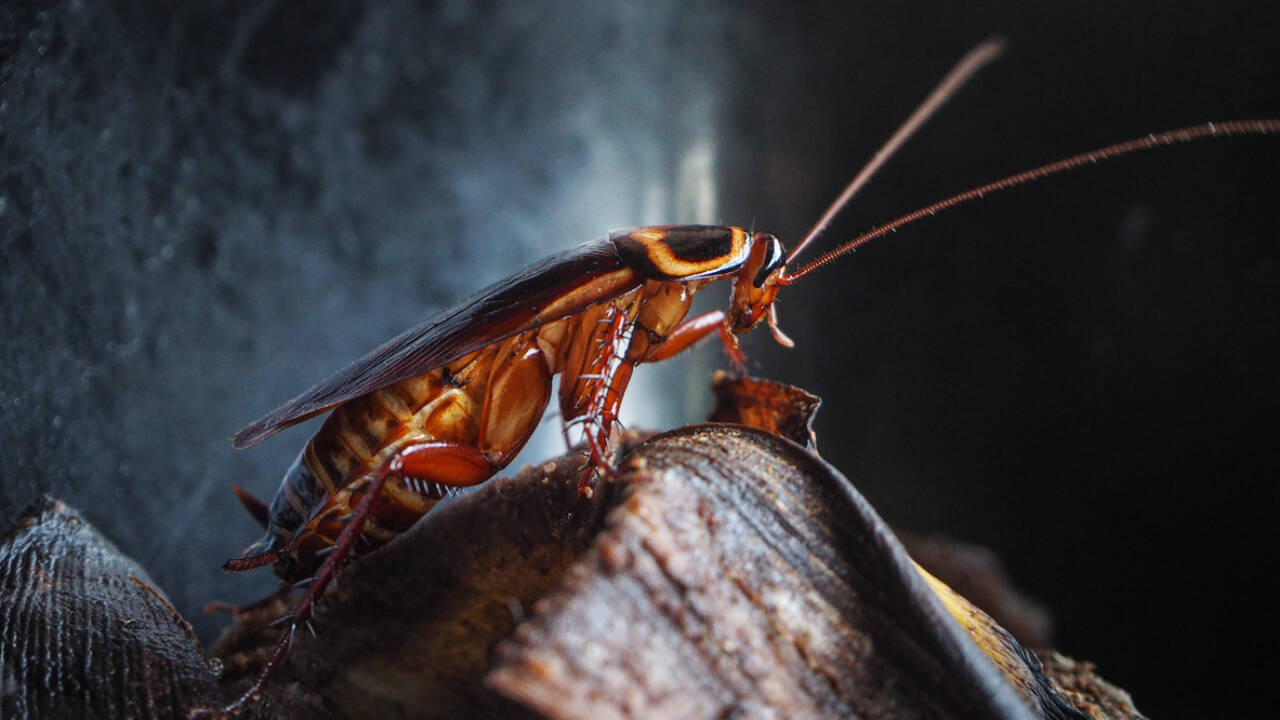
A recent study has shed light on why cockroach traps frequently fail to eliminate the pests. The primary reason behind this ineffectiveness lies in the way newborn cockroaches learn to recognize their colony's unique smell.
This smell is not acquired through direct interaction with other cockroaches, but rather through the feces of their colony members. Newborn cockroaches are able to detect and learn the distinct scent of their colony's feces, allowing them to identify and navigate towards their colony.
Cockroach traps typically work by luring the pests with attractive smells or tastes, with the goal of capturing or killing them. However, these traps often fail to account for the complex social dynamics of cockroach colonies. By learning their colony's smell from feces, newborn cockroaches are able to avoid traps that do not mimic this scent.
The study's findings have significant implications for the development of more effective cockroach traps. Rather than relying solely on attractive smells or tastes, traps could be designed to incorporate the unique scent of a cockroach colony's feces. This could potentially increase the effectiveness of these traps and provide a more reliable means of eliminating cockroach infestations.
Cockroaches are a common pest found in many households, particularly in urban areas like Mumbai. They are known to spread disease and trigger allergies, making them a significant public health concern. The failure of cockroach traps to effectively eliminate these pests can have serious consequences, including the spread of disease and the exacerbation of allergic reactions.
In addition to the health risks, cockroaches can also cause significant damage to property and food. They are able to chew through a wide range of materials, including paper, cloth, and even plastic. This can result in costly repairs and replacements, making the development of effective cockroach traps a pressing concern.
The study's findings highlight the importance of understanding the complex social dynamics of cockroach colonies. By recognizing the ways in which newborn cockroaches learn to recognize their colony's smell, researchers can develop more effective strategies for eliminating these pests.
In conclusion, the failure of cockroach traps can be attributed to the unique way in which newborn cockroaches learn to recognize their colony's smell. By incorporating this knowledge into the design of future traps, researchers may be able to develop more effective means of eliminating cockroach infestations and reducing the associated health risks.
The significance of this study extends beyond the realm of pest control, highlighting the importance of understanding the complex social dynamics of insect colonies. By recognizing the ways in which insects interact with and learn from their environment, researchers can develop more effective strategies for managing pest populations and reducing the associated risks to human health.
As the world's second-most populous country, India is home to a diverse range of pest species, including cockroaches. The development of effective pest control strategies is essential for reducing the associated health risks and protecting public health. The study's findings provide a valuable insight into the behavior of cockroaches and highlight the need for further research into the development of effective pest control strategies.
In Mumbai, where cockroach infestations are a common problem, the development of effective cockroach traps could have a significant impact on public health. By reducing the number of cockroaches in the environment, residents can minimize the risk of disease transmission and allergic reactions. The study's findings provide a valuable contribution to the ongoing efforts to develop effective pest control strategies and reduce the associated health risks.
Overall, the study's findings have significant implications for the development of effective cockroach traps and the management of pest populations. By recognizing the complex social dynamics of cockroach colonies and the ways in which newborn cockroaches learn to recognize their colony's smell, researchers can develop more effective strategies for eliminating these pests and reducing the associated health risks.
Frequently asked questions
Why do cockroach traps often fail?
Cockroach traps often fail because they do not account for the unique smell of a cockroach colony's feces, which newborn cockroaches learn to recognize.
How do newborn cockroaches learn their colony's smell?
Newborn cockroaches learn their colony's smell from the feces of their colony members.