Maharashtra Seeks Consensus On APMC Reforms
Maharashtra government to discuss trader demands, market fee issues. Minister Jaykumar Rawal to convene meeting with traders and market committees.
'%3E%3Crect%20width%3D'96'%20height%3D'96'%20fill%3D'%231A5276'%2F%3E%3Ccircle%20cx%3D'30'%20cy%3D'24'%20r%3D'44'%20fill%3D'%23fff'%20opacity%3D'.12'%2F%3E%3Ccircle%20cx%3D'60'%20cy%3D'74'%20r%3D'40'%20fill%3D'%23000'%20opacity%3D'.10'%2F%3E%3C%2Fg%3E%3Cg%20fill%3D'%23fff'%3E%3Cpath%20d%3D'M31%2041%20L48%2031%20L65%2041%20Z'%2F%3E%3Crect%20x%3D'33'%20y%3D'43'%20width%3D'4'%20height%3D'17'%2F%3E%3Crect%20x%3D'41'%20y%3D'43'%20width%3D'4'%20height%3D'17'%2F%3E%3Crect%20x%3D'51'%20y%3D'43'%20width%3D'4'%20height%3D'17'%2F%3E%3Crect%20x%3D'59'%20y%3D'43'%20width%3D'4'%20height%3D'17'%2F%3E%3Crect%20x%3D'30'%20y%3D'62'%20width%3D'36'%20height%3D'4'%20rx%3D'1'%2F%3E%3C%2Fg%3E%3C%2Fsvg%3E)
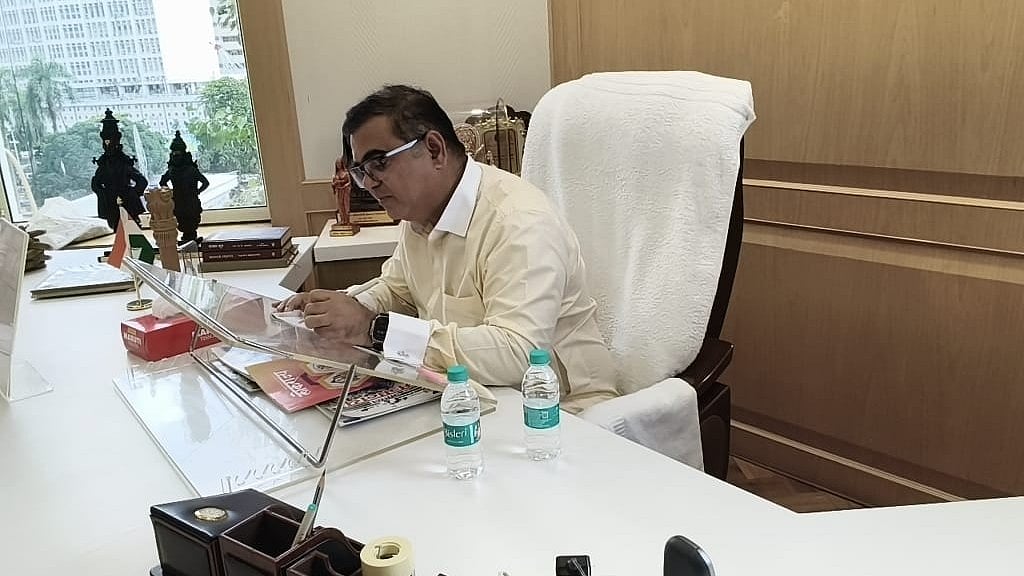
The Maharashtra government has announced plans to seek consensus-based solutions to various issues faced by traders and Agricultural Produce Market Committees (APMCs). Marketing Minister Jaykumar Rawal stated that the government aims to maintain a balance between the interests of farmers, traders, and consumers.
Rawal was speaking at a meeting held at the Mantralaya to discuss various demands raised by the Maharashtra State Traders’ Action Committee. He announced that a meeting involving office-bearers of market committees and trader representatives would be convened to discuss the issues in detail and arrive at an appropriate solution.
Trader representatives have demanded the abolition of service and user charges imposed by APMCs and sought the replacement of cess with maintenance charges. They have also called for amendments to market committee laws and regulations in line with changing business requirements and demanded a transparent system conducive to the ease of doing business.
The traders have further sought removal of differences in taxation between registered and unregistered traders. Rawal stated that the government’s objective is to support farmers, traders, and market committees without causing financial losses to any stakeholder or imposing an additional burden on consumers.
If certain agricultural commodities are being subjected to double taxation, trader organisations should submit detailed representations, Rawal said. The government would examine the matter and hold discussions with the GST Commissioner to explore measures to reduce the tax burden.
Rawal added that completely abolishing the cess may not be a practical solution, but viable alternatives should be explored. He stressed that APMCs are expected to provide essential services and facilities to traders.
The minister also announced that services provided by market committees would gradually be brought online to improve transparency, efficiency, and ease of doing business. He pointed out that the issues and requirements of market committees in Mumbai, Pune, and other districts are different and therefore decisions would be taken after considering the specific circumstances of each market.
The government would continue discussions with stakeholders to ensure that reforms in the APMC system benefit farmers and traders while safeguarding consumer interests. The minister's announcement is seen as a positive step towards addressing the long-standing issues faced by traders and APMCs in the state.
The Maharashtra government's decision to seek consensus-based solutions is expected to have a significant impact on the state's agricultural sector. The government's efforts to balance the interests of farmers, traders, and consumers are likely to lead to more efficient and transparent market practices.
In recent years, the state has witnessed several protests and demonstrations by traders and farmers demanding reforms in the APMC system. The government's decision to engage with stakeholders and address their concerns is seen as a step in the right direction.
The outcome of the meeting and the subsequent discussions with stakeholders are eagerly awaited by the trading community and farmers in the state. The government's ability to find a consensus-based solution will be crucial in determining the success of the reforms.
In conclusion, the Maharashtra government's decision to seek consensus-based solutions to the issues faced by traders and APMCs is a positive step towards creating a more efficient and transparent market system. The government's efforts to balance the interests of farmers, traders, and consumers are likely to lead to more stable and sustainable market practices.
The success of the reforms will depend on the government's ability to engage with stakeholders and address their concerns. The trading community and farmers in the state are eagerly awaiting the outcome of the meeting and the subsequent discussions with stakeholders.
The Maharashtra government's decision to bring services provided by market committees online is also expected to improve transparency and efficiency in the market system. The move is likely to reduce corruption and increase accountability in the APMC system.
Overall, the Maharashtra government's efforts to reform the APMC system are seen as a positive step towards creating a more efficient and transparent market system. The government's ability to find a consensus-based solution will be crucial in determining the success of the reforms.
Frequently asked questions
What are the demands of the Maharashtra State Traders’ Action Committee?
The traders have demanded the abolition of service and user charges imposed by APMCs and sought the replacement of cess with maintenance charges.
What is the government's objective in reforming the APMC system?
The government's objective is to support farmers, traders, and market committees without causing financial losses to any stakeholder or imposing an additional burden on consumers.