SC Rules Revenue Record Change Doesn't Affect Property Title
Supreme Court clarifies property title rules. Revenue record changes have no impact.
'%3E%3Crect%20width%3D'96'%20height%3D'96'%20fill%3D'%23B3261E'%2F%3E%3Ccircle%20cx%3D'30'%20cy%3D'24'%20r%3D'44'%20fill%3D'%23fff'%20opacity%3D'.12'%2F%3E%3Ccircle%20cx%3D'60'%20cy%3D'74'%20r%3D'40'%20fill%3D'%23000'%20opacity%3D'.10'%2F%3E%3C%2Fg%3E%3Cg%20fill%3D'%23fff'%3E%3Crect%20x%3D'29'%20y%3D'49'%20width%3D'8'%20height%3D'19'%20rx%3D'1'%2F%3E%3Crect%20x%3D'39'%20y%3D'40'%20width%3D'9'%20height%3D'28'%20rx%3D'1'%2F%3E%3Crect%20x%3D'50'%20y%3D'45'%20width%3D'8'%20height%3D'23'%20rx%3D'1'%2F%3E%3Crect%20x%3D'60'%20y%3D'53'%20width%3D'7'%20height%3D'15'%20rx%3D'1'%2F%3E%3Crect%20x%3D'41'%20y%3D'34'%20width%3D'5'%20height%3D'6'%2F%3E%3C%2Fg%3E%3C%2Fsvg%3E)
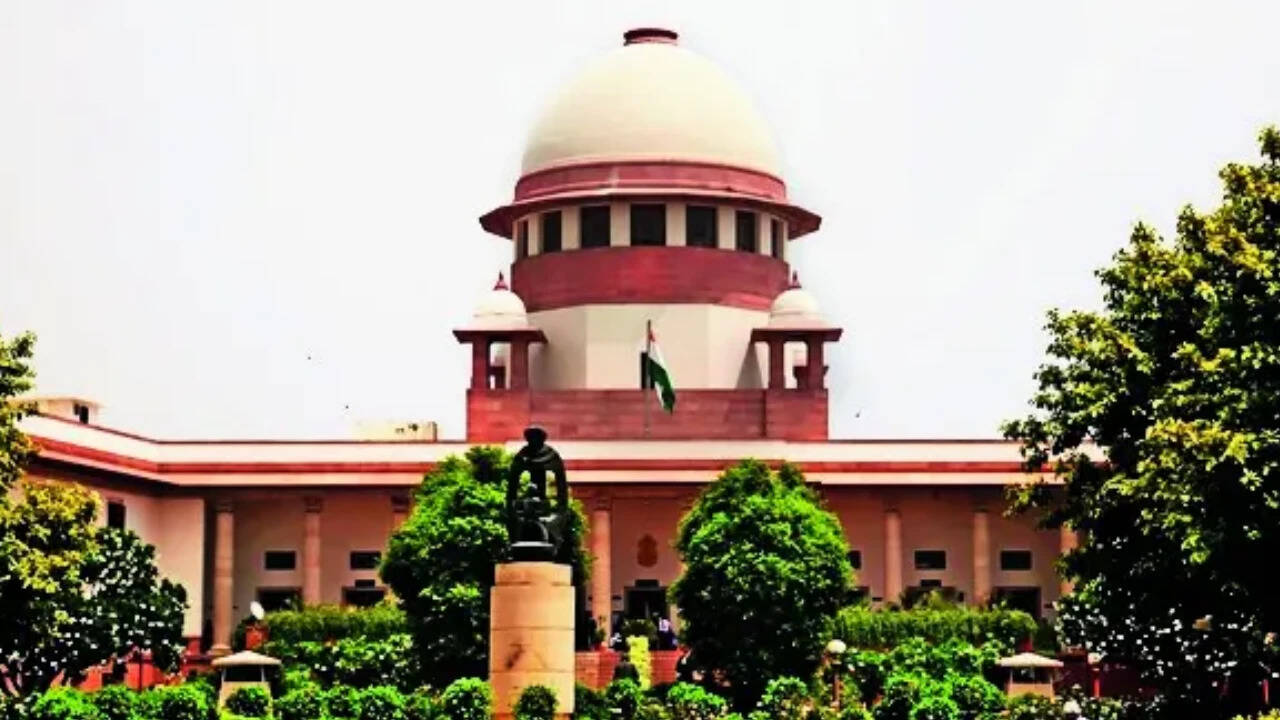
The Supreme Court has made a significant ruling regarding property titles in India. According to the court, a change in revenue records does not create or end a property title. This decision is expected to have far-reaching implications for property owners and disputes across the country.
The Supreme Court's ruling comes as a clarification on the issue, which has been a point of contention in many property disputes. The court has stated that revenue records are merely a reflection of the property's ownership and do not have the power to create or extinguish property titles.
This ruling is based on the principle that property titles are created and transferred through sale deeds, gift deeds, and other such documents. Revenue records, on the other hand, are maintained by the government to track ownership and collect taxes.
The Supreme Court's decision is likely to bring clarity to property disputes, where revenue records are often used as evidence. The court has emphasized that property titles can only be created or transferred through legitimate means, such as sale or gift deeds, and not through changes in revenue records.
In India, property disputes are common, and the Supreme Court's ruling is expected to have a significant impact on the resolution of such disputes. The decision will also help to prevent fraudulent activities, where individuals may try to alter revenue records to claim ownership of a property.
The ruling is also expected to affect the functioning of the revenue department, which maintains the records. The department will need to ensure that changes to revenue records are made accurately and in accordance with the law.
The Supreme Court's decision is a significant development in the field of property law in India. It is expected to bring clarity and transparency to property transactions and disputes, and will help to protect the rights of property owners.
The ruling is also a reminder of the importance of maintaining accurate and up-to-date records, both by the government and by property owners. It highlights the need for property owners to ensure that their titles are legitimate and properly documented, and for the government to maintain accurate records to prevent disputes.
In conclusion, the Supreme Court's ruling that a change in revenue records does not create or end a property title is a significant development in the field of property law in India. It is expected to bring clarity and transparency to property transactions and disputes, and will help to protect the rights of property owners.
Frequently asked questions
What is the impact of changing revenue records on property title?
According to the Supreme Court, changing revenue records does not create or end a property title.
How are property titles created or transferred in India?
Property titles are created or transferred through legitimate means, such as sale or gift deeds, and not through changes in revenue records.