Iran Warns US of Retaliation Amid Fragile Truce
Iran issues fresh warning, rejects Trump's claim, and vows to defend itself

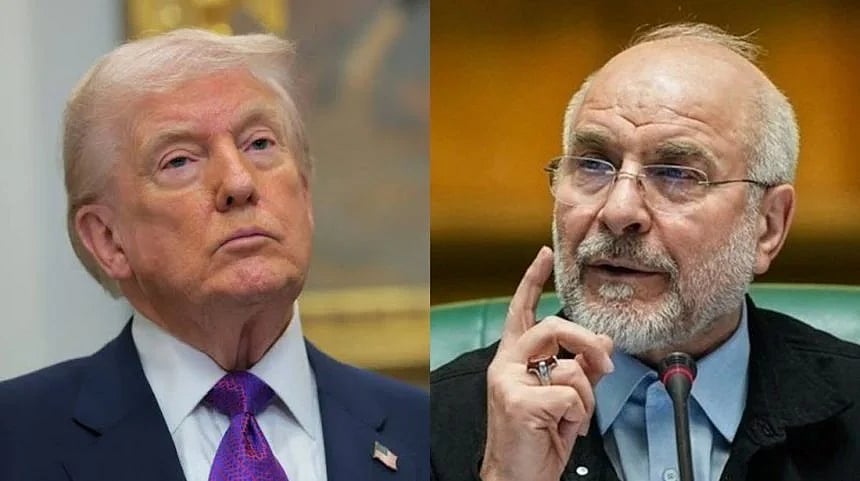
Iran has issued a stern warning to the United States, stating that any breach of commitments will be met with reciprocal action. This warning comes days after US President Donald Trump declared that the ceasefire with Tehran was over.
The Iranian Foreign Ministry spokesperson emphasized that Tehran would respond firmly if Washington failed to honor its obligations. The spokesperson stated that any US breach of commitments would be met with reciprocal action, highlighting the uncertainty surrounding the fragile understanding between the two countries.
Iran also dismissed President Trump's assertion that Tehran had requested Washington to continue negotiations. The Foreign Ministry clarified that Iran never sought fresh talks with the United States but agreed to receive a delegation from Qatar, which has been acting as a mediator between the two sides.
Mohammad Bagher Ghalibaf, Iran's top negotiator, said that while ending the conflict remains a global priority, Iran would never surrender under pressure. He warned that Tehran was fully prepared to defend itself if Washington failed to uphold the understanding reached between the two countries. Ghalibaf emphasized that the confrontation would never end with Iran's surrender and that Tehran would stand firmly against the US if necessary.
Ghalibaf also conveyed Iran's lack of trust in the United States during discussions with US Vice President JD Vance. He stressed that negotiations with Washington can only be pursued from a position of strength, stating that those who can negotiate with America are those who are prepared for war.
Ali Khomeini, the grandson of Islamic Republic founder Ruhollah Khomeini, echoed the hardline stance, insisting that the ongoing dialogue with Washington should not be viewed as an effort to achieve peace. He accused the United States of being a hostile power and argued that negotiations were merely another form of confrontation.
The fragile truce between Iran and the US faces fresh strain, despite the brief reduction in hostilities last month. The understanding between the two countries remains uncertain, with both sides exchanging warnings and accusations.
The situation highlights the deep-seated mistrust and tensions between Iran and the US, making it challenging to achieve a lasting peace. The international community is closely watching the developments, hoping for a resolution to the conflict.
In conclusion, the warning issued by Iran to the US amid the fragile truce underscores the complexities and challenges involved in resolving the conflict. The situation demands careful diplomacy and a commitment to upholding obligations to prevent further escalation.
As the global community continues to monitor the situation, it is essential to recognize the significance of the Iran-US conflict and its potential implications for regional and global stability. The conflict has far-reaching consequences, affecting not only the Middle East but also the global economy and international relations.
The US and Iran must work towards finding a peaceful resolution, one that addresses the concerns and interests of both parties. This requires a willingness to engage in constructive dialogue, to listen to each other's perspectives, and to seek common ground. The international community must also play a role in facilitating this process, providing support and guidance to help the parties move forward.
Ultimately, the resolution of the Iran-US conflict will depend on the ability of both sides to find a mutually acceptable solution, one that respects the sovereignty and interests of both nations. This will require patience, persistence, and a commitment to peace, as well as a willingness to address the underlying issues that have driven the conflict.
The world watches with bated breath as the situation unfolds, hoping for a peaceful resolution that will bring stability and security to the region. The consequences of failure are too great to contemplate, and it is essential that all parties work towards a solution that promotes peace, understanding, and cooperation.
The Iran-US conflict is a complex and multifaceted issue, with deep historical roots and far-reaching implications. It is a conflict that has been driven by a range of factors, including political, economic, and cultural differences. Resolving this conflict will require a comprehensive approach, one that addresses the underlying issues and promotes a deeper understanding between the parties.
As the situation continues to evolve, it is essential to remain vigilant and to work towards a peaceful resolution. The international community must continue to support efforts to promote dialogue and understanding, and to encourage the parties to work towards a mutually acceptable solution. Only through peaceful means can we hope to achieve a lasting resolution to the conflict, one that promotes stability, security, and cooperation in the region.
In the end, the resolution of the Iran-US conflict will depend on the ability of both sides to find common ground and to work towards a peaceful solution. This will require a willingness to listen, to compromise, and to seek a mutually beneficial outcome. The world waits with hope and anticipation, eager to see a peaceful resolution to this complex and challenging conflict.