Violent Protest Erupts in Datia Over BJP Ticket Denial
Protest turns violent, NH-44 blocked, FIR filed against 27 leaders

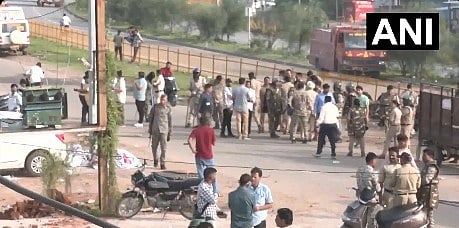
A violent protest broke out in Datia, Madhya Pradesh, on Saturday after the BJP denied a ticket to former Home Minister Narottam Mishra for the upcoming assembly bypoll. The protest, which began on Friday evening, saw around 5,000 supporters gather and block National Highway-44 for over 11 hours, demanding a reconsideration of the ticket decision.
The situation took a turn for the worse when police and administrative officials arrived at the scene to clear the highway. Protesters pelted stones at the police force, including Superintendent of Police Mayur Khandelwal and Collector Swapnil Wankhede. In response, police used water cannons and tear gas to control the crowd.
According to police, more than eight personnel were injured in the clash, including SP Khandelwal, SDOP Poonamchand Yadav, and Indergarh TI Narendra Singh Rajput. Collector Wankhede also confirmed that stones were thrown at him during the incident. BJP workers, on the other hand, claimed that several party members were injured, including district general secretary Bhure Chaudhary and Kisan Morcha vice-president Sumit Yadav.
The police have registered an FIR against 27 named leaders and 200 unidentified workers in connection with the violence. The protest saw police vehicles damaged and some vehicles overturned, with both sides blaming each other for triggering the clash.
The BJP had announced Ashutosh Tiwari as its candidate for the Datia Assembly bypoll, sparking outrage among Mishra's supporters. Deputy CM Jagdish Devda has expressed confidence in Tiwari's win, while praising Mishra's contributions to the party.
Narottam Mishra has appealed to his supporters to maintain calm and not resort to violence. The incident has highlighted the tensions within the BJP ahead of the upcoming bypoll.
The blockade of NH-44 caused significant disruption to traffic, with long queues of vehicles forming on the highway. The situation was eventually brought under control, but not before the protest had turned violent.
The incident has sparked a war of words between the BJP and the opposition, with many criticizing the police handling of the situation. The BJP has defended its decision to deny Mishra a ticket, citing the need for fresh faces in the party.
The Datia bypoll is seen as a crucial test for the BJP, which is looking to retain its seat in the assembly. The party's decision to deny Mishra a ticket has been seen as a surprise move, given his popularity in the region.
The incident has also raised questions about the handling of protests by the police, with many accusing the authorities of using excessive force. The opposition has demanded an inquiry into the incident, alleging that the police had acted in a partisan manner.
In the end, the violence in Datia has highlighted the challenges faced by the BJP in managing its internal dynamics ahead of the upcoming bypoll. The party will need to work hard to regain the trust of its supporters and ensure a smooth campaign in the region.
The significance of this incident extends beyond the bypoll, as it reflects the broader tensions within the BJP and the challenges faced by the party in managing its internal dynamics. As the party looks to the future, it will need to address these challenges and work towards rebuilding trust with its supporters.
The incident has also sparked a debate about the role of the police in handling protests, with many calling for greater accountability and transparency in the handling of such situations. As the investigation into the incident continues, it remains to be seen what actions will be taken to address the concerns of all parties involved.
In conclusion, the violent protest in Datia has highlighted the complexities and challenges of Indian politics, where internal party dynamics and police handling of protests can have significant consequences. The incident serves as a reminder of the need for greater transparency, accountability, and restraint in the handling of such situations, and the importance of addressing the concerns of all parties involved.