India's Human Milk Banks Save Vulnerable Newborns
Donated milk saves lives, helps at-risk infants. Human milk banks make a difference.
'%3E%3Crect%20width%3D'96'%20height%3D'96'%20fill%3D'%23B3261E'%2F%3E%3Ccircle%20cx%3D'30'%20cy%3D'24'%20r%3D'44'%20fill%3D'%23fff'%20opacity%3D'.12'%2F%3E%3Ccircle%20cx%3D'60'%20cy%3D'74'%20r%3D'40'%20fill%3D'%23000'%20opacity%3D'.10'%2F%3E%3C%2Fg%3E%3Cg%20fill%3D'%23fff'%3E%3Crect%20x%3D'29'%20y%3D'49'%20width%3D'8'%20height%3D'19'%20rx%3D'1'%2F%3E%3Crect%20x%3D'39'%20y%3D'40'%20width%3D'9'%20height%3D'28'%20rx%3D'1'%2F%3E%3Crect%20x%3D'50'%20y%3D'45'%20width%3D'8'%20height%3D'23'%20rx%3D'1'%2F%3E%3Crect%20x%3D'60'%20y%3D'53'%20width%3D'7'%20height%3D'15'%20rx%3D'1'%2F%3E%3Crect%20x%3D'41'%20y%3D'34'%20width%3D'5'%20height%3D'6'%2F%3E%3C%2Fg%3E%3C%2Fsvg%3E)
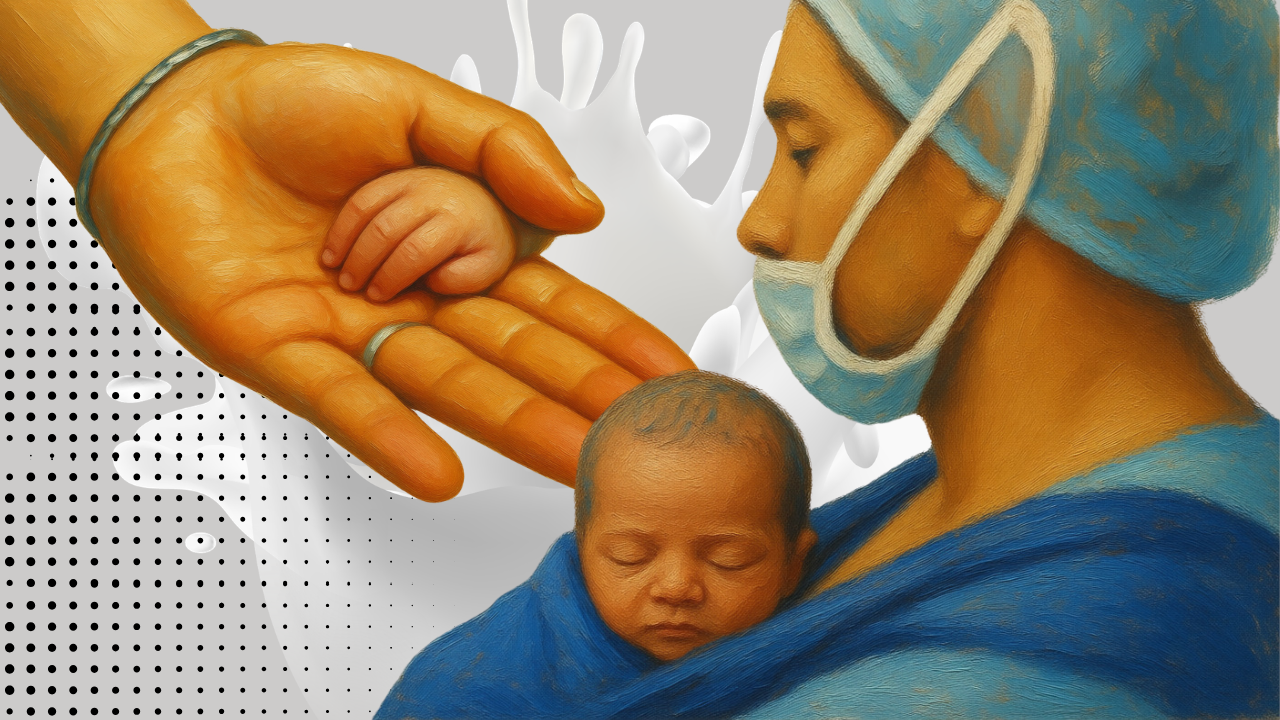
Human milk banks in India are playing a vital role in providing life-saving nourishment to the country's most vulnerable newborns. These banks rely on donations from lactating mothers who generously give their surplus milk to help infants who are unable to receive milk from their biological mothers.
The donated milk undergoes rigorous screening and pasteurisation to ensure its safety for consumption by newborns. This thorough process highlights the significant impact that human milk banks have on the health and well-being of premature and sick children.
In India, many newborns are at risk due to lack of access to breast milk, which is essential for their growth and development. Human milk banks are bridging this gap by providing a safe and reliable source of breast milk to those who need it most.
The concept of human milk banks is not new, but it has gained significant importance in recent years due to the increasing number of premature births and infant mortality rates in India. These banks are operated by non-profit organisations and hospitals, which work together to collect, screen, and distribute donated milk to neonatal intensive care units and other healthcare facilities.
The process of donating milk is straightforward. Lactating mothers who wish to donate their surplus milk contact a human milk bank, where they are screened for eligibility. Once eligible, they are provided with equipment and instructions on how to express and store their milk. The donated milk is then collected, screened, and pasteurised before being distributed to those in need.
Human milk banks have made a significant difference in the lives of many newborns and their families. They have helped to reduce infant mortality rates, improve the health and well-being of premature and sick children, and provide a sense of hope and comfort to families who are struggling to care for their newborns.
In addition to the health benefits, human milk banks also promote a sense of community and social responsibility. They bring together lactating mothers who are willing to donate their surplus milk, healthcare professionals who work tirelessly to collect and distribute the milk, and families who are grateful for the life-saving nourishment that the milk provides.
Overall, human milk banks are a vital resource for India's most vulnerable newborns. They provide a safe, reliable, and life-saving source of breast milk, which is essential for the growth and development of newborns. As the demand for donated milk continues to grow, it is essential that more lactating mothers come forward to donate their surplus milk and help make a difference in the lives of those who need it most.
The impact of human milk banks on the health of premature and sick children cannot be overstated. They have helped to reduce the risk of infections, improve cognitive development, and promote healthy growth and development. As India continues to work towards improving its healthcare system, human milk banks will play an increasingly important role in providing life-saving nourishment to the country's most vulnerable newborns.
In conclusion, human milk banks are a shining example of the impact that generosity, community, and social responsibility can have on the lives of others. They have made a significant difference in the lives of many newborns and their families, and will continue to do so as long as there are lactating mothers who are willing to donate their surplus milk and help those in need.
Frequently asked questions
What is the purpose of human milk banks in India?
Human milk banks in India provide life-saving nourishment to at-risk infants who cannot receive breast milk from their biological mothers.
How is donated milk screened and processed?
Donated milk undergoes rigorous screening and pasteurisation to ensure its safety for consumption by newborns.