
India's Hydrogen Train Saves 3200 Litres Diesel
India's first hydrogen train completes trial runs, saves fuel, and reduces emissions. Next stop: Delhi route tests.
'%3E%3Crect%20width%3D'96'%20height%3D'96'%20fill%3D'%230B6E4F'%2F%3E%3Ccircle%20cx%3D'30'%20cy%3D'24'%20r%3D'44'%20fill%3D'%23fff'%20opacity%3D'.12'%2F%3E%3Ccircle%20cx%3D'60'%20cy%3D'74'%20r%3D'40'%20fill%3D'%23000'%20opacity%3D'.10'%2F%3E%3C%2Fg%3E%3Cg%20fill%3D'none'%20stroke%3D'%23fff'%20stroke-width%3D'3.2'%20stroke-linecap%3D'round'%20stroke-linejoin%3D'round'%3E%3Cpolyline%20points%3D'31%2C59%2041%2C49%2049%2C54%2063%2C37'%2F%3E%3Cpolyline%20points%3D'55%2C37%2063%2C37%2063%2C45'%2F%3E%3C%2Fg%3E%3C%2Fsvg%3E)
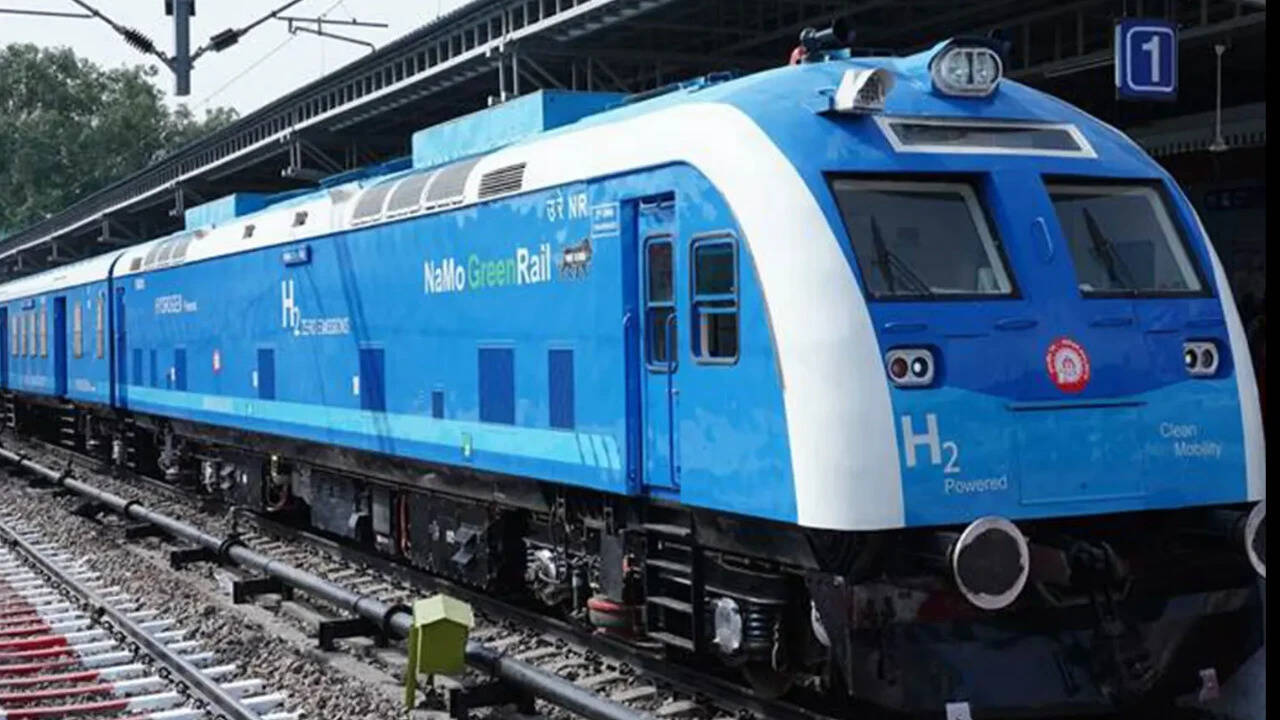
India's first hydrogen-powered train has successfully completed trial operations, covering a distance of over 1,200 kilometers. This innovative project has already resulted in a significant saving of over 3,200 litres of diesel fuel. The train is equipped with hydrogen fuel cells that generate electricity, releasing only water vapor and heat as byproducts, making it an environmentally friendly mode of transportation.
The hydrogen train project is an indigenous initiative that aims to promote zero-emission rail transport in the country. To support this project, dedicated hydrogen storage and refuelling facilities have been established at Jind. These facilities will play a crucial role in the operation of the hydrogen train, enabling it to run smoothly and efficiently.
The trial runs of the hydrogen train have been a significant success, demonstrating the potential of this technology to reduce greenhouse gas emissions and dependence on fossil fuels. The next phase of trial runs is planned for the Delhi route, which will further test the capabilities of the hydrogen train and pave the way for its widespread adoption.
The use of hydrogen fuel cells in trains is a relatively new concept, but it has shown promising results in reducing emissions and operating costs. The Indian Railways has been actively exploring alternative fuel options to reduce its carbon footprint and promote sustainable transportation.
The success of the hydrogen train project is a significant milestone in India's efforts to transition to a low-carbon economy. The government has set ambitious targets to reduce greenhouse gas emissions and promote the use of renewable energy sources. The development of hydrogen fuel cell technology is a key part of this strategy, and the Indian Railways is playing a leading role in its implementation.
The hydrogen train project has the potential to transform the rail transport sector in India, making it more efficient, sustainable, and environmentally friendly. As the project moves forward, it is expected to have a significant impact on the reduction of greenhouse gas emissions and the promotion of clean energy technologies.
In the coming years, the Indian Railways plans to expand the use of hydrogen fuel cell technology to other parts of its network, with the aim of reducing its dependence on fossil fuels and promoting sustainable transportation. The success of the hydrogen train project is a significant step towards achieving this goal, and it is expected to have a lasting impact on the rail transport sector in India.
The adoption of hydrogen fuel cell technology is a significant development in the rail transport sector, and it has the potential to reduce emissions and operating costs. As the technology continues to evolve, it is expected to play an increasingly important role in the transition to a low-carbon economy.
In conclusion, the hydrogen train project is a significant milestone in India's efforts to promote sustainable transportation and reduce greenhouse gas emissions. The success of the project is a testament to the potential of hydrogen fuel cell technology to transform the rail transport sector, making it more efficient, sustainable, and environmentally friendly.
Frequently asked questions
What is the significance of India's first hydrogen train?
India's first hydrogen train is significant because it promotes zero-emission rail transport and reduces dependence on fossil fuels.
Where will the next trial runs of the hydrogen train take place?
The next trial runs of the hydrogen train are planned for the Delhi route.