BSE Replaces Wipro in Nifty 50 Index
BSE to join Nifty 50, Wipro exits. What's next for shareholders?
'%3E%3Crect%20width%3D'96'%20height%3D'96'%20fill%3D'%230B6E4F'%2F%3E%3Ccircle%20cx%3D'30'%20cy%3D'24'%20r%3D'44'%20fill%3D'%23fff'%20opacity%3D'.12'%2F%3E%3Ccircle%20cx%3D'60'%20cy%3D'74'%20r%3D'40'%20fill%3D'%23000'%20opacity%3D'.10'%2F%3E%3C%2Fg%3E%3Cg%20fill%3D'none'%20stroke%3D'%23fff'%20stroke-width%3D'3.2'%20stroke-linecap%3D'round'%20stroke-linejoin%3D'round'%3E%3Cpolyline%20points%3D'31%2C59%2041%2C49%2049%2C54%2063%2C37'%2F%3E%3Cpolyline%20points%3D'55%2C37%2063%2C37%2063%2C45'%2F%3E%3C%2Fg%3E%3C%2Fsvg%3E)
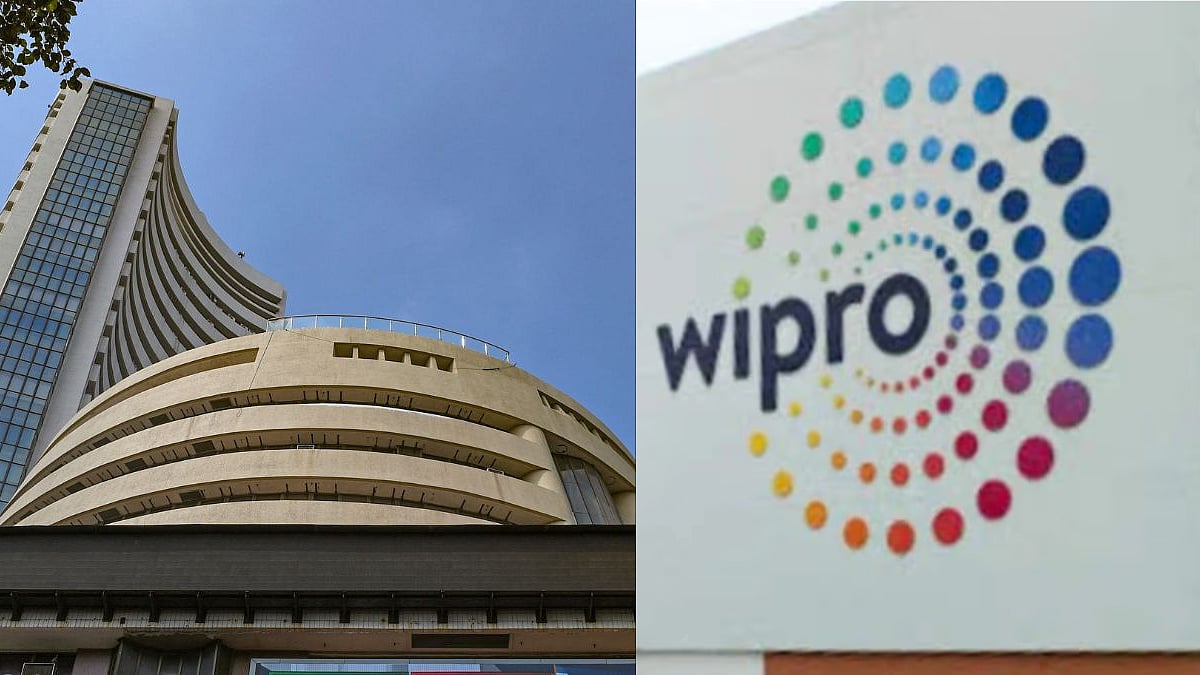
BSE Ltd will replace Wipro Ltd in the Nifty 50 index as part of NSE Indices' semi-annual review. The change will take effect on September 30, 2026.
The Index Maintenance Sub-Committee (Equity) of NSE Indices Ltd approved BSE's inclusion after evaluating companies based on their average free-float market capitalisation. BSE recorded an average free-float market capitalisation of ₹1,40,879 crore, significantly higher than Wipro's ₹55,930 crore.
BSE met the eligibility criteria as its six-month average free-float market capitalisation was at least 1.5 times that of the smallest constituent eligible for replacement. Other companies, such as TVS Motor Company and Divi's Laboratories, were not selected for inclusion due to their lower average free-float market capitalisation.
Only companies available for trading in the NSE Futures and Options segment qualify for inclusion in the Nifty 50 index. The replacement of Wipro with BSE will also be reflected in the Nifty50 Equal Weight index.
Following its exit from the benchmark index, Wipro will become part of the Nifty Next 50. The Nifty 50 is tracked by several index funds, exchange-traded funds (ETFs), and global passive investment products. Once BSE enters the index, these funds will have to buy BSE shares to replicate the Nifty 50 portfolio, creating additional demand for BSE shares and potentially supporting the stock price.
More institutional participation could increase trading volumes and improve liquidity. Global investors who benchmark India exposure against the Nifty 50 may start tracking BSE more closely.
On the other hand, funds tracking the Nifty 50 will have to remove Wipro from their portfolios after its exclusion. This may lead to automatic selling of Wipro shares by index funds and ETFs, creating short-term downward pressure on the stock. Losing Nifty 50 status may reduce Wipro's exposure among global passive investors.
However, Wipro will not lose its business fundamentals because of index exclusion. The company will move to the Nifty Next 50, which is still a major index tracked by investors. If Wipro's earnings improve, the stock can recover regardless of index status.
The change in the Nifty 50 index is significant for shareholders, as it may impact the stock prices of both BSE and Wipro. Investors should be aware of the potential effects of this change on their portfolios.
In conclusion, the replacement of Wipro with BSE in the Nifty 50 index is a significant development that may have implications for shareholders. While BSE's inclusion may lead to increased demand for its shares, Wipro's exclusion may result in short-term downward pressure on its stock. However, Wipro's business fundamentals remain unchanged, and the company's stock can recover if its earnings improve.
The Nifty 50 index is a widely followed benchmark in India, and changes to its constituents can have a significant impact on the stock market. The inclusion of BSE and the exclusion of Wipro reflect the changing landscape of the Indian economy and the performance of various companies.
Overall, the change in the Nifty 50 index is a reminder of the dynamic nature of the stock market and the need for investors to stay informed about developments that may impact their investments.
Frequently asked questions
What is the impact of BSE's inclusion in Nifty 50?
BSE's inclusion may lead to increased demand for its shares and potentially support the stock price.
What happens to Wipro after its exclusion from Nifty 50?
Wipro will become part of the Nifty Next 50 and may experience short-term downward pressure on its stock due to automatic selling by index funds and ETFs.