Gulf States May Accept Iran's Control of Strait of Hormuz
Gulf energy producers acknowledge Iran's control, prioritizing peace over export delays.
'%3E%3Crect%20width%3D'96'%20height%3D'96'%20fill%3D'%234A235A'%2F%3E%3Ccircle%20cx%3D'30'%20cy%3D'24'%20r%3D'44'%20fill%3D'%23fff'%20opacity%3D'.12'%2F%3E%3Ccircle%20cx%3D'60'%20cy%3D'74'%20r%3D'40'%20fill%3D'%23000'%20opacity%3D'.10'%2F%3E%3C%2Fg%3E%3Cg%20fill%3D'none'%20stroke%3D'%23fff'%20stroke-width%3D'3'%3E%3Ccircle%20cx%3D'48'%20cy%3D'48'%20r%3D'16'%2F%3E%3Cellipse%20cx%3D'48'%20cy%3D'48'%20rx%3D'6.5'%20ry%3D'16'%2F%3E%3Cline%20x1%3D'32'%20y1%3D'42'%20x2%3D'64'%20y2%3D'42'%2F%3E%3Cline%20x1%3D'32'%20y1%3D'54'%20x2%3D'64'%20y2%3D'54'%2F%3E%3C%2Fg%3E%3C%2Fsvg%3E)
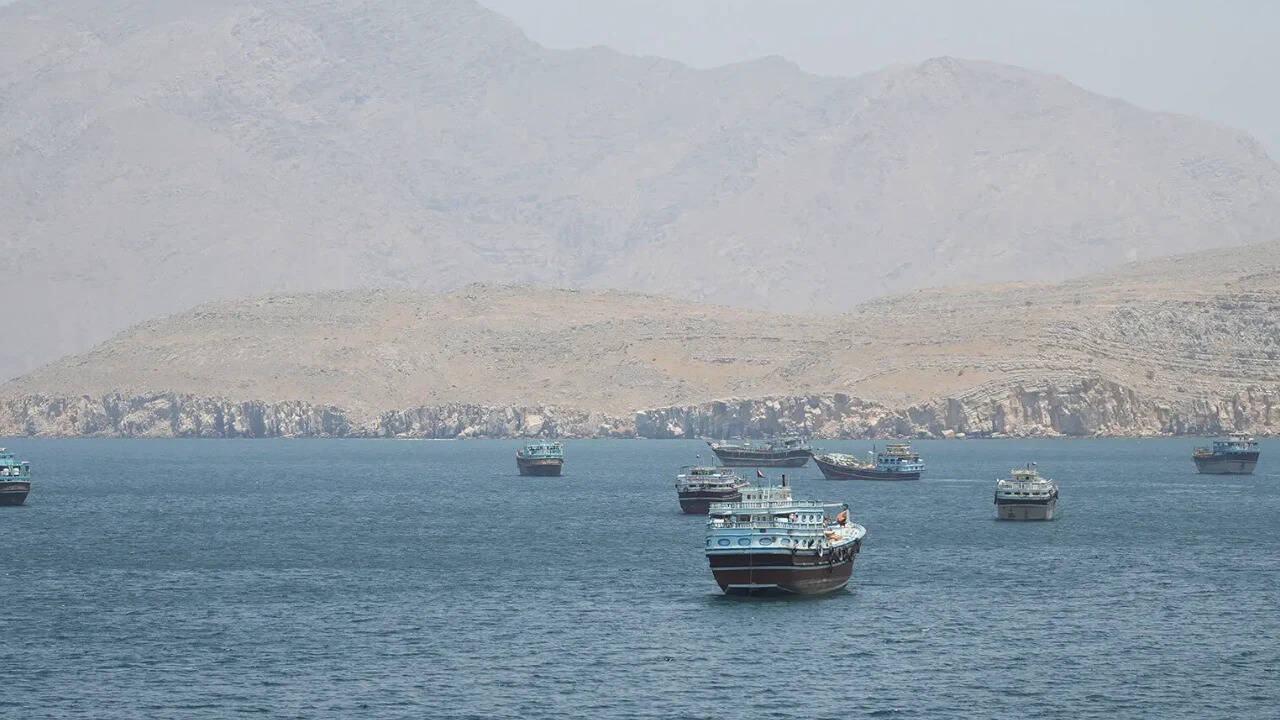
A significant development has occurred in the Middle East, where Gulf energy producers have acknowledged Iran's assertion of control over the critical Strait of Hormuz. This strategic waterway is a vital passage for global energy trade, and its control has been a point of contention in the region. The acknowledgment comes amidst attempts to resume normal passage through the strait, which have been hindered by ongoing tensions between Iran and other countries in the region.
The governments of Gulf states, including Saudi Arabia and the United Arab Emirates, have prioritized peace and stability in the region over potential delays in their oil exports. This approach is driven by a desire to avoid further escalation of tensions, which could have far-reaching consequences for the global economy. Iran, on the other hand, is seeking to ease financial pressures and secure a prohibition on international warships in the strait, which would extend the disruption of global energy channels.
The Strait of Hormuz is a critical chokepoint for global energy trade, with approximately 20% of the world's oil passing through it every day. The strait's control has been a point of contention between Iran and other countries in the region, including the United States, which has a significant military presence in the area. The ongoing tensions have led to a disruption of global energy channels, with oil prices fluctuating in response to the uncertainty.
The Gulf states' acknowledgment of Iran's control over the strait is a significant development, as it reflects a shift in the regional balance of power. Iran's assertion of control is driven by its desire to secure its interests in the region and protect its economy from external pressures. The country has been subject to international sanctions, which have had a devastating impact on its economy.
The international community is watching the situation closely, as the disruption of global energy channels has far-reaching consequences for the global economy. The United States, in particular, has a significant interest in maintaining the free flow of oil through the strait, and has deployed military assets to the region to protect its interests. However, the Gulf states' prioritization of peace and stability suggests that they are willing to accept Iran's control over the strait, at least for the time being.
The situation in the Middle East remains complex and volatile, with multiple players and interests at stake. The Gulf states' acknowledgment of Iran's control over the Strait of Hormuz is a significant development, but it is unlikely to mark the end of the tensions in the region. The international community will continue to monitor the situation closely, as the consequences of the disruption of global energy channels are felt around the world.
In conclusion, the Gulf states' acceptance of Iran's control over the Strait of Hormuz reflects a shift in the regional balance of power and a prioritization of peace and stability over economic interests. The situation remains complex and volatile, with far-reaching consequences for the global economy. As the international community continues to monitor the situation, it is clear that the Middle East will remain a critical region for global energy trade and security.
Frequently asked questions
What is the significance of the Strait of Hormuz?
The Strait of Hormuz is a critical chokepoint for global energy trade, with approximately 20% of the world's oil passing through it every day.
Why are the Gulf states prioritizing peace over export delays?
The Gulf states are prioritizing peace and stability in the region to avoid further escalation of tensions, which could have far-reaching consequences for the global economy.