India Homes 60% Of World's Wild Asian Elephants
India has over 60% of the world's wild Asian elephants. PM Modi highlights conservation efforts.
'%3E%3Crect%20width%3D'96'%20height%3D'96'%20fill%3D'%231B5E20'%2F%3E%3Ccircle%20cx%3D'30'%20cy%3D'24'%20r%3D'44'%20fill%3D'%23fff'%20opacity%3D'.12'%2F%3E%3Ccircle%20cx%3D'60'%20cy%3D'74'%20r%3D'40'%20fill%3D'%23000'%20opacity%3D'.10'%2F%3E%3C%2Fg%3E%3Cg%3E%3Ccircle%20cx%3D'48'%20cy%3D'48'%20r%3D'15'%20fill%3D'%23fff'%2F%3E%3Cpath%20d%3D'M43%2034%20Q50%2048%2043%2062'%20fill%3D'none'%20stroke%3D'%238a94a6'%20stroke-width%3D'2.4'%2F%3E%3Cpath%20d%3D'M47%2033%20Q54%2048%2047%2063'%20fill%3D'none'%20stroke%3D'%238a94a6'%20stroke-width%3D'1.8'%20stroke-dasharray%3D'1.5%203'%2F%3E%3C%2Fg%3E%3C%2Fsvg%3E)
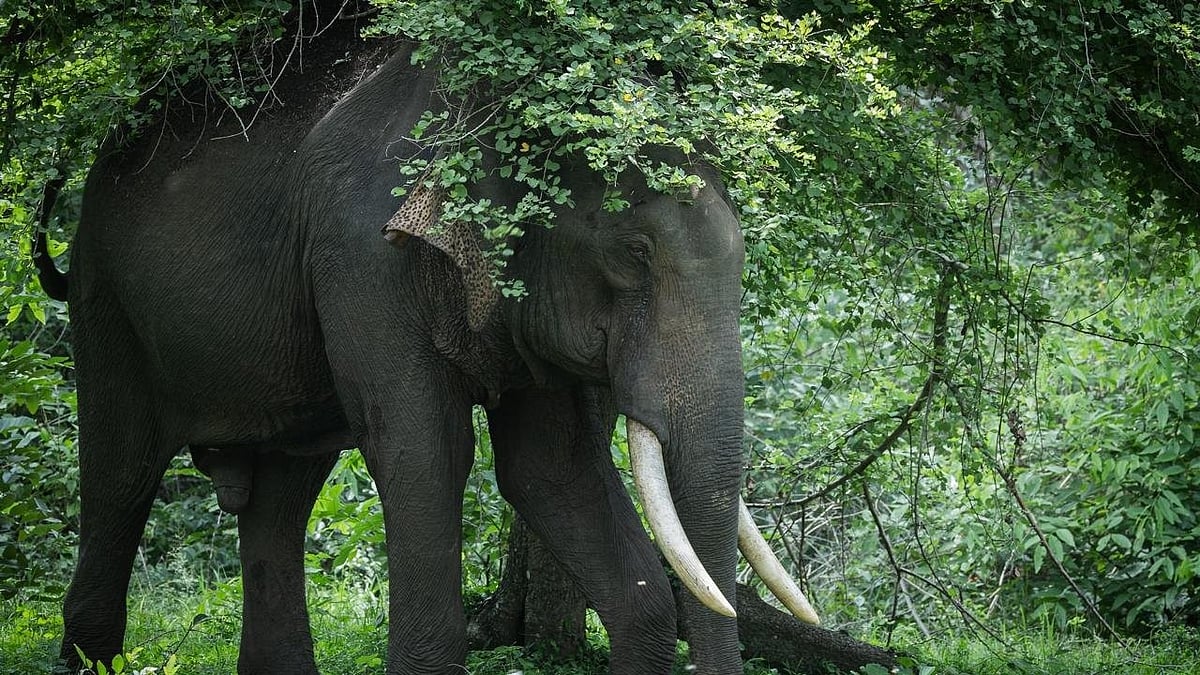
Prime Minister Narendra Modi stated that India is home to more than 60% of the world's wild Asian elephant population.
He made this statement on World Elephant Day, which is observed every year on August 12 to raise awareness about elephant conservation.
The Prime Minister emphasized the importance of protecting elephants and their natural habitats. He acknowledged the efforts being made towards wildlife conservation in India, particularly the 33 Elephant Reserves that provide safe habitats for elephants.
Asian elephants are classified as Endangered on the International Union for Conservation of Nature (IUCN) Red List, making conservation efforts crucial for their long-term survival. India has one of the largest remaining populations of wild Asian elephants, with over 29,000 elephants found across several states.
The country launched Project Elephant in 1992 to protect elephants, conserve their habitats, and address issues such as human-elephant conflict. The initiative also focuses on maintaining elephant corridors, which allow herds to move between fragmented forest areas in search of food and water.
PM Modi expressed pride in the efforts of forest personnel, scientists, veterinarians, mahouts, and local communities who are integral to elephant conservation efforts. He celebrated the majestic elephant as an integral part of India's ecological heritage.
World Elephant Day was established to raise awareness about the challenges faced by elephant species. The day aims to promote the conservation of elephants and their habitats. With India being home to over 60% of the world's wild Asian elephants, the country's conservation efforts are crucial for the long-term survival of the species.
The conservation of Asian elephants is a significant issue, with the species facing numerous threats such as habitat loss, poaching, and human-elephant conflict. India's efforts in protecting elephants and their habitats are essential for maintaining the ecological balance and preserving the country's biodiversity.
In conclusion, India's role in elephant conservation is vital, and the country's efforts in protecting elephants and their habitats are commendable. The celebration of World Elephant Day serves as a reminder of the importance of conservation efforts and the need to protect these majestic creatures and their habitats.
The success of India's conservation efforts can be seen in the increasing population of wild Asian elephants in the country. However, more needs to be done to address the challenges faced by the species, and the country must continue to work towards protecting elephants and their habitats.
Overall, India's conservation efforts are a step in the right direction, and the country must continue to prioritize the protection of elephants and their habitats. With the support of the government, conservation organizations, and local communities, India can make a significant impact in the conservation of Asian elephants.
The future of elephant conservation in India looks promising, with the country's efforts being recognized globally. The celebration of World Elephant Day serves as a reminder of the importance of conservation efforts and the need to protect these majestic creatures and their habitats.
In the end, the conservation of Asian elephants is a collective effort that requires the support of everyone. India's role in elephant conservation is vital, and the country must continue to prioritize the protection of elephants and their habitats.
Frequently asked questions
What percentage of the world's wild Asian elephants are found in India?
Over 60% of the world's wild Asian elephants are found in India.
What is the purpose of World Elephant Day?
The purpose of World Elephant Day is to raise awareness about elephant conservation and the challenges faced by the species.