Muslims Protest Non-Muslim Members In MP Waqf Board
Muslims in Bhopal wear black bands to protest non-Muslim members in MP Waqf Board. The board includes two non-Muslim members for the first time.

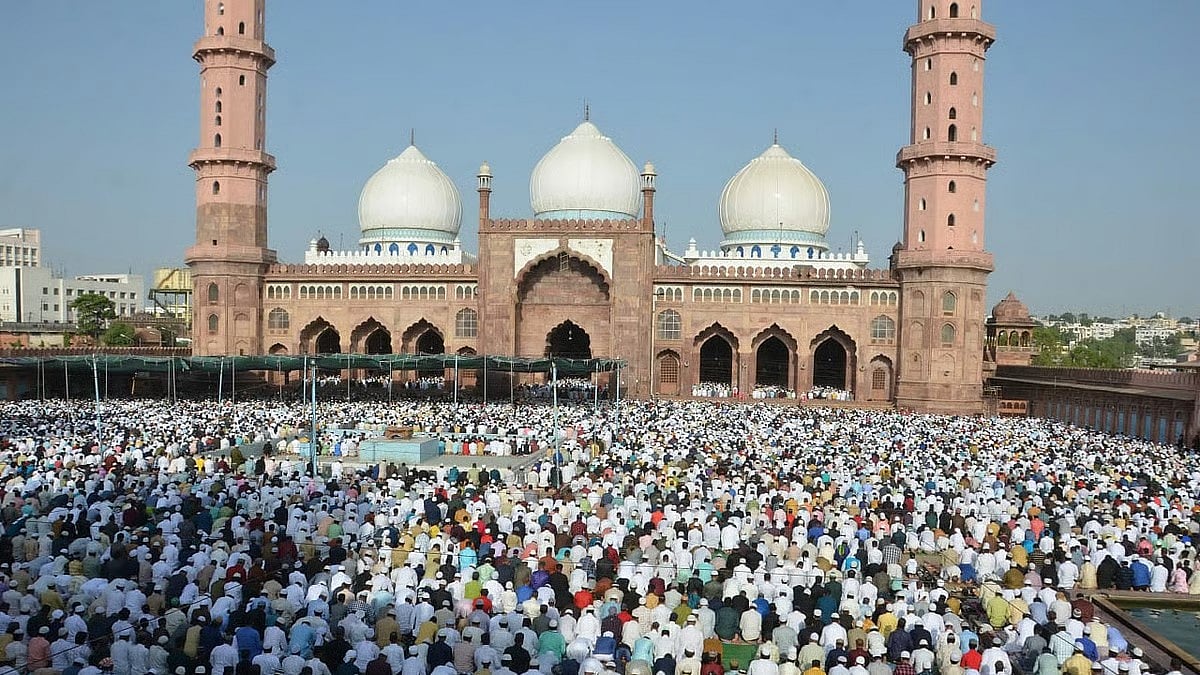
A significant protest took place in Bhopal, Madhya Pradesh, on Friday as members of the Muslim community wore black bands to offer Juma prayers at the Taj-ul-Masajid mosque. This symbolic protest was in response to the Madhya Pradesh government's decision to reconstitute the MP Waqf Board, which now includes two non-Muslim members for the first time in the country's history.
The two non-Muslim members, Manoj Malpani from Indore and Animesh Bhargava from Raghogarh in Guna district, were appointed to the board, sparking widespread criticism and opposition from the Muslim community. The protest at the Taj-ul-Masajid mosque was attended by worshippers from different parts of Bhopal, who gathered to express their opposition to the government's decision.
According to the organisers, the protest was peaceful and aimed to convey the concerns of the Muslim community to the government. The opposition to the new Waqf Board began earlier this week, with members of the All India Muslim Tyohar Committee staging a protest at Budhwara Square in Bhopal. The organisation also sent a letter to the President and the Prime Minister, demanding that the current Waqf Board be dissolved and the appointment order be withdrawn.
The issue has also led to the resignation of Nikah Qazi Mohammad Maaz Khan Nomani Nadvi from the post of General Secretary of the Deeni Taleemi Board, citing differences over the support extended to some members of the newly formed Waqf Board. Several Islamic scholars and leaders of Muslim organisations have also criticised the government's decision, with some questioning the claim of transparency and demanding that Muslims be included in committees of other religions.
The Jamiyat Ulema Madhya Pradesh president, Mufti Mohammad Ahmad, and Naib Sadar Mufti Zia Qasmi have made similar demands, highlighting the need for representation and transparency in the Waqf Board. The protest on Friday is being seen as the first large symbolic protest after demonstrations, memorandums, public statements, video messages, and resignations.
The MP Waqf Board is responsible for managing and administering waqf properties, which are properties donated for charitable or religious purposes. The inclusion of non-Muslim members in the board has raised concerns among the Muslim community, who feel that their rights and interests may not be represented.
The government's decision to reconstitute the Waqf Board and include non-Muslim members has sparked a heated debate, with some arguing that it is a move towards transparency and others seeing it as an attempt to interfere with the rights of the Muslim community. The protest on Friday is a clear indication of the strong feelings among the Muslim community, who are demanding that their concerns be heard and addressed.
In conclusion, the protest by Muslims in Bhopal against the inclusion of non-Muslim members in the MP Waqf Board is a significant development that highlights the need for representation, transparency, and accountability in the management of waqf properties. The government's decision has sparked a heated debate, and it remains to be seen how the situation will unfold in the coming days.
The controversy surrounding the MP Waqf Board has also raised questions about the rights and interests of the Muslim community in India. The protest on Friday is a reminder that the community will not hesitate to express its concerns and demands when it feels that its rights are being compromised. As the situation continues to unfold, it is essential to ensure that the rights and interests of all communities are respected and protected.
The MP Waqf Board controversy is a complex issue that requires careful consideration and attention. The government must ensure that the rights and interests of the Muslim community are protected and respected, while also promoting transparency and accountability in the management of waqf properties. The protest on Friday is a significant development that highlights the need for dialogue and understanding between different communities in India.
In the end, the controversy surrounding the MP Waqf Board is a reminder that the rights and interests of all communities must be respected and protected. The government must ensure that the Waqf Board is managed in a transparent and accountable manner, while also promoting the rights and interests of the Muslim community. The protest on Friday is a significant development that highlights the need for dialogue, understanding, and cooperation between different communities in India.