US To Revoke 200,000 Visas Of Asylum Seekers
Trump admin plans to revoke visas of up to 200,000 asylum seekers. Largest mass revocation in US history.
'%3E%3Crect%20width%3D'96'%20height%3D'96'%20fill%3D'%234A235A'%2F%3E%3Ccircle%20cx%3D'30'%20cy%3D'24'%20r%3D'44'%20fill%3D'%23fff'%20opacity%3D'.12'%2F%3E%3Ccircle%20cx%3D'60'%20cy%3D'74'%20r%3D'40'%20fill%3D'%23000'%20opacity%3D'.10'%2F%3E%3C%2Fg%3E%3Cg%20fill%3D'none'%20stroke%3D'%23fff'%20stroke-width%3D'3'%3E%3Ccircle%20cx%3D'48'%20cy%3D'48'%20r%3D'16'%2F%3E%3Cellipse%20cx%3D'48'%20cy%3D'48'%20rx%3D'6.5'%20ry%3D'16'%2F%3E%3Cline%20x1%3D'32'%20y1%3D'42'%20x2%3D'64'%20y2%3D'42'%2F%3E%3Cline%20x1%3D'32'%20y1%3D'54'%20x2%3D'64'%20y2%3D'54'%2F%3E%3C%2Fg%3E%3C%2Fsvg%3E)
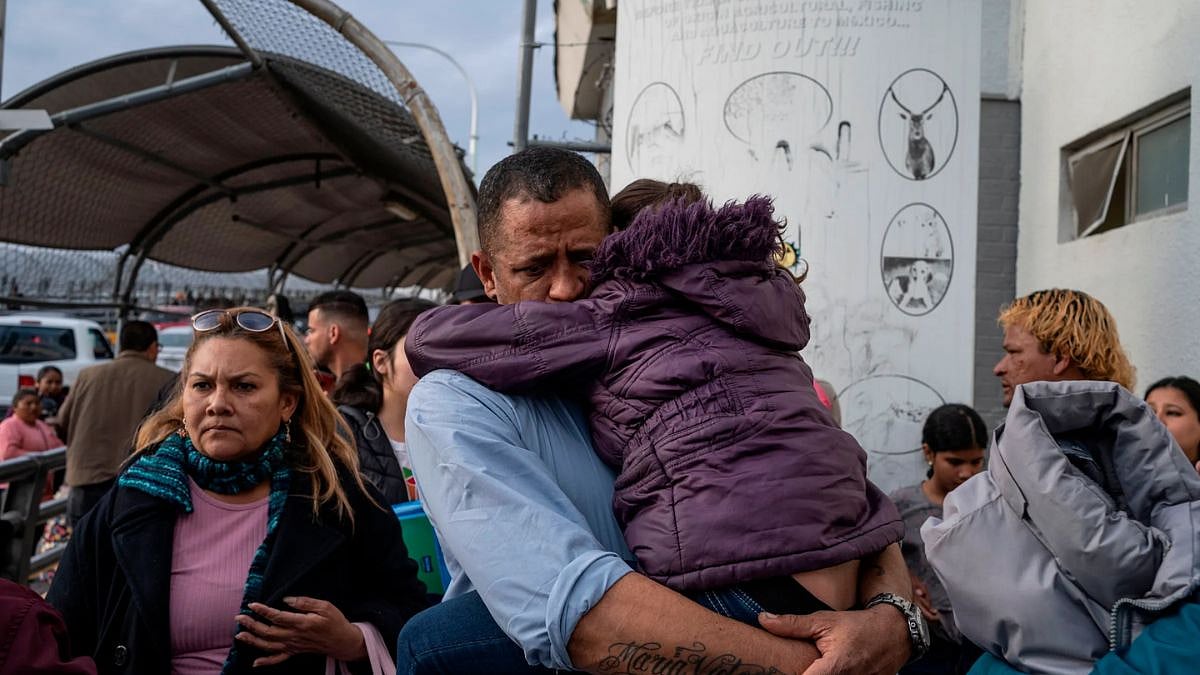
The Trump administration is preparing to revoke the business and tourism visas of up to 200,000 foreigners who have applied for or are currently seeking asylum status in the United States. This move would be the largest single mass revocation of visas in US history and would likely face legal challenges.
The State Department is expected to announce the revocation of so-called B1 and B2 visas issued between 2016 and 2026 whose holders have sought asylum or are now seeking asylum. The action will be taken in coordination with the Department of Homeland Security.
According to State Department spokesman Tommy Pigott, the administration is coordinating with DHS to identify and revoke the nonimmigrant visas of foreigners who have come to the United States claiming to be short-term visitors, but then file for asylum to stay here permanently. However, Pigott declined to comment on the number of visas that might be revoked, saying the number of revocations remains dynamic and will be done on a rolling basis.
The revocations would not necessarily result in the immediate deportation of the individuals affected. Most of those with asylum cases currently pending would be recategorised but would lose their status as business or tourism travellers.
Since President Donald Trump took office for his second term last year, his administration has steadily ramped up restrictions on visa applicants. The administration has demanded more information about their social media histories, required the posting of expensive bonds for processing visas, and outright banned the issuance of visas to citizens of certain countries.
Deputy Secretary of State Christopher Landau recently called out people who try to use tourist and business visas to get into the United States and then apply for asylum. Landau stated that asylum isn't supposed to be a loophole to circumvent immigration law. He cited the case of a Colombian citizen who came to the US in 2015 on a tourist visa and then applied for asylum.
B1 visas are generally issued for business trips, while B2 visas are generally issued for tourism. The Trump administration's move to revoke these visas is seen as a significant step in its efforts to restrict immigration and enforce stricter border control.
The move is likely to face legal challenges and has sparked controversy among immigration advocates. The administration's actions have been criticized for being overly restrictive and for potentially violating the rights of asylum seekers.
In the coming weeks, the State Department is expected to announce the details of the visa revocation plan. The move is seen as a significant development in the Trump administration's immigration policy and is likely to have far-reaching implications for asylum seekers and immigration law in the United States.
The Trump administration's efforts to restrict immigration and enforce stricter border control have been a key focus of its policy agenda. The move to revoke visas of asylum seekers is seen as a significant step in this effort and is likely to be closely watched by immigration advocates and lawmakers.
In conclusion, the Trump administration's plan to revoke the visas of up to 200,000 asylum seekers is a significant development in US immigration policy. The move is likely to face legal challenges and has sparked controversy among immigration advocates. As the details of the plan are announced, it is likely to have far-reaching implications for asylum seekers and immigration law in the United States.
Frequently asked questions
What is the Trump administration planning to do with asylum seekers' visas?
The Trump administration is planning to revoke the business and tourism visas of up to 200,000 foreigners who have applied for or are currently seeking asylum status in the United States.
What type of visas will be revoked?
The visas to be revoked are B1 and B2 visas, which are generally issued for business trips and tourism, respectively.