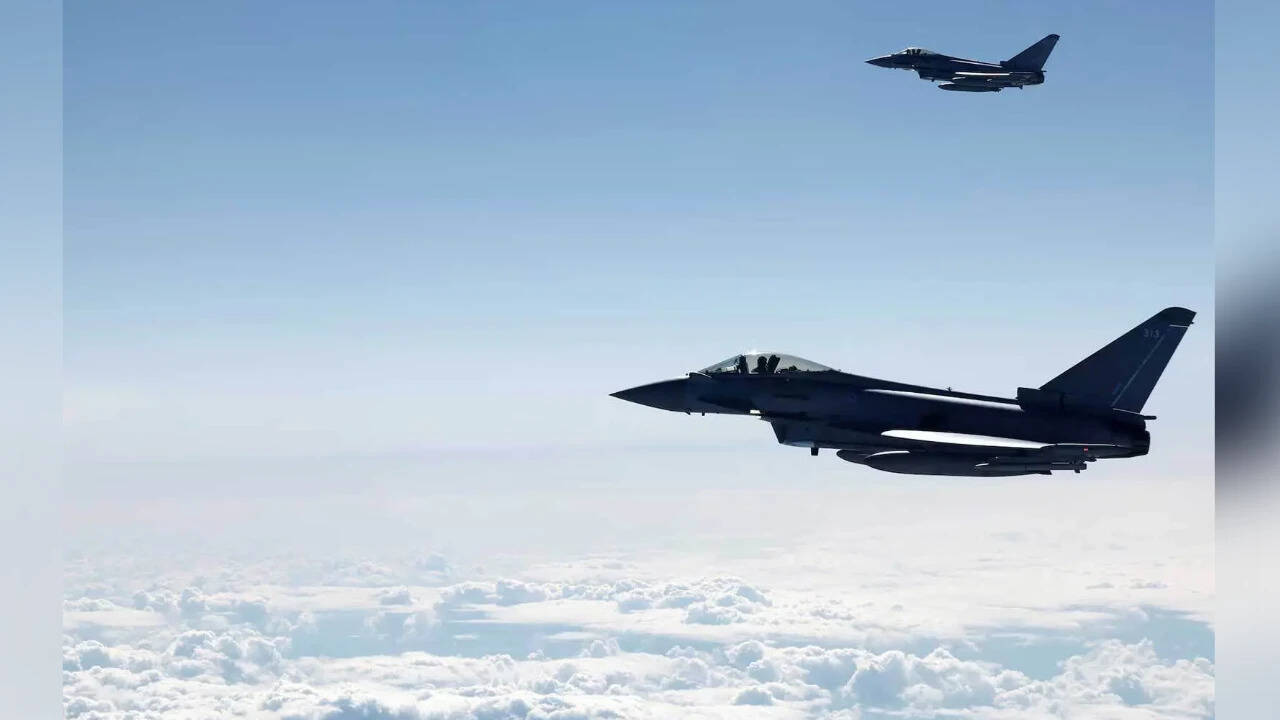
Operation Sindoor Exposes Pakistan's Nuclear Limits
Pakistan's nuclear deterrence has limitations, a report reveals. Operation Sindoor sheds light on this.
'%3E%3Crect%20width%3D'96'%20height%3D'96'%20fill%3D'%234A235A'%2F%3E%3Ccircle%20cx%3D'30'%20cy%3D'24'%20r%3D'44'%20fill%3D'%23fff'%20opacity%3D'.12'%2F%3E%3Ccircle%20cx%3D'60'%20cy%3D'74'%20r%3D'40'%20fill%3D'%23000'%20opacity%3D'.10'%2F%3E%3C%2Fg%3E%3Cg%20fill%3D'none'%20stroke%3D'%23fff'%20stroke-width%3D'3'%3E%3Ccircle%20cx%3D'48'%20cy%3D'48'%20r%3D'16'%2F%3E%3Cellipse%20cx%3D'48'%20cy%3D'48'%20rx%3D'6.5'%20ry%3D'16'%2F%3E%3Cline%20x1%3D'32'%20y1%3D'42'%20x2%3D'64'%20y2%3D'42'%2F%3E%3Cline%20x1%3D'32'%20y1%3D'54'%20x2%3D'64'%20y2%3D'54'%2F%3E%3C%2Fg%3E%3C%2Fsvg%3E)

A recent report has highlighted the limitations of Pakistan's nuclear deterrence, citing Operation Sindoor as a key example. This operation has brought to the forefront the constraints of Pakistan's nuclear capabilities.
The report suggests that Operation Sindoor has exposed the vulnerabilities of Pakistan's nuclear deterrence, raising questions about its effectiveness. This has significant implications for regional security and the balance of power in South Asia.
Operation Sindoor was a significant event that tested the limits of Pakistan's nuclear deterrence. The operation revealed that Pakistan's nuclear capabilities are not as robust as previously thought, and that there are limitations to its deterrence.
The report's findings are based on a thorough analysis of Operation Sindoor and its aftermath. The analysis reveals that Pakistan's nuclear deterrence is not a guarantee against aggression, and that there are scenarios in which its nuclear capabilities may not be effective.
The limitations of Pakistan's nuclear deterrence have significant implications for regional security. The report suggests that India and other countries in the region need to be aware of these limitations and plan accordingly.
In the context of South Asia, the report's findings are particularly relevant. The region is home to several nuclear-armed states, and the balance of power is delicate. The limitations of Pakistan's nuclear deterrence add a new layer of complexity to the regional security landscape.
The report's conclusions are based on a detailed examination of Operation Sindoor and its implications. The analysis provides valuable insights into the limitations of Pakistan's nuclear deterrence and the implications for regional security.
In terms of significance, the report's findings suggest that Pakistan's nuclear deterrence is not a foolproof guarantee against aggression. This has significant implications for India and other countries in the region, which need to be aware of these limitations and plan accordingly.
The report's findings also highlight the need for a nuanced understanding of nuclear deterrence in South Asia. The region's complex security landscape requires a deep understanding of the limitations and vulnerabilities of nuclear-armed states.
Overall, the report provides a detailed analysis of the limitations of Pakistan's nuclear deterrence, highlighting the need for a nuanced understanding of regional security in South Asia.
The implications of the report's findings are far-reaching, and have significant consequences for regional security. The limitations of Pakistan's nuclear deterrence add a new layer of complexity to the regional security landscape, and highlight the need for careful planning and diplomacy.
In conclusion, Operation Sindoor has exposed the limitations of Pakistan's nuclear deterrence, highlighting the need for a nuanced understanding of regional security in South Asia. The report's findings have significant implications for India and other countries in the region, and highlight the need for careful planning and diplomacy.
The report's conclusions are a reminder that nuclear deterrence is not a guarantee against aggression, and that there are limitations and vulnerabilities to nuclear-armed states. This has significant implications for regional security, and highlights the need for a deep understanding of the complex security landscape in South Asia.
Frequently asked questions
What is Operation Sindoor?
Operation Sindoor is an event that tested the limits of Pakistan's nuclear deterrence.
What are the implications of Pakistan's nuclear deterrence limitations?
The limitations of Pakistan's nuclear deterrence have significant implications for regional security in South Asia, highlighting the need for careful planning and diplomacy.