Ex-Engineer Gets 5-Year Jail In Disproportionate Assets Case
Former executive engineer sentenced to 5 years, fined Rs 25 lakh. Case was 24 years old.
'%3E%3Crect%20width%3D'96'%20height%3D'96'%20fill%3D'%23B3261E'%2F%3E%3Ccircle%20cx%3D'30'%20cy%3D'24'%20r%3D'44'%20fill%3D'%23fff'%20opacity%3D'.12'%2F%3E%3Ccircle%20cx%3D'60'%20cy%3D'74'%20r%3D'40'%20fill%3D'%23000'%20opacity%3D'.10'%2F%3E%3C%2Fg%3E%3Cg%20fill%3D'%23fff'%3E%3Crect%20x%3D'29'%20y%3D'49'%20width%3D'8'%20height%3D'19'%20rx%3D'1'%2F%3E%3Crect%20x%3D'39'%20y%3D'40'%20width%3D'9'%20height%3D'28'%20rx%3D'1'%2F%3E%3Crect%20x%3D'50'%20y%3D'45'%20width%3D'8'%20height%3D'23'%20rx%3D'1'%2F%3E%3Crect%20x%3D'60'%20y%3D'53'%20width%3D'7'%20height%3D'15'%20rx%3D'1'%2F%3E%3Crect%20x%3D'41'%20y%3D'34'%20width%3D'5'%20height%3D'6'%2F%3E%3C%2Fg%3E%3C%2Fsvg%3E)
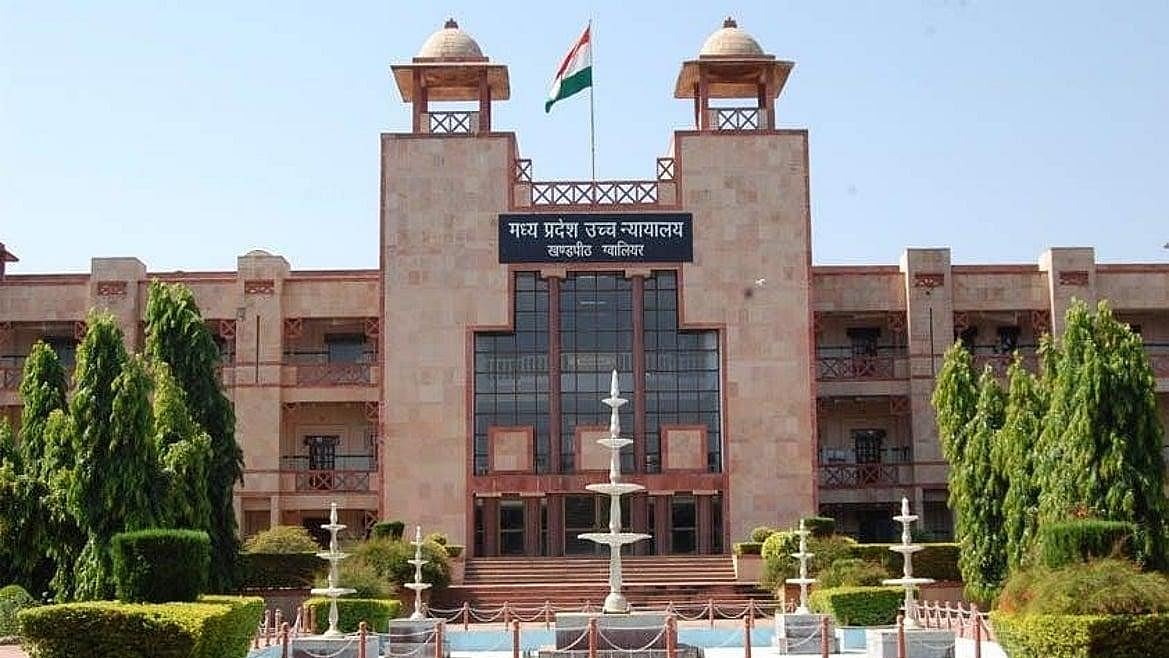
A special court in Khargone, Madhya Pradesh, has sentenced former executive engineer Kailashchandra Parwal to five years of rigorous imprisonment in a 24-year-old disproportionate assets case. The court also imposed a fine of Rs 25 lakh on Parwal.
The case against Parwal was registered in 2002, when Dhar resident Shailendra Joshi complained to the Lokayukta that Parwal had demanded a Rs 50,000 bribe. The Lokayukta subsequently caught Parwal while accepting the money, according to the prosecution.
During the investigation, officials found alleged assets disproportionate to Parwal's known income and searched his residences in Khargone, Dewas, and Indore. The investigation revealed that Parwal earned Rs 34,64,528 from known sources between August 1, 1981, and September 8, 2002, but spent Rs 1,08,70,213, leaving Rs 74,05,690 unexplained. This amount was 213.75% above his known income.
The prosecution examined around 131 witnesses and submitted more than 500 documents during the trial. The defence, on the other hand, examined seven witnesses and produced around 350 documents.
First Additional Sessions Judge and Special Court Judge Rajkumar Chauhan passed the order on Tuesday, according to special public prosecutor and assistant director of prosecution Prakash Solanki.
Parwal was sent to Mandleshwar sub-jail after the verdict. The case is a significant example of the long arm of the law catching up with corrupt officials, even after a delay of 24 years.
The Lokayukta's role in catching Parwal while accepting the bribe and the subsequent investigation and prosecution demonstrate the importance of anti-corruption mechanisms in India. The case also highlights the need for transparency and accountability in public office.
The verdict is a reminder that corruption will not be tolerated and that those found guilty will face the consequences. The sentence and fine imposed on Parwal serve as a deterrent to others who may be tempted to engage in corrupt practices.
In the context of India's ongoing efforts to combat corruption, this case is a significant milestone. The government has implemented various measures to prevent corruption, including the Lokpal and Lokayuktas Act, 2013. The Act provides for the establishment of a Lokpal at the central level and Lokayuktas at the state level to investigate cases of corruption against public servants.
The case against Parwal demonstrates the effectiveness of these measures in bringing corrupt officials to justice. It also underscores the importance of a fair and impartial judiciary in upholding the rule of law and ensuring that those found guilty are held accountable.
In conclusion, the sentence and fine imposed on Parwal are a significant step towards combating corruption in India. The case serves as a reminder that corruption will not be tolerated and that those found guilty will face the consequences. It also highlights the importance of anti-corruption mechanisms and the need for transparency and accountability in public office.
The verdict is a testament to the Indian judiciary's commitment to upholding the rule of law and ensuring that justice is served. It is a significant milestone in the country's ongoing efforts to combat corruption and promote good governance.
Frequently asked questions
What was the sentence imposed on the former executive engineer?
The former executive engineer was sentenced to 5 years of rigorous imprisonment and fined Rs 25 lakh.
How old was the case against the former executive engineer?
The case against the former executive engineer was 24 years old.